'I was trapped': Modern slavery rises across London

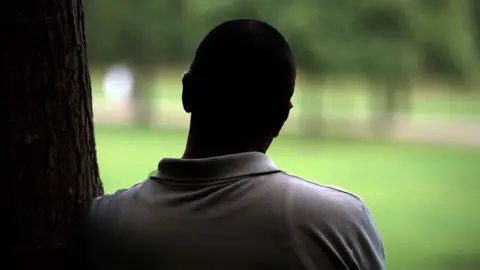 Getty Images
"I just had a normal life, and then it slowly dissolved into hell".
Christian - not his real name - had worked hard to build a safe, stable home for himself and his family.
But after he was unknowingly befriended by criminals, he was pulled into a world of coercion, fear and criminal exploitation.
The men he believed were friends took over his home, manipulated him into travelling abroad to smuggle drugs, and ultimately cost him his relationship with his loved ones.
Christian had become a victim of modern slavery.
Modern slavery is the illegal exploitation of victims who are forced to work for little, or no, pay - including forced labour and criminal activity.
New Home Office figures show reports of such exploitation in London have increased by almost 10% in 2025, compared with 2024.
'They just took over'
When Christian was initially befriended by one of the men, he was thankful for the company.
He says his neurodivergence means he can be "naive" when people show him kindness. "I crave affection and having friends because I never had it growing up."
After years of feeling lonely, he was being invited to social events.
"It felt like I suddenly had a friendship circle," he says. "They didn't look like people who were criminals, they didn't look like bad people, they were family people."
Once Christian felt secure, slowly but surely, the tone began to change. His friend began stashing drugs in his property, and then more people started turning up at his house. They had keys cut and would come in uninvited.
"It all went weirdly downhill; they started getting aggressive, demanding. They just took over."
He had become a victim of cuckooing, a modern slavery offence which involves taking over a vulnerable person's home for criminal activity.
He initially objected to drugs being stored in his home, but after increased pressure, reluctantly agreed to his friend storing what he thought was cannabis in his garden shed.
Christian was warned that if anything went missing, he would be responsible, so after an attempted break-in to his shed, he felt compelled to move the bag of drugs inside his property.
It was when he moved the bag that he discovered that it did not contain cannabis as he thought, but Class A drugs and weapons.
"I knew that everything had gone downhill, and I was going to lose everything. I felt trapped."
'Terrified'
When the authorities became aware of what was happening, and realised children may be at risk, they felt compelled to intervene.
Christian's family were removed from his home, isolating him even further.
He was at rock bottom when he was once more approached by his so-called friend.
"He was all apologetic, telling me he was so sorry and that he didn't know any of this was happening. He said he was going to give me money for my family."
The friend offered him a trip abroad, suggesting Christian brought back some trainers and fake watches that they could both sell back in England.
But when he arrived, he was told it was not trainers he would be bringing back, but bags full of cannabis; he had to pay back his "debt", or he was not coming home.
"I didn't know what that meant. I thought they were going to kill me."
He called a friend, who sent him money for a flight, and he escaped.
But home was not a refuge anymore, and Christian was trapped inside his house, terrified.
He tried to get moved by the council, but he says their only offer was a place in a B&B which he felt was unsafe due to the prevalence of drug users, so he returned to his house.
For the next 18 months, the gang would turn up at his property, march him to cash points, and force him to hand over his money.
"It was like having a home, but not knowing where home is anymore. Being scared to be there every day."
'It's happening everywhere'
Finally, after Christian broke down in front of his housing officer, the Salvation Army intervened.
Recognising him as a potential victim, they called in an organisation called Hestia, the largest provider of modern slavery support in London and the South East.
Alison Logier, the director of modern slavery response, describes how Hestia helps survivors access services such as safe accommodation and financial aid.
"When people come to us, they cannot believe what support they're entitled to. They don't believe they would be taken seriously," she says.
Hestia said it had seen an increase in cuckooing offences since the pandemic, where people became more socially isolated, putting them more at risk of exploitation by criminals under the guise of friendship.
Their research shows modern slavery offences are happening in every local borough in London.
"It's happening in our local communities, yet we don't see it. When people hear this happened on their doorstep, they can't believe it."
Modern slavery is on the rise
According to the latest Home Office data, 2,871 reports of exploitation in the capital were recorded in 2025, compared with 2,661 in 2024.
The increase in cases is mirrored across the country. In 2025, the number of potential victims of modern slavery referred to the National Referral Mechanism (NRM) in the UK was more than double that seen in 2020, reaching a record high.
The NRM is the government framework for identifying and supporting victims of modern slavery.
The latest data also shows a significant rise in referrals of British nationals who made up 22% of the cases in 2025, the biggest single nationality represented.
The Home Office has said it plans to toughen up the system to "prevent foreign criminals and illegal migrants from abusing modern slavery laws to avoid removal".
A spokesperson said: "The Home Secretary has announced tough new steps to prevent foreign criminals and illegal migrants from abusing modern slavery laws to avoid removal, while ensuring our processes remain fair, compassionate, and effective."
'I want to restart my life'
Christian is currently living in a safe house, and the wheels are in motion to find him permanent accommodation, which Alison describes as one of Hestia's biggest challenges.
"For survivors to escape, they need to leave their home, which is often their only entitlement to housing under their local authority," she explains.
In the context of London's housing crisis, safe houses can offer an interim solution, but finding a permanent home is essential for survivors to gain a sense of stability.
Christian vividly recalls the last night he spent in his house.
"I remember lying in bed, I put the TV on, and I cried a little bit of happiness because I thought 'I'm going to be gone tomorrow'."
He describes the actual moment he left as "heartbreaking".
"Walking past all my pictures, looking at how much work I'd put into my house. I started with nothing. It took years to build that home, and I made it how I wanted it. It was perfect."
Hestia helped Christian enrol in college, but his experience has left him with mental scars.
"Even when I'm having a really good day at college, it's always there in the back of my head. It's like living in a warzone," he says.
"Sometimes I think I'm going to wake up... and it's all going to have been a bad dream. But I know that's not the case."
Because Christian has been moved hundreds of miles away for his own safety, he can only afford to travel to see his family once a month.
"I can't wait to get my own place," he says. "I just want to restart my life."
- If you've been affected by the issues in this story, help and support is available via the BBC Action Line
Listen to the best of BBC Radio London on Sounds and follow BBC London on Facebook, X and Instagram. Send your story ideas to hello.bbclondon@bbc.co.uk
