'I feel I'm less inclined to go on my phone'
With friends, chatting, laughing, check the phone, check Instagram, TikTok, doom-scroll and back in the room.
And before we know it two hours have passed.
It's a pattern we've all found ourselves in but it's something that Gen Z and millennials are hoping to stop, as they focus more on so-called analogue activities.
From university students to young adults, there is a growing rise of picking up new hobbies like knitting, photography and crosswords to step away from their phones and be more present.

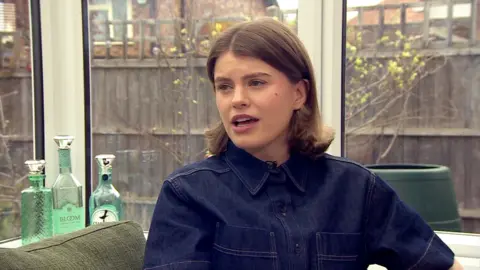
"It can be very isolating," said Hazel Baldwin, 26, from Hook.
She is a professional actor, currently in Les Miserables in the West End: "Even though you can be on tour with loads of different people, you don't have your people around you."
Since then she took up knitting, creating hats, slippers and jumpers for friends and family, often doing the activity on her commute to work.
"I feel like I'm less inclined to go on my phone and I feel like, just more calm in general. I feel like there's a purpose in what I do as well. Knitting, you always have an end goal," she explained.
This analogue shift is also reshaping fashion with the rise of the "analogue bag" — handbags designed specifically to hold books, journals, cameras, knitting kits, even crossword puzzles — reflecting a growing desire to carry offline activities into daily life.

According to Ofcom, the average adult in the UK spends 5 hours a day on their phone.
Psychologist Audrey Tang explains that this is not a superficial thought but a deeper meaning for a need of connection and grounding: "If things are going on around us, outside, and we're always hearing about it, it can make us anxious and with phones we're always connected.
"Taking a step away from that can actually just give our minds and our bodies a little bit of a breather, and that gives us time to reset.
"So, it can be really, really helpful to step away from our phones."
Tang adds that it is not just helping out personally, but combating loneliness too.
"That companionship, that conversation from new activities, can be just as important as doing something a little bit more freeing."
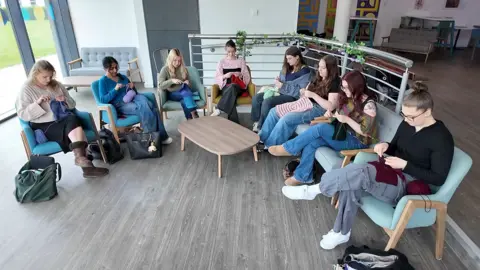
At the University of Portsmouth, students are embracing this idea through a growing number of activity focused societies.
The crochet club welcomes all abilities — some members make jumpers, others come for the social side, and many simply want to try something new like Sonya, who gave up social media for Lent and joined the club as her friend was the president.
"It was really hard at the beginning, but everyone here has been really nice. I even made a coaster for my mum," she said.
"I can't see anything worse than going back to doom-scrolling right now, it's something I will definitely continue."
It is not just crafts gaining momentum. The university's fishing society has grown by 400 members since November.
The group travels together to coastal spots, including the Isle of Wight, with equipment provided.
"We can drink and socialise, which university students love to do," said 19-year-old club president Tom Thirkell.
Rather than a brief digital detox, the analogue focus sees the online generation come offline to change their relationship with screens for the long term.
You can follow BBC Hampshire & Isle of Wight on Facebook, X, or Instagram.
