From brushstrokes to brands: The studio helping adults with learning disabilities

 BBC / Rosa Rahimi
 BBC / Rosa Rahimi
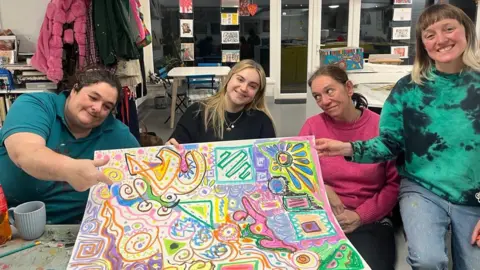
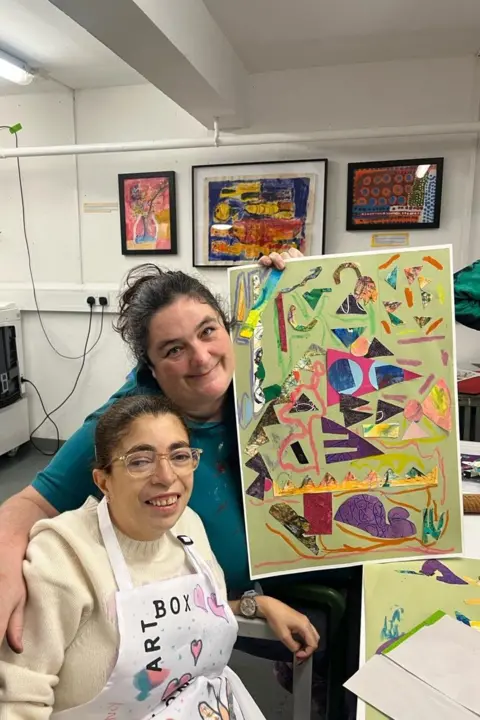
When Madeline Alterman started Artbox in Islington in 2011, she only had £300, a handful of volunteers and an idea - to support artists with learning disabilities and autism.
Now her organisation works with more than 90 artists each week, providing studio space, materials and tuition.
Some of their works have been exhibited, commissioned and sold, with artist Shruti designing the advent calendar for beauty brand Lush, and Seatton painting the cover art for Irish music artist CMAT's second studio album, Crazymad, for Me.
Meanwhile, Richard's painting called SHIP was featured in last month's edition of the House and Garden magazine.
Artbox was born out of Ms Alterman's belief that adults with learning disabilities need "real opportunities" rather than "token gestures".
"I was hearing the same issues again and again: loneliness, isolation, nothing fulfilling to do, not feeling valued, shrinking budgets and almost no access to paid or purposeful work," she explained.
Ms Alterman, who has a background in art and psychology and co-directs the organisation, grew up with a younger brother who has learning disabilities.
"We were encouraged to include him in everything, to advocate for him, to understand the system, and to push for better support."
'Mummy, Daddy, I've sold a painting!'
I visited the studio on a Thursday afternoon for one of the week's livelier sessions, with the Backstreet Boys blasting through the speakers.
"Everyone here presents with their own differences," said tutor Katie Parsons.
"You can't just say 'people with autism hate loud noises' – that's not the case. Certain people with autism hate loud noises in the same way that certain people without autism hate loud noises."
Seeta, 52, arrived with a picture of a parrot she had seen on TV and planned to draw. It took her approximately an hour and a half to create an expertly drawn and coloured rendering.
Diagnosed with meningitis at six months old, Seeta said she has epilepsy and panic attacks, and was in comas throughout her youth.
At the age of 20, she sold her first painting.
"I ran home shouting, 'Mummy, Daddy, I've sold a painting!'"
 BBC / Rosa Rahimi
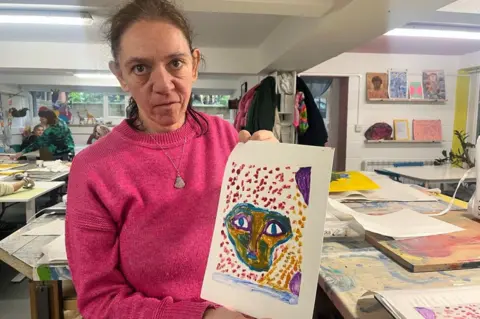
Violet started attending the sessions at Artbox when her mother died.
"When I first joined, I only wanted black and red because I was grieving so much," she said.
"Then I came out of the light and saw all the bright colours and suddenly it was like, 'I can do this, I can be an artist now'."
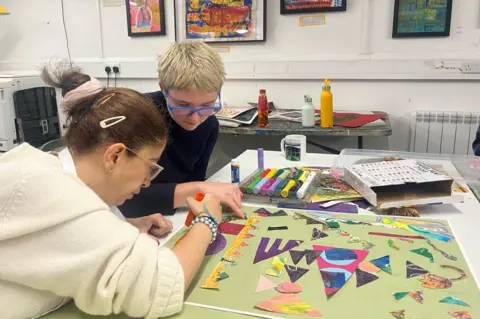
Violet is also volunteer and workshop leader for Artbox - the workshops help the organisation to raise funds and build confidence in the artists who lead them.
 BBC / Rosa Rahimi
One artist with Down's syndrome returned to the Francis Crick Institute, which had previously worked with her as a patient, to deliver a workshop for World Down's Syndrome Day.
Parsons, herself a practicing artist, says she is inspired by both the confidence and 'amazing lack of preciousness' possessed by the Artbox artists.
"One of their most incredible qualities is that they don't have that self-conscious nervousness about creating that a lot of us do – second-guessing whether we're doing the right thing and whether we're doing it correctly."
Ms Alterman says their organisation will keep finding ways for artists' work to be "seen, celebrated, and taken seriously."
"When adults with learning disabilities receive the right environment – properly staffed, well-resourced, and grounded in respect – they thrive."
Listen to the best of BBC Radio London on Sounds and follow BBC London on Facebook, X and Instagram. Send your story ideas to hello.bbclondon@bbc.co.uk
