Bill to lower voting age to 16 introduced in Parliament

 Getty Images
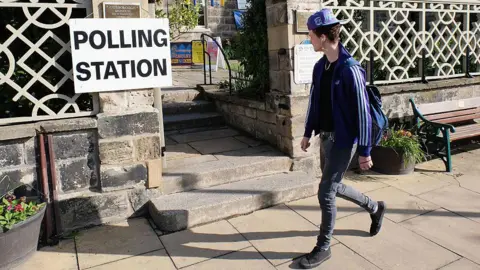
Legislation to allow 16 and 17-year-olds to vote at the next general election is beginning its journey through Parliament.
The Representation of the People Bill, which also includes measures to tighten the rules around political donations and protect against foreign interference, was introduced on Thursday.
Meanwhile, the government said a small number of councils in England will test out using locations such as train stations or supermarkets for polling booths in May's local elections to make it easier for people to vote.
The government said lowering the voting age would engage young people in democracy and ensure their voices are heard.
However, opponents of the idea question whether 16-year-olds have enough life experience to vote.
Shadow local government secretary Sir James Cleverly said: "The Conservatives are clear that people become adults at 18 and that is when citizenship rights – such as voting – should be gained."
The minimum voting age is already 16 for local council elections in Scotland and Wales, as well as elections to the Senedd and Scottish Parliament.
But for other elections, including to the UK Parliament, local elections in England and all elections in Northern Ireland, it is 18.
The proposals to lower the voting age to 16 across the UK would be the biggest change to the electorate since it was reduced from 21 to 18 in 1969.
To become law, the bill must be approved by both MPs and peers, a process which can take months.
The government has said it is aiming for the changes to be in force by the next general election, which is due to take place by 2029 but could be called earlier than this.
Critics have claimed the move to lower the voting age is opportunistic, as younger people are more likely to vote for left-wing parties.
However, Labour's youth vote is at risk from the Green Party, with polls suggesting it has overtaken Labour to become the most popular party amongst younger age groups in recent months.
In the UK, 16 and 17-year-olds make up only around 3% of the population aged 16 and over so researchers say the impact on overall vote share is likely to be negligible, particularly as turnout tends to be lower for younger age groups.
Liberal Democrat Cabinet Office spokeswoman Lisa Smart said votes at 16 were "long overdue" but the bill was "nowhere near enough to fix a democracy that's in crisis".
"We need to scrap our broken, unfair voting system, finally make the House of Lords democratic, and stamp out the influence of foreign adversaries in our elections altogether," she added.
The bill also includes measures to strengthen the rules around foreign donations.
Currently political parties can only accept donations from individuals registered on a UK electoral register or UK-registered companies which carry out business in the country.
However, there have been concerns that foreign nationals could get around the rules by donating through a foreign company that is registered in the UK.
Under the government's proposals, companies making political donations will have to show they have a genuine connection to the UK, including demonstrating they are headquartered here, majority owned or controlled by UK electors or citizens and have generated sufficient revenue to cover the donation.
The Electoral Commission, which oversees elections and regulates political donations it the UK, said the measures "could help close long-standing loopholes".
But chief executive Vijay Rangarajan added: "We are concerned that using revenue to determine companies' eligibility to donate to political parties is an inadequate safeguard against foreign money. Using profit would more clearly reflect genuine UK-based activity."
Local Government Secretary Steve Reed said: "The Representation of the People Bill will usher in a new era for our democracy – one that protects against foreign interference and empowers young people.
"With growing threats from abroad, now is the time to make changes to make our elections secure and get young people engaged in them."
Other measures in the bill include expanding forms of voter ID in Great Britain to include UK-issued bank cards and moving towards automatic voter registration.

Sign up for our Politics Essential newsletter to keep up with the inner workings of Westminster and beyond.
