The science park that revolutionised the world

 BT Group
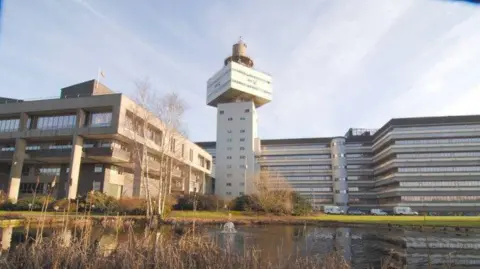
Nestled away in the south of Suffolk sits a science and research park that, potentially without, we would be living in a completely different world.
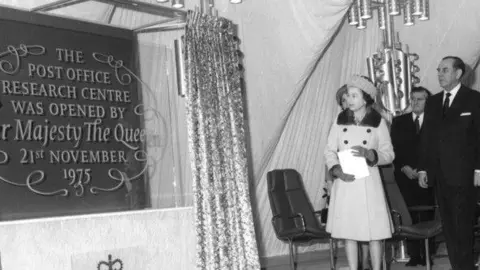
Adastral Park, located just outside Martlesham Heath near Ipswich, is owned by BT and was officially opened by Elizabeth II in November 1975.
Recently celebrating its 50th anniversary, the park is behind key telecommunication firsts such as the roll-out of broadband and early AI systems.
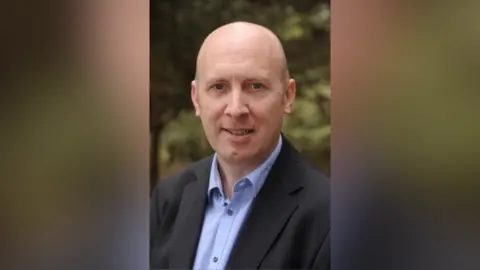
Peter Bell, managing director of Adastral Park, has worked at the site for the past 32 years, so where did he think we would be without it?
"Where would you be without your phone, without the internet and everything else," he explained.
"BT has really been the engine of the digital communication and digital features that we've got today and everything we almost take for granted today around telecoms and connectivity.
"Personally I moved here 32 years ago and it's amazing to see how we've been the powerhouse of innovation that really shaped the UK economy, certainly in communications."
Optical fibre and SMS
 BT Group
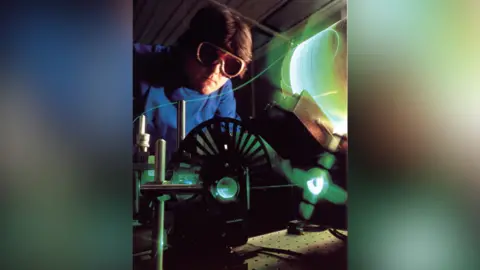
In the early 1980s, Adastral Park was at the forefront of optical fibre development and its commercial roll-out, Mr Bell said, proving that data could be sent further and at a lower cost using various types of fibre.
"It is there in every telecommunication operator and it is the backbone of what starts the revolution that we've had over the last 50 years," Mr Bell said.
In 1989 the site was then behind the world's first satellite phone system for airline passengers which debuted on a British Airways 747 and BT also played a part in the roll out of SMS (short message service) in 1993.
 BT Group
After the birth of the World Wide Web in 1991, BT began to look at how it could offer a mass market internet service.
In 1994, it launched an internet service for business customers before two years later it did the same for residential and small business customers.
"I keep on telling my children, who were born and brought up in Suffolk, that when I moved to Suffolk from a job a long time ago, 32 years ago, broadband didn't exist and they sort of look at me aghast," Mr Bell said.
"So it really did provide a leap frog for digital communication."
 BT Group
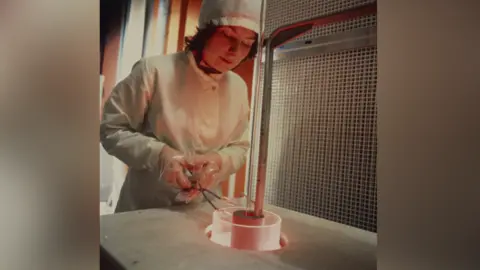
In the 1990s, BT was also working on the beginnings of AI, developing things like intelligent agents which Mr Bell said were often taken for granted now.
In 1995, BT ran interactive trials to households in Ipswich and Colchester in nearby Essex, giving people access to video on demand and more from their ordinary televisions.
London 2012 Olympics
 BT Group
More recently in 2012, BT was named as the London Olympics telecommunication partner, but it also had to protect the games against cyber threats.
"We had a tool that we used which allowed us to see where we were getting cyber attacks to mitigate those and that was all developed here in [Adastral Park]," Mr Bell explained.
"We're not far away from the Olympic Park, but we certainly had a key role to play during the Olympics 2012 and that's the sort of stuff that happens in the background that nobody sees."
Mr Bell said he often had to pinch himself that he was a part of Adastral Park and the recent 50th anniversary had been "fantastic".
He added: "Adastral Park is the centre of our innovation and development. Who knows what will happen in 50 years?"
Follow Suffolk news on BBC Sounds, Facebook, Instagram and X.
