Trail hunt ban moves closer as consultation begins

 Getty Images
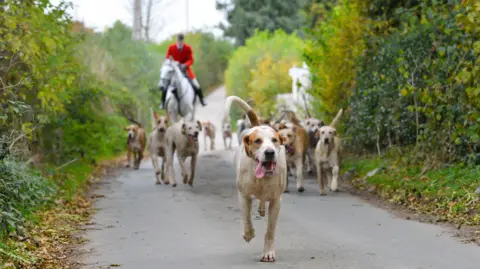
A proposed end to trail hunting in England and Wales came a step closer on Thursday as the government launched a public consultation on a ban.
Trail hunting was introduced after the Hunting Act 2004 as an alternative to hounds chasing foxes and involves using an animal-scented rag. Labour first announced a planned ban in its 2024 election manifesto.
Animal welfare campaigners, including the RSPCA, say live animal scents are often picked up by packs instead and that trail hunting is being used as a "smokescreen" to hide the deliberate hunting of foxes by some hunt groups.
The Countryside Alliance, which campaigns on rural issues, said a ban would be "unnecessary, unjustified and unfair".
 Mary Perry
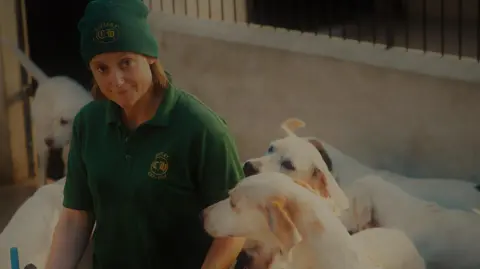
Mary Perry, who is joint master of the Cotley Harriers hunt, which dates back to 1797 and has about 70 riders and more than 50 hounds, told the BBC that countryside events held by the hunts "bring people together" and that criticisms of legitimate trail hunting were "incredibly frustrating".
Perry, a former youth worker who has been involved with the hunt based near Chard in Somerset for the past 17 years, said that "up and down the country, there will be people saying 'Why - when we do our best, we follow all the guidelines - why do they think a ban is a good idea?'"
The Alliance said that a ban would risk jobs and local businesses supported by hunting and its associated activities.
It estimates that countryside hunts bring £100m to the rural economy every year.
Tim Bonner, the Alliance's chief executive, said the government was attacking rural communities with "another assault on rural life".
"A ban on trail hunting is unnecessary, unjustified and unfair," he said.
"If the government continues down this path, it will do nothing but confirm to rural people that Labour has warped priorities and a fundamental dislike of the countryside."
'Pivotal moment'
The RSPCA said there was "mounting evidence" that trail hunting is being used as a "smokescreen" for illegal hunting.
David Bowles, the organisation's head of public affairs, said that was "putting wild animals, pets and livestock at risk, while rural communities face intimidation and anti-social behaviour."
The League Against Cruel Sports, which has been lobbying for a ban, welcomed Thursday's consultation launch.
Its chief executive, Emma Slawinski, said new legislation would allow "the courts and police to tackle persistent and prolific illegal hunting".
"For more than 20 years, hunts have carried on breaking the law and ignoring the ban on chasing and killing wild animals with dogs," she said.
"This is a pivotal moment for animal welfare and, as well intentioned as the original [fox-hunting] ban was, this time around we need to get it right with stronger measures to stop the cruelty and killing."
The government said the 12-week consultation would be a chance for the public, landowners, animal welfare organisations, hunts and rural groups to give their views on a range of issues.
This would include how trail hunting should be legally defined, the use of animal-based scents in training dogs, what other equestrian activities might be put at risk by a ban and how dogs used for trail hunting might be affected.
A spokesman for the Department for Environment, Food and Rural Affairs (Defra) said the government wanted other alternative hunt activities to "continue to thrive".
That includes drag hunting - which uses a fixed course for the hounds to follow - and clean‑boot hunting, where bloodhounds chase the scent of runners they mingle with before they set off.
He added that the government recognised that hunts "can support jobs and local businesses, and bring people together across the countryside".
Baroness Sue Hayman, animal welfare minister, added that the "nature of trail hunting makes it difficult to ensure wild and domestic animals are not put at risk of being killed or injured. That is clearly unacceptable."
