Drones could save vaccine wastage in rural Rwanda

 University of Birmingham
In parts of Africa almost a quarter of vaccine doses are thrown away because they have not been stored at the right temperature.
Research from the University of Birmingham suggests delivery by drone could stop this.
In Rwanda, commercial drone delivery is already used to deliver blood and medical products in remote areas.
Just one or two operators can launch hundreds of drones a day.
"Anywhere within the country is reachable in forty five minutes or less" Prof Chris Green from the university said.
The problem with vaccines is they need to be refrigerated. In some of the more remote clinics, without easy road access or reliable power supplies, they are vulnerable, especially if there are issues with the on site fridges.
If the power fails and a fridge stops working hundreds of vaccine doses could be lost.
Prof Green divides his time between the NHS and research for the University of Birmingham.
He and his team wondered if the solution was Rwanda's burgeoning drone delivery services.
He said: "The idea was that we could keep vaccines in a central location, where it's very secure and just send out what you need that day."
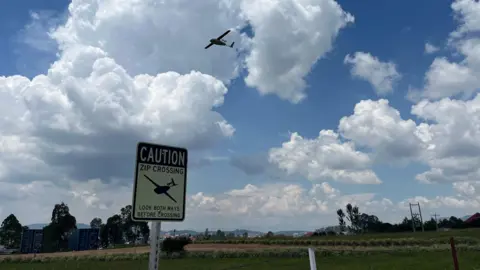
As people arrive at the clinics for their jabs the doctors and workers on site simply send a text or email message requesting vaccine delivery and within the hour the drone is overhead, dropping off its load.
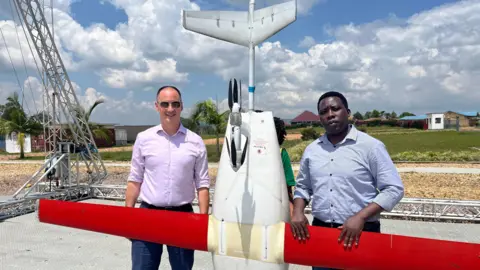
The drones are large fixed wing devices, like mini planes, launched using a giant catapult. The shoebox sized package of vaccine floats down by parachute.
At the end of its mission the drone circles back to the station where it is caught on a wire between two towers. It is then lowered back to the ground, refuelled and made ready to do it all again.
 University of Birmingham
Gilbert Rukundo is a PhD student on the project from the Rwanda Biomedical Centre and the university.
He said: "When you see the mums arriving you order the number of vials and even before you are done registering them the vaccine vials are there."
It's very early in the analysis of the data from the project but in some clinics the number of vials of vaccine stored on site went down by 90%. All the while the clinics were still able to carry out their vital immunisation work.
The hope is the idea can be rolled out further when the authorities see just how effective drone delivery is.
Follow BBC Birmingham on BBC Sounds, Facebook, X and Instagram.
