The Lib Dems' manifesto pledges analysed

 BBC
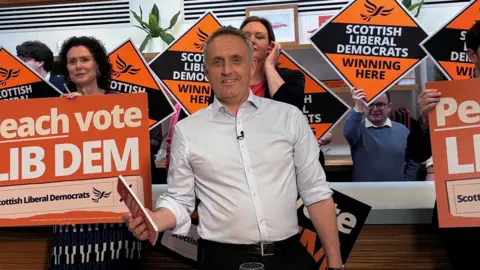
BBCThe Scottish Liberal Democrat's leader, Alex Cole-Hamilton, has launched his party's manifesto for the 2026 Holyrood election. The full document runs to 96 pages. So, what is the party promising? BBC Scotland journalists have been analysing the pledges.

Get stuff done
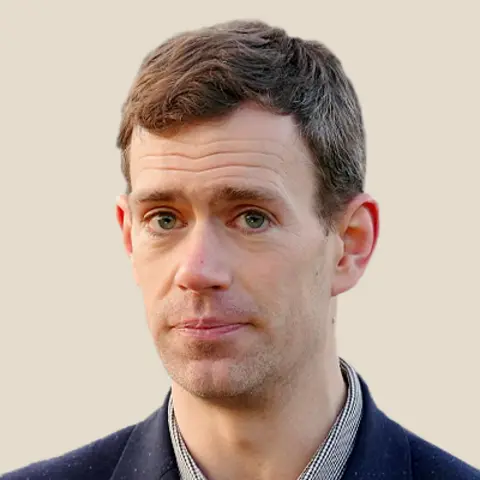
The Lib Dem manifesto is a chunky, 96-page document with loads of different ideas in it.
It promises the party will "get stuff done", adding: "Budget by budget, bill by bill, case by case, we use our leverage as MSPs to deliver change with fairness at its heart."
It strikes me not such as a prospectus for government, but a menu of bargaining chips that can be deployed in negotiations down the road.
The Lib Dems know that Alex Cole-Hamilton is unlikely to be moving into Bute House.
But given everyone is already talking about post-election arithmetic and the dealmaking which might decide who runs the country, he could end up acting as kingmaker.
The party also has a history of doing budget deals even with the SNP, carving out wins for particular local issues which they can then show off to voters at the next election.
There was a similar theme to the Green manifesto - these are papers packed full of ideas which won't necessarily all have to be delivered as a coherent whole, but of individually achievable policy proposals to take into future talks.
Deliver realistic NHS waiting times
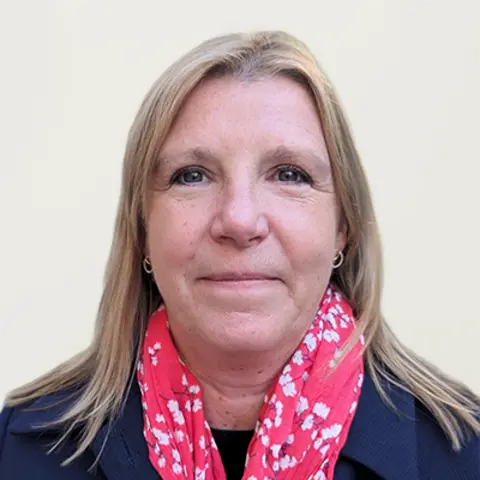
The Liberal Democrats describe their plans for health and social care as "realistic".
Some other parties want GP appointments within 48 hours, the Lib Dems say it should be within five days or 24 hours for urgent appointments.
Older people will have a named doctor.
The plan is to recruit 900 support staff, but doctors say demand is so high it will take time to ease the pressure.
The focus of many pledges are familiar themes for the Lib Dems.
Improving access to social care to help people get out of hospital and cut waits for mental health services.
They say a 10-year workforce plan will help recruitment, they will raise wages for social care staff and boost affordable housing.
But all of these proposals are costly.
Councils have warned they may have to cut services to afford wage increases for social care staff, so it is a fine balance between what you want to achieve and how you are going to pay for it.
Change early years education
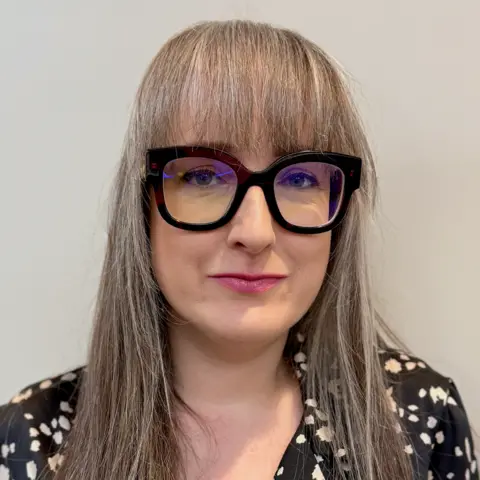
The Liberal Democrats say they would introduce a series of voluntary pilots to look at changing the way the first few years of primary school are delivered.
They want to focus on play-based learning until the age of seven, similar to the Finnish format.
They say this will help children acquire "important learning and social skills before formal schooling starts".
However, it should be noted that Finland has experienced a drop in their position within Pisa, the international ranking system.
The Lib Dems devote nearly a full page to ideas on how to support the teaching workforce, to solve shortages alongside the recruitment crisis.
They would introduce policies such as three-year packages for probationer teachers in subjects with shortages, and allow those on short-term or zero-hour contracts the chance to qualify to teach other subjects or move from primary to secondary.
Like most of the other major parties, they have also pledged to banish mobile phones in the classroom.
Bring in another layer of local government
The Liberal Democrats believe there may be a place for a new tier of local government.
The manifesto proposes offering communIties the opportunity to establish island or burgh councils.
They would be established by a charter which would define its functions.
Many Scottish towns had burgh councils which were abolished when local government was reformed in the 1970s.
Some of these towns still refer to themselves as "royal burghs" as a matter of civic pride.
Of course, the devil is in the detail. Precisely what powers might a burgh or island council have? Would it be subservient to both Holyrood and the existing local authority? Or a tier of power in its own right? Would it have any meaningful powers over taxation, spending and local services? Or would they be glorified community councils with little actual power?
In some towns with a sense of their identity, such as the old burghs, you will still find older people who mourn the loss of local political power half a century ago.
Could burgh and island councils empower communities? Or would they be an additional tier of administration and bureaucracy?
Drive down fossil fuel consumption
The Liberal Democrats take a much more nuanced approach to the future shape of our energy mix, which is currently delivering high energy bills and turbo-charging the cost-of-living crisis.
They don't directly address the question of whether they would support more exploration licenses in the North Sea, which the UK Labour government has banned.
Instead, they focus on the consumption of fossil fuels to drive down how much oil and gas we need as a country.
However, that involves a very long list of expensive proposals, delivered at pace, which could be a struggle to finance.
These include an emergency insulation programme, so homes lose less warmth, accelerating the roll-out of domestic heat pumps, and more investment in electric vehicle charging infrastructure as more of us ditch petrol and diesel cars.
The manifesto recognises that climate change is leading to more damaging wildfires, droughts and floods and therefore cannot be ignored without incurring significant costs in dealing with the aftermath of these extreme weather events.
But governing involves choices and saying you'll do everything can leave questions around credibility.
Shake up arts funding
Like the other parties, the Lib Dems target the arts agency Creative Scotland and want to see a shakeup of funding, based on the findings of the most recent review.
They're also keen to see a wider spread of funding, beyond the big cities, a worthy ambition but one which fails to recognise that most existing cultural organisations are based in cities, and often struggle to find the resources to take their work as far afield as they might wish. One city project they do champion is the creation of Dundee's Eden Project.
They're keen to focus on the games industry – establishing a Games Innovation Centre and a network of regional hubs aimed at encouraging and developing the sector with advice, networking and low-cost office space.
And public broadcasters get their support, including a proposal for a permanent BBC charter ratified by the four nations.
Make it easier for disabled people to work
The Scottish Lib Dems say they want to "make it easier" for disabled people to find a job.
One key point they've highlighted is supporting the right to work from home, a policy the UK party is promoting.
On one hand, that might offer genuine flexibility and opportunity for disabled people.
On the other, could it discourage employers from making potentially expensive adaptations in the workplace?
If the Lib Dems gained power in Holyrood, it would be difficult to implement changes when so much of disability legislation lies with Westminster.
It would require the transfer of powers like Access to Work to Holyrood, which may take quite some time, given the complicated nature of devolving responsibilities.
But one key point, this is all about choice.
Being in the workplace is about more than employment. It's about social interaction, one thing disability charities have long campaigned for in modern workplaces.

