How weight loss jabs have changed the battle with obesity

 PA
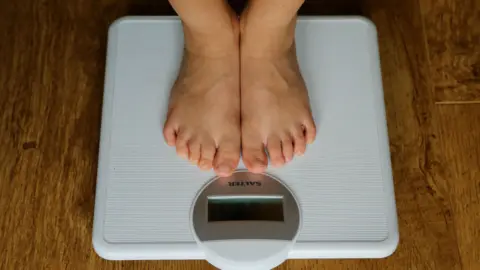
PAGLP-1 weight loss jabs have become one of the biggest medical stories of the decade.
About 100 million people are on them worldwide, according to the World Health Organization, and with the University College London estimating that number to be 1.6 million in the UK alone. And that number is growing every month.
Scientists and clinicians say it has been a game changer in tackling what is becoming a global crisis in obesity.
More than 50 clinical trials are currently underway for new drugs. So how will the picture change in the coming years?
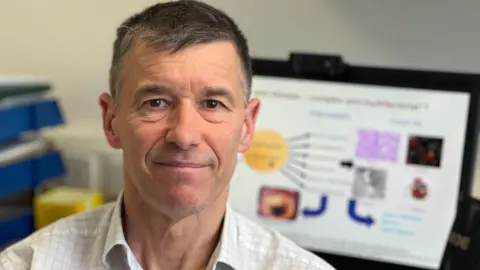
In February 2021 a global team of researchers published a paper which would help transform the way people lose weight.
Jointly led by Prof John Wilding from the University of Liverpool and Prof Bob Kushner from the US, they had just conducted a two year study looking at the effect of semaglutide, the active ingredient in Wegovy, on weight loss. It concluded that people on the drug lost up to 15% of their body weight over the 68 weeks of the trial.
"The people who were taking the placebo injections, who were getting exactly the same support from the dieticians and everything only lost about 2.5% of their body weight," said Wilding.
"We'd never seen that with medicine before."
Four months later Wegovy was approved for use in the US, and a multi-billion pound industry was born.
GLP-1 is just one of more than 30 hormones in the gut which we all produce naturally and which helps regulate the appetite. It works partly by telling the brain that we feel full.
The existence of GLP-1 has been known about since the 1980s, but at the time it was seen mainly as a potential treatment for type-2 diabetes because it helps the pancreas secrete insulin, which diabetics often struggle to produce in large enough quantities.
In the 1990s researchers at Imperial College London discovered that rats injected with the drug showed a reduced appetite.
Wilding, who was then a young researcher on the team, said the results had been "very interesting" but at the time the future significance of this discovery was not fully appreciated.
'I had to do something'
Obesity, although an issue for some, was far less common than it is today. More crucially, naturally occurring GLP-1 breaks down in the body within one to two minutes and so the effects don't last.
Scientists were already producing drugs which mimicked the same effect – called GLP-1 receptor agonists – but they too only lasted a matter of minutes.
But in the early 2000s scientists in New York produced a version which lasted 12 hours - long enough for patients to take. Over the following years the Danish drug firm Novo Nordisk (which makes Ozempic, Saxenda and Wegovy) and the US firm Eli Lilly (which makes Mounjaro) developed the weekly versions in use today.
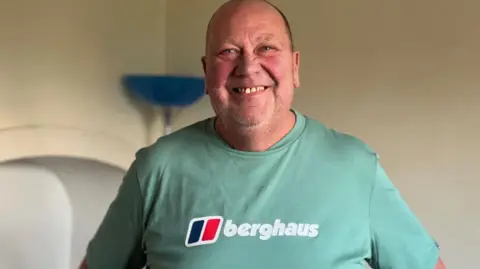
For many the results are transformational. Delivery driver David Hynd has been on them for nearly a year and lost 4st (25kg).
"In the first month that I started taking Mounjaro I lost nearly a stone," he said.
"When you see that coming off you in a month it's just a complete eye opener. So obviously you keep going."
David has a thyroid condition which makes losing weight more difficult. He started on the injections after reaching 22st (140kg) and struggling with his health.
"I had heart failure, irregular heart beat, COPD, sleep apnoea," he said.
"I was getting to a point where I had to do something for my own good."
David, from St Helens, said he had tried and failed with diets many times before but the injections immediately changed his appetite, including the type of food he craved.
"I just don't eat biscuits now, I don't eat the things I normally had. The first couple of months I was just eating salads and chicken breast but really, really enjoying it. I still enjoy it now."
With two thirds of adults in England now classified as overweight, and 30% living with obesity, the government is keen to see more people follow David's example. But the question is, who pays for it?
Both Mounjaro and Wegovy are available on the NHS but the criteria is currently very strict.
In theory under NICE guidelines (the body which approves drugs for NHS use) it can be given to people with a BMI of 35 or over and one related health condition (for Mounjaro) or a BMI of 30 and over with one related health condition (for Wegovy).
The criteria for patients from some ethnic minorities is slightly lower as NICE judged that they were at higher risk for weight-related health issues.
NICE calculated that for Mounjaro alone 3.4 million people would qualify under these criteria. Modelling by the NHS concluded that this would cost billions of pounds a year with a high of £3.9bn at the end of the second year.
The NHS decided that this cost was unsustainable. So instead they decided to restrict it initially to patients with a BMI of 40 and four related health conditions from a list of five (37.5 BMI for some groups).
The bar will decrease gradually over the next 12 years starting in June when the BMI requirement will go down to 35 but patients will still need the four health conditions.
Some obesity experts worry that this means many people who are severely overweight are unable to access it.
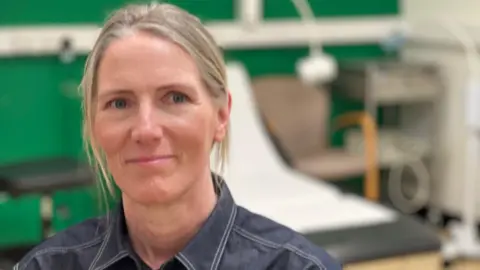
Dr Nicki Mazey is a GP partner at Brownlow Health in Liverpool who specialises in obesity.
"There is a cohort of patients who I feel would absolutely benefit from it but they don't quite meet the criteria and I am not allowed to prescribe it," she said.
"I've had patients with BMIs over 100 but they don't have the four out of five co-morbidities."
"At that point they'll ask, 'What are my options? Where can I get it or shall I go privately?'. I'd never had that situation [before] but now I'm having it regularly."
Dr Mazey worries that the high cost of private prescriptions is driving some towards the unregulated, and often dangerous, black market.
Private prescriptions can cost more than £300 a month. Delivery driver David says he spends £250 on Wegovy after switching from Mounjaro, which cost him more.
He says he has had to cut back on other expenses and compares it to others paying for a car.
"You've got to sacrifice certain things.
"If you've got the money and you were in my shoes you'd do it. For people who haven't got the money, I do feel sorry for them."
Along with the high cost of the drugs, some campaigners are concerned that not enough is being done to tackle the root causes of obesity.
Many experts agree that it is a chronic condition which some people are simply more genetically disposed to than others. But it is also strongly impacted by the society we live in, and over the past decades there has been a dramatic shift.
In 1980, adult obesity rates in England were just 6% for men and 9% for women – less than a third of rates today, according to the UK Health Security Agency. The Obesity Health Alliance, a co-alition of 70 charities and health organisations, wants the government to act more decisively against the promotion of unhealthy food and drinks.
"Everywhere you turn at the moment, down the high streets, in the supermarkets, when you order online, even when you watch TV adverts, you'll be faced with wall to wall unhealthy food and that's become our cultural wallpaper and it's something that needs to change," said director Katharine Jenner.
"We really need the government to take the bull by the horns and start tackling the food and drink industry."
She stressed that the alliance supports the use of GLP-1s.
"You would expect if there is a good medicine which can help that you would encourage that where possible. In the way you would treat someone with cancer or raised blood pressure."
"We just need to also think about the bigger picture to stop more people heading on to this treadmill of obesity later in life."
'I wish I'd done it years ago'
Like all drugs, GLP-1 medicines and the associated rapid weight loss can have side effects. They can range from nausea through to hair loss to more serious and rare complications like kidney issues and gall stones.
There is also the question of what happens when people stop taking them. Numerous studies have shown that they can rapidly gain much of the weight lost.
But this month the results of a trial of a GLP-1 tablet called Foundayo showed that regular use largely avoided that. Already Wegovy tablets for weight loss are being marketed in the US and a decision on their use here is expected later in the year.
Although no price has yet been set, the tablets may be cheaper, which many hope will allow more to be treated on the NHS.
Wilding said there were more than 50 clinical trials currently underway for different obesity drugs.
"I think that means that there will be more choice, there will be more powerful medicines which could help people who would otherwise have to have bariatric surgery," he said.
"At the end of the day that improves the life of people living with obesity".
David's planning on losing another stone before stopping the injections.
"I wasn't happy with myself, I was depressed, I was in a rut.
"I knew something had to be done but I wasn't doing it and now I've done something. I wish I'd done it years ago," he said.
"Hopefully I can be here for a bit longer, see the grandkids grow up."
Listen to the best of BBC Radio Merseyside on Sounds and follow BBC Merseyside on Facebook, X, and Instagram. You can also send story ideas via Whatsapp to 0808 100 2230.
