Veterans threaten MoD with legal action over LGBT compensation scheme

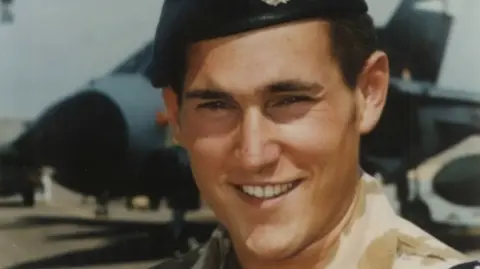 Mark Shephard
A pair of veterans who say they were driven out of the armed forces for being gay have threatened to take legal action against the Ministry of Defence after being refused access to financial reparations.
The former servicemen say that, because of their rank, they have been unfairly denied access to the government's full compensation scheme - which offers up to £70,000 to those who lost their careers under a ban that lasted until 2000.
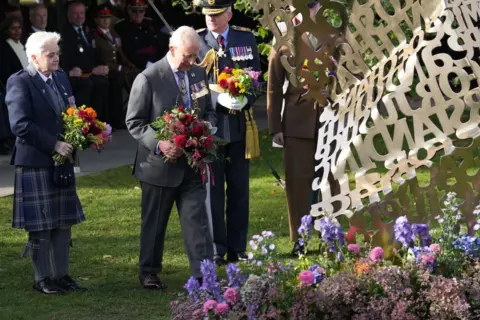
It comes just months after King Charles III dedicated the UK's first memorial to those impacted by the so-called "gay ban".
The BBC has contacted the MoD, which previously said it "deeply regrets" the treatment of those impacted by the ban.
Mark Shephard, 49 and Steven Stewart, 55, have issued a pre-action letter to the MoD, challenging the lawfulness of the LGBT+ Veterans Financial Recognition scheme, which was introduced after a landmark report into the treatment of LGBT+ veterans under the ban.
The law - which was in place between 1967-2000 - meant personnel who were gay, or perceived to be gay, faced intrusive investigations, the shame of dishonourable discharge and in some cases imprisonment.
Those impacted can apply for a LGBT Dismissed or Discharged Payment of £50,000, with an additional amount of up to £20,000 available for those who experienced additional impacts, such as criminal records or abusive questioning and interrogation.
The pair are part of a group of around 40 veterans who have been rejected for the payment, and say the scheme's criteria unfairly discriminates against lower-ranking veterans who felt forced out of the military.
Under the terms of the scheme, those who were commissioned officers - a position of authority in the forces - who were not dismissed outright but felt pressured or forced to leave because of the threat of disciplinary action qualify to receive the £50,000 payment.
However non-commissionedranks who felt similarly forced out do not qualify for the payment.
Lawyers for the pair say this distinction means the scheme "does not operate fairly between individuals who were differently ranked during service" and say they are prepared to bring a judicial review to force the government to widen the criteria.
They predict the rules could be stopping thousands of veterans from receiving reparations.
Shephard served in the RAF from 1995 to 2001 as a fitter, helping to maintain and service aircraft.
He says in 1999, while serving at RAF Benson, he was questioned about his sexuality and told he could either face dismissal, or volunteer to resign and work his 18-month notice period.
He said: "I felt like I was driven out of the career I trained hard to achieve and excelled at."
Shephard added: "Nothing will ever make up for what many people had to go through. This action isn't about the money but ensuring those who had to give up their military lives and careers get the justice they're entitled to."
 Getty Images
The threat of legal action is likely to cause embarrassment for the MoD, which has been keen to publicise the work its done to make reparations for the suffering caused by the ban, including hosting an official event in which the King dedicated a memorial to LGBT+ service personnel.
Angela Jackman KC, a partner at Irwin Mitchell, representing the veterans, said: "The scheme makes no allowance for Dismissed or Discharged Payment to potentially thousands of enlisted personnel who say they were subjected to discrimination and harassment, including disciplinary proceedings, which forced them to resign.
"In some cases, veterans say they were given an ultimatum to resign otherwise face consequences such as dishonourable discharge.
"The rules simply do not acknowledge numerous circumstances where veterans were constructively dismissed."
Stewart served for seven years in the British Army as a corporal in the Royal Military Police, where he was deployed in the Gulf War and in Northern Ireland, receiving a Accumulated Campaign Service Medal for his long-term service.
He left the army in 1995 following an investigation into his sexuality, which he says was "intrusive and deeply traumatic".
He added: "The least I and many others deserve is for the redress scheme to actually recognise what happened to hundreds, if not thousands of service personnel, was wrong."
The MoD has previously vowed to speed up the awards process after it was criticised for handling applications too slowly, particularly for elderly and infirm veterans.
BBC News understands that a number of former service personnel who were eligible for the scheme have died while waiting for payouts.
Ed Hall, chairman of LGBT+ veterans support charity Fighting with Pride, said: "This scheme is an opportunity for the government to put itself on the right side of history, and we urge the government to listen and address the manifest injustice these former service people are facing."
A spokesperson for the MoD previously said it "deeply regrets the treatment of LGBT serving personnel between 1967 and 2000, which was wholly unacceptable" and that what they experienced was "not reflective of today's values or the inclusive culture of our armed forces".
The BBC has contacted the MoD for its response to the threat of legal action.
