First environment report says serious challenges remain

 BBC
BBCStormont has made progress on all six of its Environmental Improvement Plan (EIP) objectives, according to the first annual progress report (APR).
But the Department of Agriculture, Environment and Rural Affairs (Daera) acknowledged that "serious challenges" remain and warned of "long-standing pressures" on Northern Ireland's environment and "the need for sustained investment, coordinated action and long-term recovery planning".
The Office for Environmental Protection (OEP) welcomed the report, saying it allowed people in Northern Ireland to see "for the first time" what the executive is doing for the environment.
It will provide an independent assessment of the document in the next six months.
What does the EIP cover?
The EIP was published in September 2024.
It has six strategic objectives:
- Excellent air, water and land quality
- Healthy and accessible landscapes everyone can connect with and enjoy
- Thriving, resilient and connected nature and wildlife
- Sustainable production and consumption on land and at sea
- Zero waste and highly developed circular economy
- Net zero GHG emissions and improved climate resilience and adaptability
A Nature Recovery Strategy has also been published for consultation.
What actions have been taken?
 PA Media
The report points to achievements like strengthened environmental monitoring, the publication of the Third Cycle River Basin Management Plan and improvements in marine protection.
There has also been progress on the restoration of peatland and the creation of new woodland.
Legislation was introduced in December 2024 for Packaging Extended Producer Responsibility – a policy that aims to reduce environmental impact of packaging by making producers responsible for the costs of recycling it.
Greenhouse gas emissions in Northern Ireland have also fallen to 31.5% below 1990 levels.
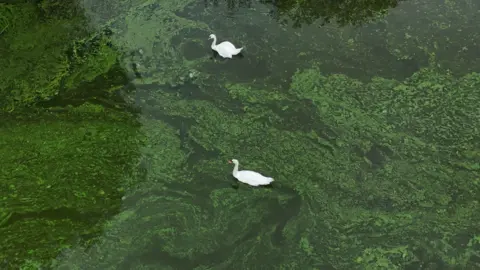
But water quality continues to be affected by excess nutrients – phosphorus and other elements – that come from agriculture, wastewater and other sources like households and septic tanks.
Biodiversity is not recovering as quickly as needed.
What happens now?
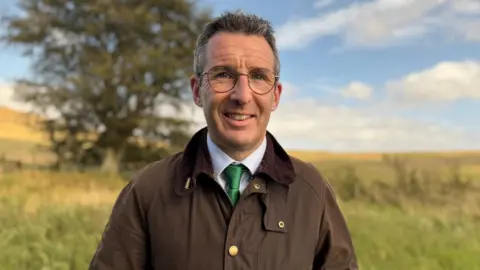
Agriculture Minister Andrew Muir said there was still work to be done.
"Our ambition is clear, and with the right policy landscape, we can be the stewards our environment clearly needs," he said.
"However, real and lasting improvement will require more resource and funding, stronger environmental governance, as well as improved collaboration across government, industry, communities and wider society."
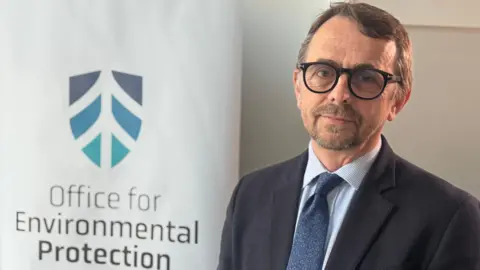
The OEP will produce an independent assessment of the first annual progress report in the next six months.
Its chief scientist, Prof Robbie McDonald, said nature in Northern Ireland was "under unsustainable pressure", as the OEP found in a previous review.
He added that "urgent action" was needed and the report was a "significant and welcome" addition to scrutiny and accountability.
"The report is nevertheless clear on the challenges ahead and is candid about delays and future plans," he said.
"We welcome the recognition that the pace and scale of activity must increase, and that effective delivery of the plan, actually putting it into action, is of utmost importance now.
"The APR is also clear that this must involve all sectors."
