Beekeeper loses 140,000 bees to wasps and snow

 BBC
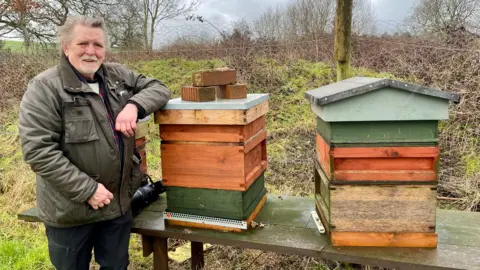
BBCA volunteer beekeeper said losing about 140,000 bees due to changes in the weather was "like losing a family pet".
Paul Haggett said all 14 of his bee colonies were killed off by an "eruption" of wasps, due to a warm spring and mild autumn, then finished off by the recent snow brought by Storm Goretti.
The 70-year-old said finding empty hives was "soul-destroying" and a sad loss for the volunteers and visitors to Handley Farm in Shottle, Derbyshire.
"We did everything by the book but we've got to look for new methods next year to see how we can prevent the wasps getting in," he said.
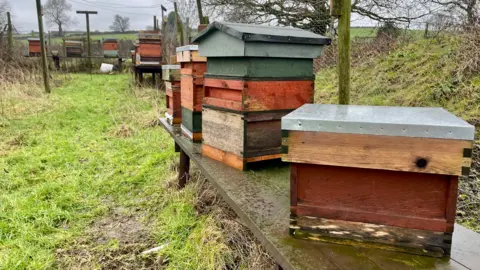
Volunteer Haggett has looked after the bees at the farm, which is part of the Chatsworth Estate, for the last seven years.
It is part of a community interest project attended by local young people.
"It just changes their lives.
"It's just wonderful to see them open up when they come here. It's good fun," he said.
But in early July, huge swarms of wasps arrived on the farm weeks earlier than usual and continued to thrive in the warm temperatures up until the end of November.
"The early start meant they'd developed quicker and there were a lot more adult wasps than normal, just out looking for sugar," Haggett said.
He said 11 of the 14 hives were decimated by the wasps, but the three surviving colonies were then wiped out when snow hit Derbyshire on 9 January.
Haggett said the 14 hives could have been filled with up to 700,000 bees in the height of summer.
 Getty Images
"It's soul-destroying. You think to yourself, what have I done wrong?
"You do everything by the book and unfortunately they're living creatures and the weather conditions contribute to the problem," Haggett said.
The beekeeper said he was determined not to let this devastation dampen his enthusiasm and plans to use his late brother's inheritance to invest in new colonies.
"We will get started again and try and build them up, plus any swarms that are around the area, we'll try and catch those and give them a new home," he said.
Follow BBC Derby on Facebook, on X, or on Instagram. Send your story ideas to eastmidsnews@bbc.co.uk or via WhatsApp on 0808 100 2210.
