The Aldi-style disruptors who could be about to shake up the vets market


 Getty Images
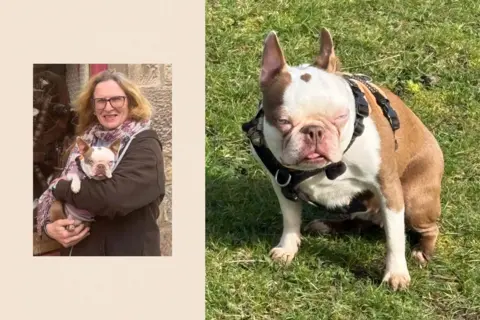
When Louise Burns noticed that her dog Bow was breathing oddly in October 2023, she took the Boston terrier straight to the vet. Louise recalls being told that Bow's airway was swollen - Bow was given a tracheostomy and then a further operation to help her breathe more easily. By the time Louise took her home after four days, the bill had reached £7,783.77.
Louise's insurance only covered the first £3,000, but in the midst of an emergency situation, she felt she had little choice other than to pay up: "You're not really in a position to go and get a second opinion where you've got a dog that's not breathing properly," says Louise, 72, from Thundersley, Essex, who contacted BBC Your Voice. Nonetheless, it felt like a lot of money to her.
I've been reporting on rising vet bills for over two years, and I've been inundated with pet owners like Louise getting in touch to complain about costs.
The Competition and Markets Authority (CMA), a government watchdog, says average vet prices across the market rose by 63% between 2016 and 2023 – well above the rate of inflation. In order to tackle this, the CMA has carried out a formal UK-wide investigation into the industry and will soon publish a final report setting out changes to how it wants vets to operate.
Meanwhile, many vets have told the BBC they feel under pressure to make money for their increasingly small pool of owners. In 2013, only 10% of vet practices in the UK were owned by large corporate groups. Now that figure stands at 60%.
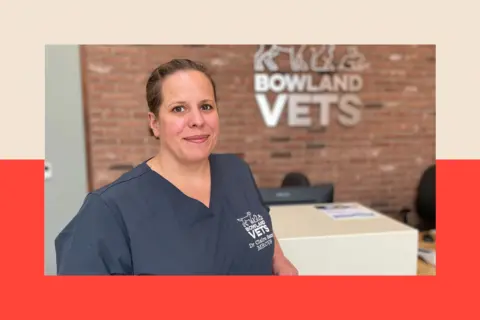
Claire Batty, who opened her own veterinary practice on the outskirts of Whalley, Lancashire, in 2023, says she previously worked for one of the big firms, but left after becoming fed up with being "told by somebody who's sat behind a desk you're not earning enough money".
Many pet owners suspect this is pushing prices up. However, Rob Williams, president of the British Veterinary Association (BVA) - which speaks for individual vets that work in both the big operators as well as independents - says it's "too reductive to say this one thing happened, therefore all the prices have shot up".
The big corporations that run more than two thirds of the vets agree with the BVA that simply blaming them for cost rises is not true. They point to factors such as massive advancements in what treatment is able to be offered, increased wages for staff and greater expectations from customers for increased costs in recent years.
What seems undeniable, however, is that prices are high and people are struggling to afford them. So what, if anything, can be done to bring them down?
Letting in daylight?
UK pet owners spent £6.3bn on vet and other pet-care services in 2024, according to the CMA - which works out as just over £365 per pet-owning household.
Prices for veterinary services differ vastly across the UK. Clear Vet's analysis of more than 500 practices found that an out‑of‑hours emergency consultation costs an average of £209 nationwide, but the figure drops to £142 in Yorkshire and rises to £295 in Manchester.
The CMA's report is keenly anticipated by vets and pet owners alike. In a provisional report published at the end of last year, it identified a series of issues including a lack of transparency around the ownership of individual practices, and whether pet owners have enough information about pricing. It also highlighted the concentration of ownership of vet practices and clinics.
Now it is expected to order measures to make vets more open about prices and who owns them.
 PA Media
If you look up a vet in your local area online, it may take a trawl of the small print on their website to find out who owns them. And working out how much treatment will cost will likely be even trickier - the initial CMA investigation found 84% of vet practice websites displayed no pricing information at all.
But many vets I speak to are nervous that measures including enforcing more transparency could make the cost of running a practice more expensive, especially for smaller businesses.
The CMA is also likely to call for it to be made easier for pet owners to access cheaper medicines online, including by capping prescription costs and requiring vets to tell pet owners about savings available by buying medicines in this way.
However, many I speak to in the industry, including the BVA, are concerned that this move could end up costing consumers in the long run.
Williams argues there are two potential unintended consequences of this likely move.
He and others have pointed out that the online pharmacies are owned by some of the large chains and "two of the large veterinary groups account for somewhere between 70% and 80% of the volume of medication supplied through that route".
He feels it is "quite ironic" that the CMA would design a remedy that would potentially push large volumes of income to two of these businesses.
"That doesn't seem to be a terribly competitive thing to do," he says.
Lidl and Aldi for the veterinary industry?
Williams and many independently owned vets I speak to are also worried that reducing profits from medicines could force vets to increase other costs - for example, how much they charge for their clinical time. Alternatively, they say, they may even have to reduce staff numbers to save money. They argue that their profit margins are pretty thin compared to the big companies.
Claire Batty insists "we do actively say to people, you can gladly get an online prescription" but she says "it does stick in my throat" who profits from that - namely some of the big chains.
Williams is more hopeful that customers could be better served by new independent vets coming in and shaking up the market.
He says that maybe new starters could do what Lidl and Aldi did for the supermarkets sector, which was previously dominated by a handful of well-established brands.
He's talking of practices like Batty's in Lancashire. She argues what businesses like hers bring to the market is "transparency with pricing and charging fairly" and she thinks she's benefited from media scrutiny of the CMA reports because people are becoming aware of who owns their practices and have "voted with their feet".
A number of new vet startups that have used subscription models to "bundle professional services" like some dental chains do, and they hope new innovation like this could shake things up.
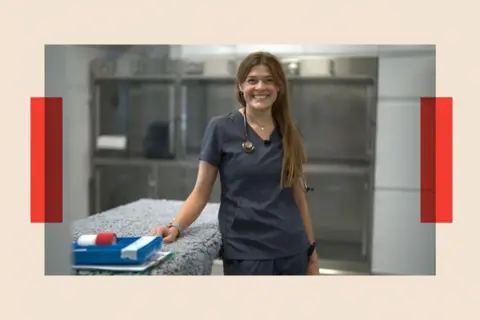
"Subscriptions give predictability, transparency and remove barriers to care," says Francesca Verney, veterinary director at independent practice Pet People in London.
"It's great for vets as we get to see patients often before they get really sick - removing suffering and intervention, and it's equally valuable to clients when budgeting for their pet's care."
Bringing vets up to date
Technology could also help improve services. There are now apps that allow clients of some practices to chat in real time to vets.
Williams also says artificial intelligence could reduce the amount of time vets spend doing paper work or processing imagery and analytics, which will free up time to spend with pets.
From spending time talking to vets, I've learned that two opinions in particular are widely shared within the profession. Firstly, that the public have a warped view of healthcare costs because we have the NHS which means we don't have a clear idea how much our own treatment costs, never mind what is reasonable for pets.
Lord Trees is the only vet in the House of Lords and the founder of the Veterinary Policy Research Foundation, which recently estimated that the veterinary industry broadly added £20bn of value to the UK. He believes these perceptions are a "big challenge" for the industry.
"The public are not attuned to the real costs of providing healthcare and the quality of service you get from the veterinary profession is exemplary," he says. "You've never heard of anybody having to wait months and months and months for elective surgery for your dog - it'll be done within a week or two, and the emergency will be done within an hour or two."
Secondly, vets want to see the law modernised because the Veterinary Surgeons Act, which sets out how vets are regulated, came into being in 1966 - a time when practices were typically owned and operated by surgeons. "That's not the case now", says Williams.
But as the law stands, it means individual vets are still regulated but not the practices they work in. Many argue this is unfair given that more than two thirds are now owned by non-vets. It means vets fear being struck off but owners of practices face little consequence.
The government has promised to change this but it could take years. "The public will have a lot of protection from the fact that the businesses themselves are also regulated," says Williams.
But while this is really important to vets, and Williams says he welcomes it, he doesn't believe it will have any impact for customers.
Rethinking which breeds to choose
So how else can pet owners' bills be brought down? Answering that may involve asking awkward questions about the types of breeds we choose and the extent to which we expect treatment to prolong the lives of our animals.
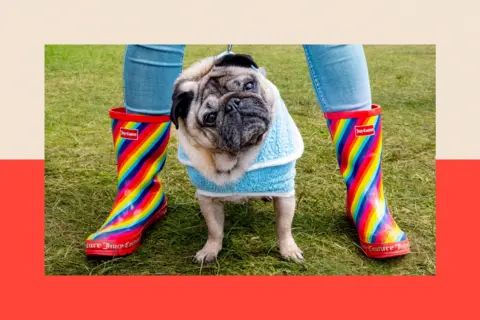
For example, the likes of pugs, Frenchies and English bulldogs all have issues with their breathing because of their squashed facial features and Scottish Fold cats suffer a lot from arthritis.
Williams is not saying we shouldn't buy these breeds - but he does say prospective owners should recognise that they will come with significant costs.
"It is something that people don't think enough about," he says.
"They're often swayed by fashion and social media influencers and that's not a good thing. Equally, if somebody has done the research and knows Breed X has problem Y, and I know that that is expensive to do, but are happy to take that on board, because they can afford it that's okay too."
Instead, for cats he suggests a "regular kind of moggy domestic British cat" and for dogs he says "all things being equal, a mixed breed dog is probably more likely to be healthy, than a pedigree dog". Advocates of pedigree breeds dispute this, however.
Batty agrees that some breeds lead to bigger vets bills but she thinks people are becoming "more sensible" in their choices.
But she says breeds like cockapoos and cavapoos "have massive skin and ear issues" and she wants to see better regulation of breeding to help.
Treating animals as animals
And there is one more uncomfortable conversation many vets say we need to have. In recent years pets have become more parts of our family and there is evidence many owners are prepared to spend large amounts of money on their health.
A recent poll by a pet food company suggested that half of 2,000 pet owners surveyed saw their pets as their children. A quick look on social media will bring up many examples of people who see themselves as "pet parents" and this is a dangerous trend according to many vets.
Batty thinks we need vets to step in more to say "we could do this, but is this fair, and is it in their best interest of the animal?" when people are looking at big bills for treatment that may not work.
"We're there to be the voice of the animal," she adds.
Vets often speak of "contextualised care" - giving pets treatment appropriate for their welfare that owners can afford.
But that requires clients to accept that just because you can carry out certain treatments, it doesn't mean you should.
So there may not be any quick fixes that will save owners money. But the debate may have a broader impact - leading the public to re-evaluate how they treat their pets.
Correction: An earlier version of this article incorrectly stated that the BVA speaks for big operators as well as independent vets and has now been updated to say it only speaks for individual vets and to provide further information on some of the arguments made by the larger operators.

BBC InDepth is the home on the website and app for the best analysis, with fresh perspectives that challenge assumptions and deep reporting on the biggest issues of the day. Emma Barnett and John Simpson bring their pick of the most thought-provoking deep reads and analysis, every Saturday.Sign up for the newsletter here
