African wild dogs settling in 'fantastically'

 Longleat/Tom Anders
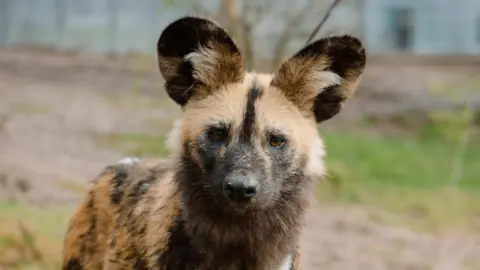
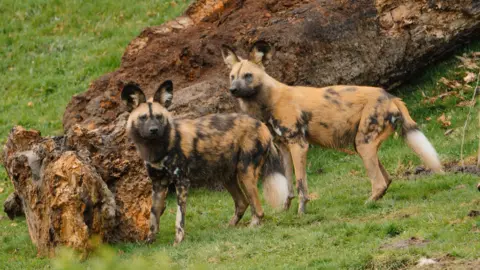
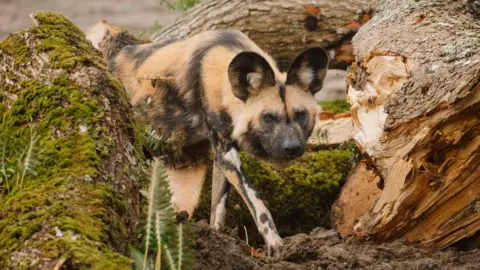
A pack of six endangered African Painted Dogs are settling into their new home "absolutely fantastically", keepers have said.
The brothers, named Ru, Kuwinda, Kenya, Rafiy, Tassili and Tan, arrived at Longleat Safari Park in Wiltshire about two weeks ago.
They are all from the same litter and are four years old.
"They've all got their own little personalities," said Jon Merrington, Longleat's deputy head of animal operations.
 Longleat/Tom Anders
The dogs came from a Kent zoo and form part of the European Endangered Species Programme.
There are thought to only be about 7,000 in the wild, scattered across Sub-Saharan Africa, in countries such at Zambia, Tanzania and Chad.
"Us taking these six boys as a start-up group for ourselves frees up other collections to breed again," Mr Merrington explained.
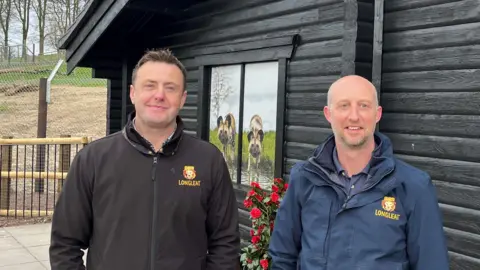
The safari park's new purpose-built area allows members of the public to walk right up to the enclosure, rather than view the animals from their car.
James Dare, Longleat's head of facilities, built the one-acre enclosure.
"I'm really proud," he said, adding that the new feature had been "well received" by visitors.
Mr Merrington told BBC Radio Wiltshire the new animals had become "a firm favourite" with staff.
"They are settling in absolutely fantastically," he added.
 Longleat/Tom Anders
Follow BBC Wiltshire on Facebook, X and Instagram. Send your story ideas to us on email or via WhatsApp on 0800 313 4630.