Artist uses factory waste to create sculptures

 BBC
BBCOne person's waste is another person's treasure and for artist Nicola Ellis, that saying could not be more accurate.
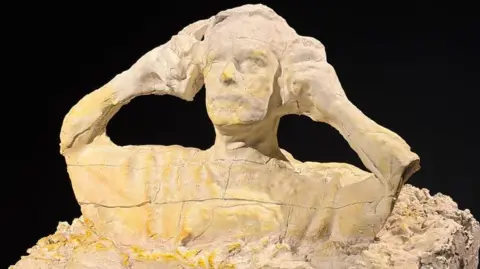
The 34-year-old, from Manchester, creates sculptures out of factory waste as part of her work as artist-in-residence with one of Lancashire's oldest manufacturing companies.
"I just have a lot of respect for people that have put a lot of years into gaining practical skills like fabricators and machine operators," said Ellis, who is also an art teacher at Stretford High School.
Her exhibition - Exercises in Knowing - is now on display at the arts centre in HOME in Manchester until 17 May.
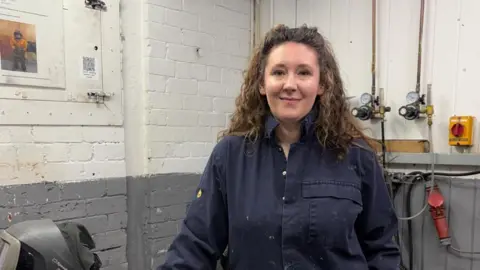
One or two days a week, Ellis creates her artworks from the factory floor of Ritherdon & Co in Darwen.
She began working from the factory through the National Festival of Making more than four years ago and was keen to highlight the manufacturing that is taking place on her doorstep.
"I have had conversations with people where they're like 'manufacturing doesn't really exist in this country anymore'," she said.
"It blows my mind because you think 'if you just drive 30 minutes down the road, Lancashire is a major hub of manufacturing that's still going on now, people are producing things here'."
As part of her work, Ellis has created sculptures from plaster featuring workers carrying out their daily tasks.
"They're just really, really great people and fun," she said.
"It's about bringing some of that into the gallery and sharing that with people that might not necessarily get the chance to meet them or experience the factory floor for themselves."
The exhibition also features videos shot from nine angles around the welding booth at Ritherdon using digital cameras and large works suspended throughout the space.
Matthew Bradley, an electrical and wiring operative, welcomed the opportunity to highlight the manufacturing work that is going on behind the factory walls as part of the exhibition.
"It would be nice for people to still carry on doing [manufacturing], rather than get just some robot, like they do in Japan, just to assemble it all, because it's the human touch," he said.
"A machine will do it the same but then people do it differently - little quirks in it and stuff like that."
Listen to the best of BBC Radio Manchester on Sounds and follow BBC Manchester on Facebook, X, and Instagram. You can also send story ideas via Whatsapp to 0808 100 2230.
