Listed iron footbridge is knocked over by train

 BBC
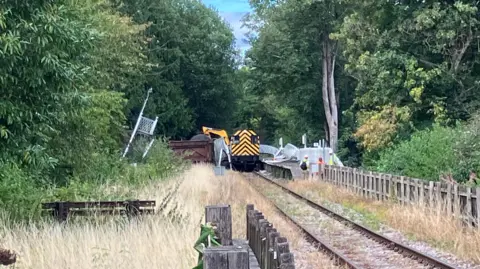
BBCA Grade II listed footbridge has been damaged after being hit by an engineering train on a heritage line.
The 133-year-old Victorian lattice iron bridge at St Mary's Halt in Lydney, Gloucestershire, was restored only in 2019 – and is said to be the last surviving piece of infrastructure from the historic Severn and Wye Railway.
Dean Forest Railway, which runs steam trains and heritage diesel services on the line, said no one was harmed in the incident, which happened just before 11:00 BST on Thursday.
It said its staff and volunteers were now working with the Office of Rail and Road and the Rail Accident Investigation Branch.
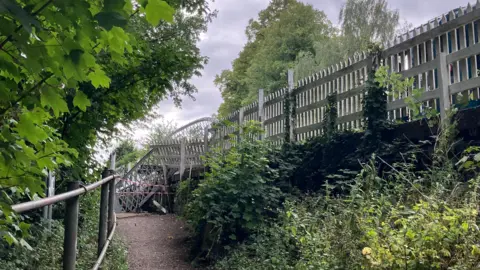
The bridge, north of the A48 and to the west of Lydney Lake, was cordoned off to the public after being knocked over.
Severn and Wye Railway was originally constructed as a tramroad network in the Forest of Dean more than two centuries ago.
The only remaining part of it in use, for heritage trips, spans 4.5 miles (7.2km) from Lydney Junction Station, which is near Lydney Harbour, to Parkend.
Dean Forest Railway said it would be running a reduced service over the weekend.
Follow BBC Gloucestershire on Facebook, X and Instagram. Send your story ideas to us on email or via WhatsApp on 0800 313 4630.
