From deadly diseases to royal visits - the photos showing a hospital's 130 years

 University Hospitals Birmingham NHS Trust
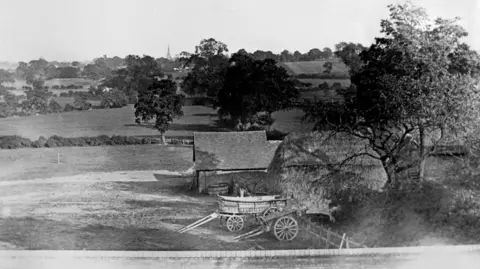
It was an outbreak of what was once one of the biggest killers in the history of humanity, smallpox, which led to a new hospital being built in 1894.
What became the modern Heartlands Hospital in Birmingham took shape as a site for people with infectious diseases on land off Yardley Green Road.
The area was bought for £4,975 from the Church of England and, what was then called Little Bromwich Hospital, admitted its first patient in 1895
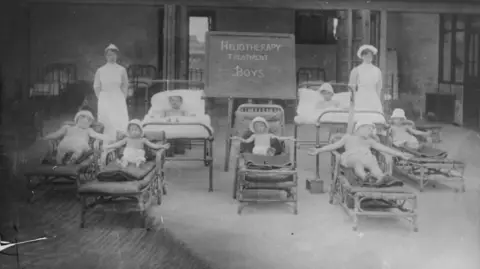
A photo exhibition is being held to mark the hospital's 130th anniversary, showcasing its use from a time of Victorian therapies for typhoid and scarlet fever to the present day of Covid-19 and beyond.
When the site first came into use, it was not constantly occupied but remained on standby between smallpox epidemics.
Nursing staff were seconded from nearby hospitals, when needed.
 University Hospitals Birmingham NHS Trust
A further outbreak of smallpox meant another emergency smallpox hospital was built across the road, called Yardley Green Hospital, which opened in 1902 - treating 500 cases of smallpox over the next give years.
By 1910, Yardley Green Hospital was largely unoccupied due to the eradication of smallpox - but cases of tuberculosis were on the rise.
In 1912, there were nearly 4,000 cases in Birmingham and, to cope with this increase, Yardley Green Hospital became Yardley Green Sanitorium.
 University Hospitals Birmingham NHS Trust
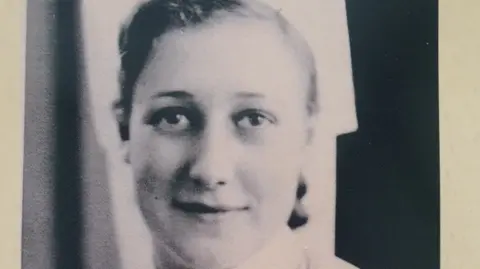
When World War Two broke out, the late Joan Cool was nearing the end of her training as a fever nurse.
She remembered, in memories shared with her family before her death earlier this year, hearing the then-prime minister, Neville Chamberlain, announcing that Britain was at war with Germany.
"I was on duty and the staff and the patients were listening to the wireless," she said.
"I and most of the staff who were off duty spent the afternoon filling sandbags which were built into a protecting wall outside the office which housed our telephone exchange and the general office.
"We were fortunate in those first few months as we did not have any air raids."
 University Hospitals Birmingham NHS Trust
She later moved to Northampton General Hospital but recalled: "I kept in touch with friends there and learned that they did suffer badly when Birmingham was bombed. At least one student was killed and many injured.
"One thing which one of my friends did tell me was that, in spite of damage to the water supplies, they did not have one case of cross infection.
"We were taught a very strict regime of asepsis nursing and this must have been well carried out, as we used to have many different kinds of infectious and contagious diseases in the hospital."
 University Hospitals Birmingham NHS Trust
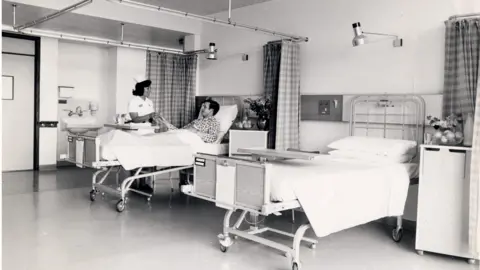
By the 1950s, cases of patients with infectious diseases needing treatment at the hospital began to fall due to vaccination programmes and the wide use of antibiotics.
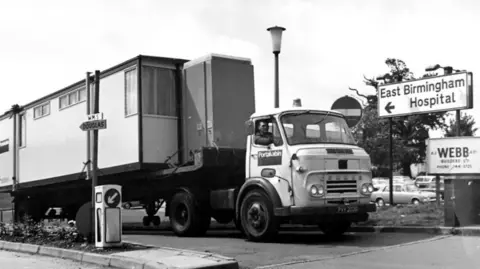
The site became a general hospital and, over the years, added many departments including accident and emergency, renal services and a maternity unit.
By the 1980s, as Birmingham began to see a rise in Aids cases, the hospital went on to become one of the leading centres for HIV care in the country.
 University Hospitals Birmingham NHS Trust
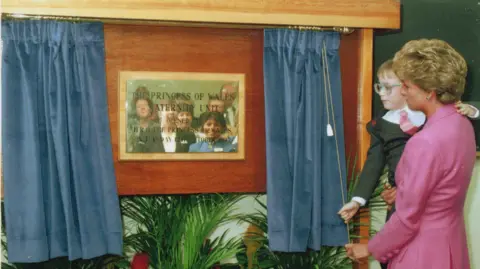
The hospital was named Heartlands Hospital in 1992 and, the following year, Princess Diana opened The Princess of Wales Maternity Unit.
The anniversary in 2025 is being marked this autumn by the University Hospitals Birmingham NHS Foundation Trust, which runs Heartlands.
Photographs will be on display at the hospital for visitors to see, in the main hospital corridor in the coming weeks.
Follow BBC Birmingham on BBC Sounds, Facebook, X and Instagram.
