'Our classrooms are becoming more and more diverse'
 BBC
BBCA rise in "newcomer" children is making schools more diverse and sparking interest in different cultures and religions, teachers have said.
Schools are experiencing a steady growth in the enrolment of pupils from other countries who are used to different languages and cultures.
According to the Department of Education there are now close to 21,000 newcomer pupils in Northern Ireland schools - about 6% of the school population.
That is a rise of around 60% over the past decade, as there were 12,932 newcomers in 2015/16.
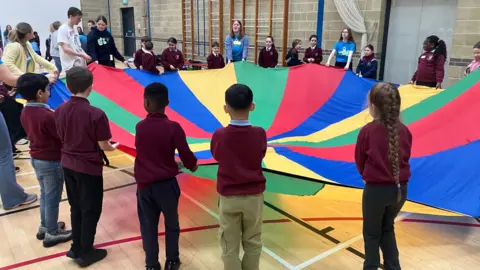
St Mary's University College recently hosted an event for aspiring teachers to meet and learn to work with newcomers - those for whom English or Irish is not their first language.
Two Belfast primary schools with large numbers of newcomer pupils – Fane Street PS and St Paul's PS Beechmount – met at the college to introduce the newcomer children, and children born in Northern Ireland, from the two schools to each other.
Student teachers from St Mary's and Stranmillis University College also took part.
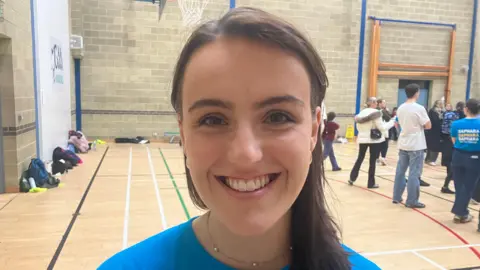
Leah Mullen is a student at St Mary's and has been on placement in schools as part of her course.
She said last year she had three newcomer pupils in her classroom - two from Afghanistan and one from Iran.
"They were just so eager to learn and be involved. They weren't fluent in English at the time, and they didn't want language to be a barrier for them," she said.
"Just because they don't speak our language doesn't mean that they're not of a very high standard of knowledge in their own language."
She added that it was important to "create a safe, nurturing environment".
"When a child comes up to another child it doesn't matter the language, they'll still learn to play together and have fun together," she said.
"They're excited to meet new people, they're excited to welcome people into their own groups."
Allocations had to be made for different religions, different cultures, different celebrations of life, she said.
"It's really powerful when children can wish each other a happy religious festival or something to do with their culture that they may not have grown up with," she added.
"And you see that in primary schools now, with children learning about Eid and Easter at the same time, and Ramadan and Lent.
"It's very powerful to see children being interested in and appreciating each other's religions and cultures at the same time."
Laura Finlay is a student teacher at Stranmillis University College.
She is planning to go on to teach religious education (RE) in post-primary school.
"Northern Ireland is becoming more and more diverse, and our classrooms are becoming more and more diverse," she told BBC News NI.
"These kids need to feel a strong sense of belonging and they need to feel respected by their peers.
"The kids need to feel valued in order to nurture and grow and to learn."
As an RE teacher, she is likely to teach children from a range of religious backgrounds in her teaching career.
Laura said that bringing newcomers and other children together taught "that we all have similarities".
"Yes, we're all diverse and unique but we can have common ground and learn from each other," she said.
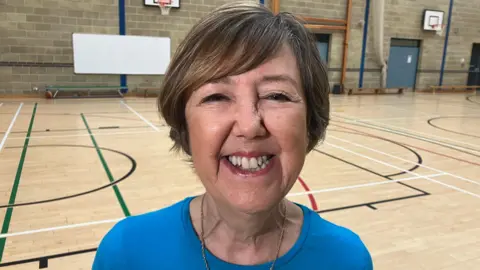
The event at St Mary's was arranged by the education charity Saphara.
Saphara founder and CEO Dr Christine Burnett, who is also a teacher, said the goal was to create a space "where every child can feel valued, included and belong".
But she said it was also to educate young teachers about how best to support pupils.
"When we say newcomer we're meaning those children whose English still isn't at the same level as their peers," she said.
"Many of these children have faced trauma as they've left Afghanistan, Ukraine, Iran, Somalia.
"So helping them feel this sense of being loved and valued and safe within the classroom is really important."
She said that could also help their families settle and become part of the community.
"At a time when their families are also struggling to fit in and to find employment, to find ways of being part of local communities, actually to help these children feel safe and welcome in school is actually a major thing that we can do," she said.
But Burnett said that schools were "uniquely placed" to provide welcoming spaces for children.
"Helping them to feel that they belong is really key," she said.
