'We trap stray cats to stop them breeding'

 BBC
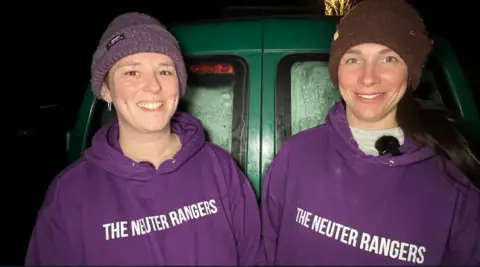
BBCA volunteer group of four women from Oxfordshire is helping to keep the feral cat population under control by trapping strays and taking them to be neutered.
The Neuter Rangers in Wantage was founded by Jess Dymond in response to what she describes as "overpopulation crisis".
She said: "There are too many cats and not enough homes or people wanting to be responsible."
The Rangers take the cats they trap to Vets for Pets in Didcot where they are neutered. Veterinary surgeon Dan Preece explained: "It isn't a new initiative but is much needed to help tackle the rising number of cats."
Before a cat is taken for surgery, it is first scanned for a microchip.
Dymond explains that if a chip is found, the owner is contacted and the cat returned home.
If the cat is not microchipped, then it will have the operation. After the animal is fully recovered, it is taken back to where it was trapped, and released again.
Dymond says the process is called "trap, neuter and return".
She told BBC Oxford that it all started when she found some stray kittens.
"I took the kittens in and kept feeding the mum but didn't realise that neutering feral cats was a thing and then a few months later more kittens turned up.
"That's when I met Stacey who had already been doing feral neutering and we decided to work together."
She explains that spaying stray cats is the best way to stop the spread of the life-limiting illness, feline immunodeficiency virus (FIV) which affects cats' immune systems and makes them vulnerable to other types of disease.
"We wanted to cut the number of cats being born outside suffering, who often die."
Preece agrees, "The health status of these cats when they're not neutered is definitely poorer.
"The reality is a lot of these feral cats, whether they're microchipped or not, are actually not being looked after...and they're basically multiplying."
Neuter Rangers volunteer Stacey Mildren has likened their work to 'emptying the sea with a teaspoon', and would like new rules introduced for cat owners, "I'd like it [to be made] law that people have to neuter and microchip before the cat goes outside."
The rangers rely on donations and fundraising to cover their costs.
"We are networking with other rescues to fund the vets because that's the most expensive part", says Dymond.
Preece says a stray colony of cats can "multiply dramatically and very quickly" if left unchecked.
"It's been happening up and down the country for decades, people don't realise.
"It used to be in the remit of the RSPCA and Cats Protection, but I think the reality is the numbers are so high and the need is so great, so I think they're doing an amazing job."
You can follow BBC Oxfordshire on Facebook, X (Twitter), or Instagram.
