Government challenged over renewable energy planning bids

 BBC
BBCCommunity leaders from across the rural south have come together to fight the Scottish government's position on renewable energy developments.
They now plan to join unified appeals from the Highlands and North East for Holyrood to pause all major planning applications.
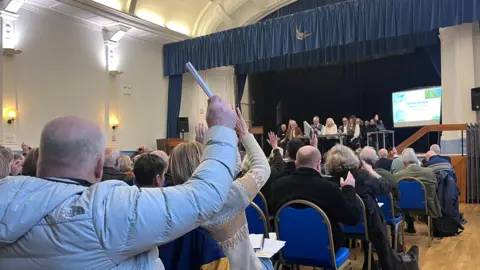
More than 40 community councils and other organisations from across the Borders, Dumfries and Galloway, East Lothian and South Lanarkshire packed into Jedburgh town Hall for the convention.
The Scottish government denied that communities were being ignored during site specific assessments of renewable energy planning applications.
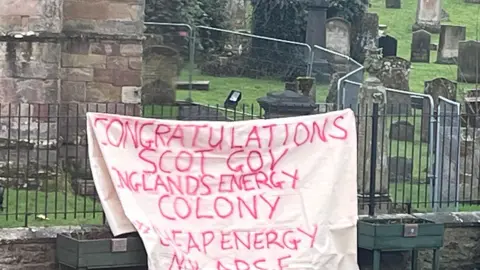
As the transition from fossil fuel to renewable energy gathers pace, the location of infrastructure to support the change has become increasingly contentious.
From a trickle of wind farm applications in areas like the Borders and the Highlands a decade ago, many rural communities are now facing a flood of development proposals for increasingly higher turbines, battery energy compounds, vast solar parks and new electricity sub stations.
Highlands councillor Helen Crawford began a push back last year which led to a unified statement on behalf of 50 community councils in her area being sent to Holyrood.
As well as asking the government to oppose the "industrialisation" of the countryside and protect communities, the appeal called for a planning inquiry, and all major applications to be paused.
Councillor Crawford, who was a guest speaker at the Jedburgh convention on Saturday, said: "We need an urgent review of what is happening to our countryside - people from Shetland to here in the Borders are deeply concerned.
"We are starting to come together and that unified voice is powerful.
"It is becoming increasingly difficult for the Scottish government to ignore what rural communities are saying."
A similar unified statement from community councils in the rural North East has already been sent to the Scottish government.
And, during the Jedburgh meeting, it was agreed that a document for the South of Scotland will be drawn up over the coming months.
Convention organiser Bob Hope, who is chair of Leitholm, Eccles and Birgham community council, said: "The government promised that they would listen to us as communities when considering renewable energy applications, but they haven't and we are now having to come together in an effort to have a voice."
He added the Highland statement had already been put in front of First Minister John Swinney.
Hope said: "The North East has added its voice, and we will be doing the same.
"There comes a time when the Scottish government will have to listen to rural communities."
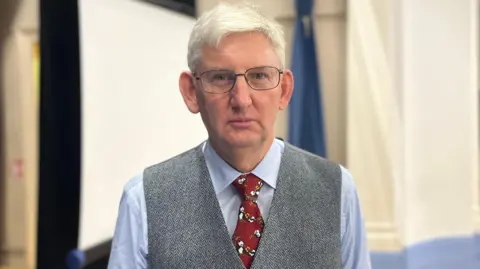
The Scottish government aims to generate around half of the country's overall energy consumption from renewable sources by 2030.
Energy Secretary Gillian Martin, who declined an invitation to the South of Scotland convention, said: "Renewable energy is set to further turbo-charge the economy of Scotland, and will provide many more jobs for the communities across the country as well as wider infrastructure benefits.
"The renewables industry also has a large positive impact on the domestic supply chain which includes many businesses based in Scotland.
"Increased generation of renewable energy is critical to the energy security of the country, and have the potential to reduce our reliance of fossil fuels and the price volatility they come with."
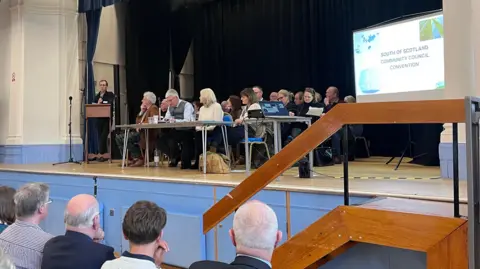
Almost all rural towns and villages across the South of Scotland are currently either fighting planning applications or already have renewable energy developments on their doorstep.
Moffat Community Council is opposing proposals for wind farms and battery energy storage systems.
Chair Mick Barker said: "Although the developers have a strategy for exploiting our landscapes and our communities, our council and government appear to be without any strategy.
"We are facing a Klondyke gold rush for space around our communities that they can develop."
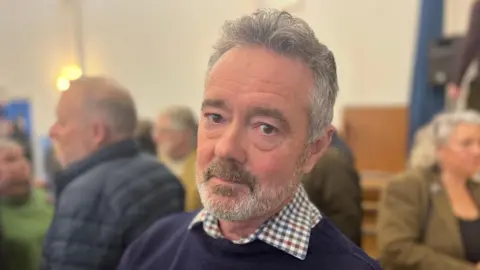
Fiona Nugent believes that developments near her home in Newcastleton are responsible for an increased risk of flooding.
She said: "These developments don't just spoil the views, they damage the area.
"I can tell how bad the river is going to be by the amount of water pouring down the hill - the turbines are all the way around the headwaters of Hermitage Water and Liddel Water.
"Our village now has its back up against the wall."
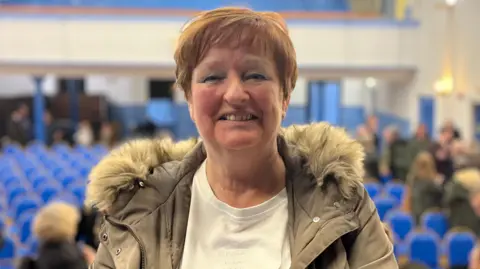
Borders MP John Lamont, who was one of the guest speakers at the convention, is backing a unified statement for the South of Scotland being sent to Holyrood.
He said: "While Westminster determines the need under the Electricity Act, it is absolutely the planning process here in Scotland that approves all these applications.
"The power is very much with the Scottish government and I applaud the communities that are saying they have had enough."
A Scottish government spokesperson said: "Potential impacts on communities, nature and cultural heritage, including the cumulative effects of developments, are important considerations in the decision-making process for developments.
"All applications are subject to site-specific assessments.
"It is also vital that communities see direct benefits from developments, including through shared ownership and community benefit schemes."