Triple killer showed 'lack of remorse' after attacks

 Nottinghamshire Police
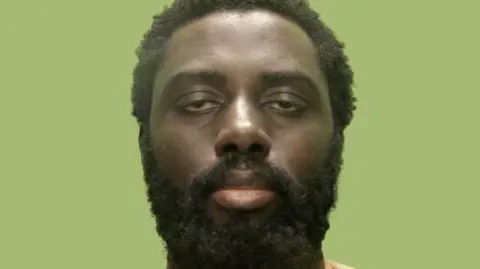
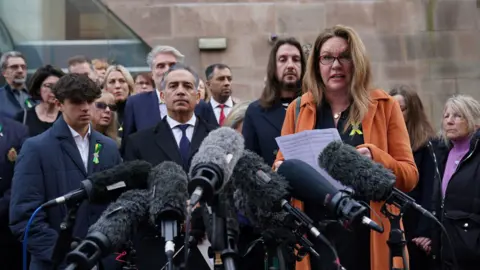
A triple killer showed a "lack of remorse" for his crimes after carrying out deadly attacks in Nottingham, a public inquiry has heard.
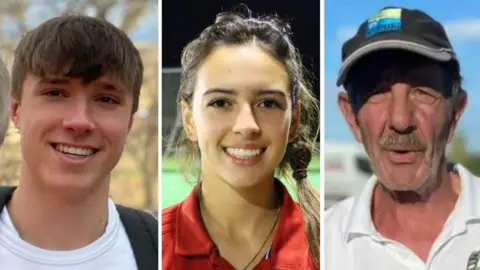
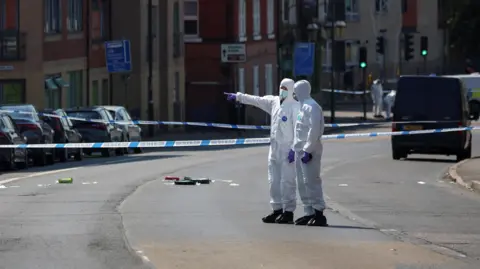
Valdo Calocane - who was diagnosed with paranoid schizophrenia - fatally stabbed Barnaby Webber, Grace O'Malley-Kumar and Ian Coates, before attempting to kill three others on 13 June 2023.
Emily Doherty, a senior social worker who assessed the killer ahead of his transfer to a high-security hospital, told the Nottingham Inquiry he seemed to "disregard" the seriousness of his offences.
The inquiry, being held in London over nine weeks, also heard how Calocane told a doctor following his arrest that he was hearing voices "all the time".
On Thursday, the inquiry heard details of Calocane's presentation in custody following his arrest on the day of the attacks.
Calocane was transferred from HMP Nottingham to HMP Manchester in June 2023 where he was assessed by Doherty on 16 August, and separately by forensic psychiatrist Dr John Milton, to see if he could be moved to Rampton Hospital, a secure hospital.
 Supplied
In her interview with Calocane, she said they spoke about what murder meant and that he was "quite passive about it".
"He didn't present as somebody who was wholly aware of what implications a murder charge could have," she said.
She added: "You could interpret it as a lack of empathy, or a lack of remorse or a lack of understanding."
In a report shown to the inquiry, Doherty recorded: "When asked about how he felt about his offence, Mr Calocane responded with, 'Everything happens for a reason. There is no justification. Everything transpires for a reason'.
"Whilst he displays little to no remorse, I had the impression he had no awareness of the seriousness of his offence."
She said Calocane was initially engaging well and was "quite polite" until she mentioned letters he wrote that had been discovered in his cell - which detailed conspiracies around mind control and hearing voices.
"His demeanour shifted rapidly," she said.
"His facial expression changed, he became very defensive and paranoid about me having read those letters and who could possibly have access to them."
Doherty said she had no access to Calocane's GP records, police records or papers from the pending criminal proceedings.
The inquiry also heard Calocane spoke to Doherty about his previous studies at the University of Nottingham, saying he enjoyed his degree, but did not mention having to take a break from his degree or his earlier assaults on housemates.
 Reuters
Milton said in his evidence that he was not given access to Calocane's medical records, held by Nottinghamshire Healthcare NHS Foundation Trust, but that he was aware Calocane had previous admissions to hospital.
He added that there was a "long period where we've no idea what his mental state was", before the attacks, when Calocane had been discharged from local mental health services.
However, he told the inquiry: "Even though those notes weren't available I still felt I had sufficient information to draw the conclusions I did."
The forensic psychiatrist said it was his "fundamental view" that Calocane was "a man presenting with psychosis on the basis of the symptoms".
The inquiry heard Calocane's notes suggested he was discharged to his GP "due to non-engagement".
In an email written by Milton, which was shown to the inquiry, he said that was "never a good plan" and added it was "likely to be a criticism for the trust to face."
The inquiry heard that during his time in custody in Manchester, Calocane was violent towards prison officers and had to be placed on a segregation unit.
 PA Media
Calocane was separately assessed on three occasions by another forensic psychiatrist, Dr Kripa Ullal, from Greater Manchester NHS Mental Health Foundation Trust.
Her evidence was read to the inquiry on Thursday.
Ullal described how during one review in August, Calocane opened up about hearing voices.
She said in her statement: "He said he started hearing voices in 2020, mainly male voices.
"He described them happening all the time including at the time of the assessment.
"When I asked what happened when he started hearing voices he stated, 'Got into trouble'.
"He told us that he was hearing these voices all day."
Ullal added that after direct questioning, it was understood the voices were "commanding in nature and were a running commentary commenting on his actions".
During that review, Calocane also said he was experiencing visual and olfactory hallucinations - smelling things that are not present - as well as experiencing memory loss.
Calocane was transferred to Rampton Hospital before his sentencing.
He is currently serving an indefinite hospital order at Ashworth High Secure Hospital, after pleading guilty to manslaughter on the grounds of diminished responsibility and to three counts of attempted murder.
The inquiry continues.
Listen to BBC Radio Nottingham on Sounds and follow BBC Nottingham on Facebook, on X, or on Instagram. Send your story ideas to eastmidsnews@bbc.co.uk or via WhatsApp on 0808 100 2210.
