Metro head promises 'world-class transport system'

 BBC
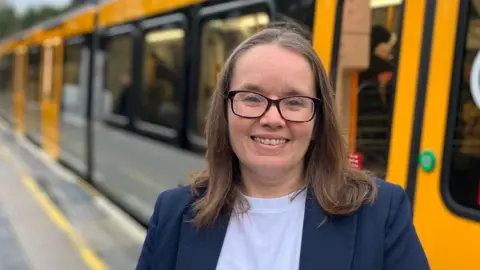
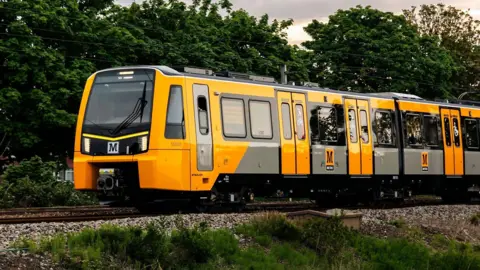
BBCThe boss of the Tyne and Wear Metro has promised to deliver a "world-class transport system" one year after the first of a fleet of new trains entered service.
So far 23 of the 46-strong fleet have become operational, with the rest of the Swiss-built trains expected to enter service in 2026.
The new trains have experienced teething problems, including a faulty door and leaking air-conditioning that led to some being temporarily withdrawn.
Metro operator Nexus managing director Cathy Massarella said she hoped older rolling stock would be completely replaced by next summer, saying: "We're in the hardest stage of this project at the minute, where we're managing old trains, bringing in new trains."
Ms Massarella insisted the introduction of the new trains had been a success, despite the problems.
She said: "As we bring them on, as our technicians and our drivers get more and more familiar with them, reliability will improve and it will be the best our customers have known for many, many years."
But she also warned plans to upgrade the Metro's outdated signalling system were also vital to the network's future.
"We need to replace this signalling system by 2030 to avoid being in the same situation that we've been in with the fleet where it was allowed to get so old it really affected our reliability."
 Nexus
NexusAlistair Ford, of the North East Public Transport Users Group, said the Metro still needed to rebuild the confidence of travellers unhappy with cancellations and delays, caused in part by older, more unreliable trains.
"The system really wasn't something that people could rely on to get to work on time, to get to school, to get to hospital appointments," he said. "So the new trains we hope will really start to bring back that reliability."
But he said the new trains had been a "great development for passengers".
"They're much smoother, they're much more efficient and much more accessible for wheelchair users and people with luggage and bikes."
