Gaelic initiative focuses on creating jobs in language's heartlands

 Getty Images
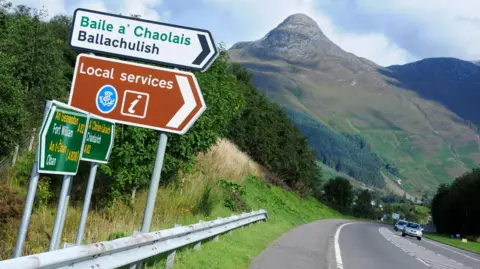
A new approach to supporting Gaelic is to focus on creating jobs and strengthening economic growth in areas where the language is traditionally spoken.
An action group called Tog - which means "to raise" in Gaelic - will bring together public bodies, local authorities and business leaders.
The Scottish government initiative will aim to help businesses to use Gaelic in their work.
Launching the action group in Inverness, Deputy First Minister Kate Forbes said Tog would put jobs and local prosperity at the heart of Gaelic language support.
Ms Forbes said the project would build on recent progress including the Scottish Languages Act 2025, which made Gaelic an official language of Scotland on St Andrew's Day.
Action group member Donald Maciver said Gaelic was one of Scotland's greatest untapped economic assets.
"When we place our language, culture and history at the heart of skills, enterprise and community development, we open doors to entirely new opportunities," he said.
"This isn't about looking back - it's about creating a better future.
"Tog enables us to turn our heritage into new industries, new careers and renewed confidence in the places we call home."
Latest census statistics show that 130,161 people in Scotland had some Gaelic skills in 2022, an increase of 43,105 from 2011.
The Scottish council with the highest proportion of Gaelic speakers was Comhairle nan Eilean Siar (Western Isles) with 57.2% having some Gaelic skills.
This was far higher than the next highest council areas, Highland (8.1%) and Argyll and Bute (6.2%).
The Scottish government has allocated £30m for initiatives to grow the language in 2025-26.
