'People see an epileptic fit and think it's drugs'

 BBC
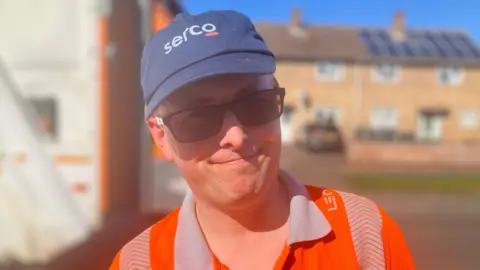
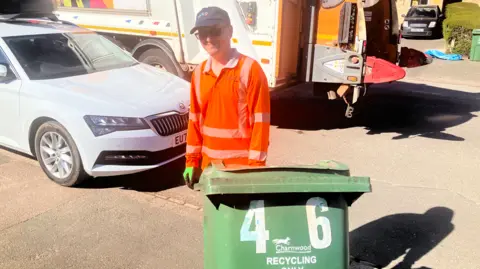
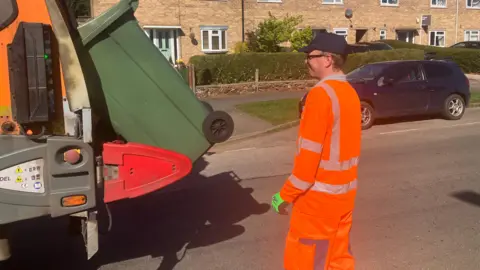
BBCAs refuse worker Robert Butler loads bins on to a lorry as part of his day job, there is no sign of the epilepsy he has lived with for more than 20 years.
Robert, from Sileby in Leicestershire, is on a mission to raise awareness of the condition, as he says "misconceptions can be dangerous".
He runs a monthly epilepsy support group, and many people living with the condition have told him that during a seizure passers-by have not helped, as they assume they have been 'drinking or taking illegal drugs'.
The 38-year-old said: "If you see someone having an epileptic seizure, don't just walk away."
Robert's message comes on Purple Day, an international day where people raise awareness of the condition.
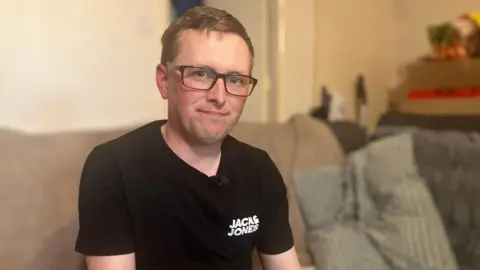
Epilepsy Action said every year in the UK about 1,000 people die from causes related to epilepsy.
Epilepsy symptoms often start in young children and people over 50, but anyone can develop the condition at any age, the charity said.
Robert, who also volunteers as a flood warden in Sielby, said: "I have heard that many times in my [support] group that a person has had an epileptic seizure in the street and people will walk past instead of helping."
He has had two types of seizures - "tonic-clonic", where a person shakes and falls to the floor, and "juvenile myoclonic", causing hands and arms to jerk suddenly.
He has had four tonic‑clonic seizures in total, and experienced "one or two" juvenile myoclonic seizures per month.
Epilepsy Action said one in 100 people have epilepsy.
Robert said: "It's quite shocking how many people have it. You don't see epilepsy - it's a hidden disability.
"Unless they have one [a seizure] in front of you, or they tell you they've got it, you don't realise."
Robert said people were often surprised to learn he had the condition.
"Because they think people with epilepsy don't work, and I work."
He added: "I have worked since I left school at the age of 16."
He said he first started as a street cleaner but his epilepsy got worse.
"Serco started realising this and took me from street cleaning, where I was alone a lot of the time, to the bins, where I am with a team.... [which] I am more comfortable with."
He added: "But I have never had seizures at work - they tend to happen in the early hours of the morning."
Robert said he wanted to see the "understanding and education" of epilepsy change, and for the condition to be researched further, "especially the medication people take".
Jon Eaton, from Epilepsy Action, said 75 years ago, when the charity was founded, people with the condition were put in epilepsy colonies.
He added: "Luckily, we're not there now. There is much more awareness, but there is a chronic misunderstanding of the scale and seriousness of epilepsy.
"We found in our most recent research that only one in five people realise the scale of epilepsy and the fact it is a really serious condition."
He said there were more than 60 types of seizure, with six "main kinds".
"There are also lots of different syndromes associated with epilepsy."
Epilepsy Action has a CARE acronym to help people know what to do when they encounter someone having a seizure.
This is "comfort", by cushioning their head with something soft to protect them from injury and to keep them comfortable, and to take "action", by starting to time the seizure and clear the area of anything that might be harmful.
Then you should "reassure" them as they come round.
The final word is "emergency", which stands for calling 999 if a seizure continues for more than five minutes, the person has not regained consciousness, has trouble breathing or has never had a seizure before.
Listen to BBC Radio Leicester on Sounds and follow BBC Leicester on Facebook, on X, or on Instagram. Send your story ideas to eastmidsnews@bbc.co.uk or via WhatsApp on 0808 100 2210.
