Nvidia faces gamer backlash over 'breakthrough' AI graphics feature


 Nvidia
A new feature from chip-maker Nvidia that promises cinematic-quality graphics using AI has prompted a backlash online, despite the company claiming it would "reinvent" what is possible in video games.
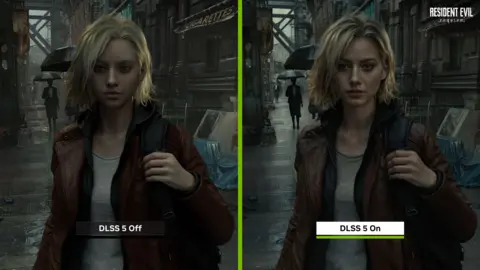
Nvidia said the DLSS 5 tool, which will be rolled out this autumn, would allow games to have "photoreal computer graphics previously only achieved in Hollywood visual effects".
In images shared with the media, the tech was shown radically changing the appearance of characters and environments in games such as Resident Evil Requiem and Hogwarts Legacy.
But some industry professionals said its use of AI went too far, making graphics feel airbrushed and hollow.
"Clearly this is a massive glow-up for environments," said video game critic Alex Donaldson on Bluesky.
"The character stuff is uncanny & weird tho, & it feels like artistic expression risks being squeezed out."
Jeff Talbot, a concept artist at Gunfire Games, posted: "This is NOT the direction games should be going in. Each DLSS 5 shot looked worse and had less character than the original."
Nvidia has become a household name because of the advanced microchips it makes for AI data centres.
But the firm was originally focused on gaming and is still a driving force of innovation in the industry.
Unveiling DLSS 5 at its main annual conference in Silicon Valley, Nvidia said the tech was the company's most "significant breakthrough" in computer graphics since it introduced real-time ray tracing in 2018.
Ray tracing is a rendering technique that transforms the look of light, shadows and reflections in games.
'We are reinventing computer graphics'
The tech giant said DLSS 5 would use AI to generate "photoreal" graphics of things like hair, fabric and skin, along with more realistic environmental lighting conditions.
"We are reinventing computer graphics once again," said Nvidia boss Jensen Huang, adding that DLSS 5 would deliver "a dramatic leap in visual realism while preserving the control artists need for creative expression."
Nvidia said the tech was supported by major publishers and game developers including Bethesda, CAPCOM and Warner Bros. Games.
There is growing anger in pockets of the gaming community about the increased use of AI-generated content in titles, which has resulted in some studios scrapping games or promising to limit their use of the technology.
Running With Scissors, the publisher behind the Postal shooter franchise, pulled a forthcoming game after critics said it had used AI-generated graphics.
The role-playing game Clair Obscur: Expedition 33 won Game of the Year at the Indie Game Awards, but was then disqualified after it emerged its developer had experimented with AI-generated images but ultimately not used them.
Some, however, have defended AI content, arguing it is pushing the industry forwards.
Charlie Guillemot, joint chief executive of Vantage Studios, which makes Assassin's Creed Shadows, said DLSS 5 would make the game feel more immersive.
"The way it renders lighting, materials and characters changes what we can promise to players. On Assassin's Creed Shadows, it's letting us build the kind of worlds we've always wanted to."
