'They arrive as young girls and leave as radicals'

 Courtesy of The Mistress and Fellows, Girton College, Cambridge
The story of a trailblazing 19th Century physics student who set up an all-women fire brigade has inspired a new musical.
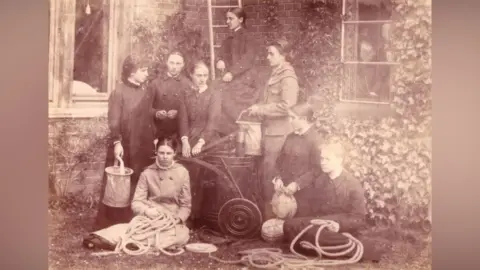
Hertha Ayrton founded the brigade in 1879, after she witnessed a haystack go up in flames next to Girton College, then a women's college at Cambridge University.
The musical, which will be premiered at the Lincoln Arts Centre, features the stories of four other pioneering science students.
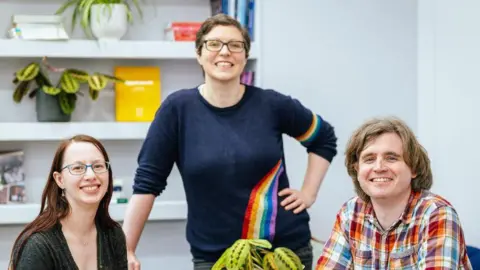
"They arrive as young girls and they leave Girton College as flaming social justice radicals," said co-creator and lyricist Helen Arney.
 Birmingham Hippodrome/Angela Grabowska
Arney first heard about Ayrton (1854-1923) during her physics degree and, years later, chose her for an episode of BBC Radio 4's Great Lives.
She thought she knew all about the woman's life - Ayrton, who came from a Jewish family, supported her widowed mother and siblings as a teacher, before self-funding her way through Girton and eventually became the first woman nominated to become a fellow of the Royal Society
But Arney was amazed when the show's expert guest mentioned how she co-founded the all-female fire brigade.
"That is the moment I thought, well, that's it, that is the musical," she said.
"You can tell her whole life through this one moment where she sees a haystack go on fire in the field next to Girton and rather than thinking 'someone else will deal with that' she thought, 'I'm going to start a fire brigade'."
The students approached the London-based Metropolitan Fire Brigade for training, which initially turned them down.
 Courtesy of The Mistress and Fellows, Girton College, Cambridge
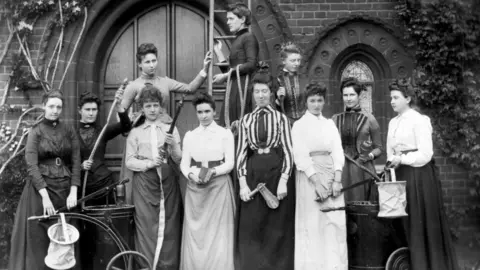
"They had to prove their worth, at which point they were given instruction manuals, and they weren't just throwing buckets, they were running rope drills, they learned to tie fireman's knots, they had a fire appliance, they had a fire bell, they met every week - it was a serious thing," said the musical's composer, Jenni Pinnock.
Dr Elisabeth Kendall, the mistress of Girton College, explained it was "highly structured, with captains, sub-captains and student corridor teams".
"It is entirely in keeping with the college's fearless spirit to have tackled the 19th Century version of a risk assessment by assembling its own all-women's fire brigade," she added.
The all-women Girton College fire brigade ran from 1879 to 1932, training every week, although they were only ever called to put out one fire.
Women were recruited to the fire service during World War Two, but it was not until 1982 that the UK's first full-time woman firefighter - 17-year-old Josephine Reynolds - joined Norfolk Fire Service.
 Getty Images
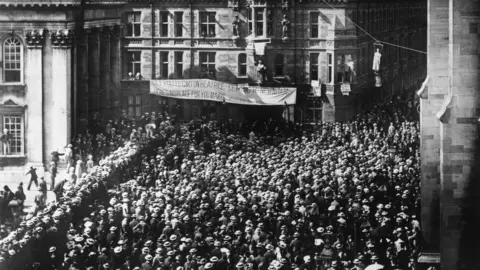
Girton was the first Cambridge women's college, but the university refused to grant degrees to women until the late 1940s, the last British university to do so.
Brian Mackenwells, the musical's book writer, said: "We've done a lot of research into the period and into these women's lives... and were super-interested in how in those three years at Girton, they learned to push against the rules of society.
"One of the key historical moments in the show is there was a vote in Cambridge University in 1897 on the question of should women be allowed a degree... and when the men struck it down, there was a full-on riot in Cambridge where straw effigies of women on bikes were set fire to."
Arney said part of the justification for denying women an education was that "if women used their brains too much their ovaries would shrivel, they wouldn't be good mothers, so it was phrased as actually helping society and protecting women".
Kendall said: "This was more than a fire brigade - it was an act of defiance.
"At a time when women at Cambridge were not even awarded degrees, Girton's women were running complex organisations, problem solving and demonstrating leadership."
 Birmingham Hippodrome/Danny Kaan
The musical's five protagonists were not necessarily students at the same time.
"Hertha was our way in and then we realised, oh, we want to have some other characters," explained Arney.
"So it's become a musical about the women, their friendship and how they go about trying to change the world for the better."
Pioneering Girton scientists
- Astronomer Annie Russell Maunder became an eclipse chaser and secured employment at Greenwich Royal Observatory - and was sacked on her marriage
- Austrian-born chemist Ida Freund arrived at Girton with a prosthetic leg and went on to become the UK's first woman chemistry professor
- Botanist Ethel Sargant was expected to become her mother's carer after Girton, doing so in between setting up a botany lab in a garden shed
- Mathematician Charlotte Scott grew up in Lincoln and later taught at the US women's college Bryn Mawr, despite developing a severe hearing impairment
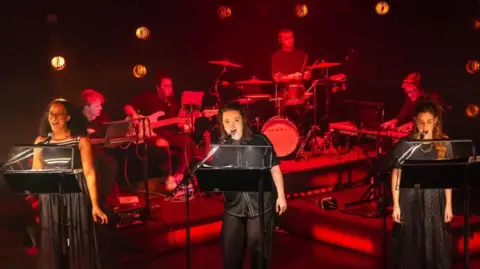 Birmingham Hippodrome/Danny Kaan
Arney said: "The women you read about are such high achieving, prestigious people, but we get to meet them when they're still working out who they are and making mistakes and just being young women trying to have fun."
And Pinnock wanted to reflect that in the music, giving it "a very contemporary musical theatre feel that's very accessible... to make it catchy and fun".
The play was developed with the support of the Birmingham Hippodrome new musical theatre writers' group, Lincoln Arts Centre's innovate artist scheme and students from the University of Lincoln musical theatre department - the university named a research centre after Scott in 2018.
The Cambridge First All-Ladies Fire Brigade will have its world premiere on 10 May.
Do you have a story suggestion for Cambridgeshire? Contact us below.
Follow Cambridgeshire news on BBC Sounds, Facebook, Instagram and X.
