New one-stop memory clinic 'to improve wait times'

 Lincolnshire Partnership NHS Foundation Trust
A new one-stop memory assessment clinic has opened to tackle "higher-than- average wait times".
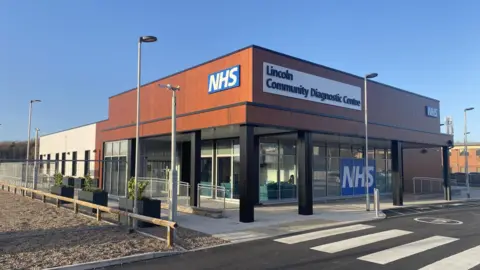
Taking place on Saturdays at the Lincoln Community Diagnostic Centre, on Beevor Street, the assessments are part of an NHS-funded 12-month trial.
Patients will be able to access all the diagnostic tests they need, as well as receiving a diagnosis and a conversation about treatment options during the same visit.
Georgina Ellis, service manager for the memory assessment and management service at Lincolnshire Partnership NHS Foundation Trust, said: "Launching this pilot in Lincoln gives us a real opportunity to rethink how memory assessments are delivered."
She added: "By offering a complete service in a single visit, we're aiming to reduce delays and make the experience more accessible for patients and their families."
The trust has partnered with Lincolnshire Community and Hospitals NHS Group to create the service, andsaid the decision for the location was "strongly influenced" due to Lincoln's "higher-than-average wait times for memory assessment across Lincolnshire".
The clinics will run from 09:00 to 17:00 BST on Saturdays and are expected to accommodate six to eight patients per day.
The Lincoln Community Diagnostic Centre opened in December and offers a range of diagnostic services including MRI and CT imaging, X-rays and medical ultrasound scanning.
Listen to highlights fromLincolnshire on BBC Sounds, watch thelatest episode of Look Northor tell us about a story you think we should be covering here.
Download the BBC News app from the App Store for iPhone and iPad or Google Play for Android devices
