Hidden cameras reveal what hedgehogs really get up to after dark
British gardens matter more than ever for hedgehogs, according to a study of the secret night life of the spiny mammals.
Scientists gave householders wildlife cameras to spy on hedgehogs in more than 400 gardens in Chester in one of the largest studies of its kind.
The animals turned up in more than half of gardens studied, with food a powerful attraction.
As numbers fall, scientists say these night-time visits could hold vital clues to the nocturnal mammal's survival.

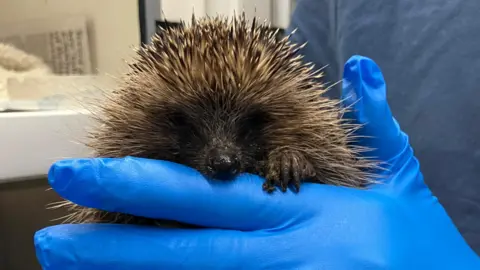
Hedgehogs are listed as vulnerable to extinction in the UK, with populations falling, particularly in rural areas, due to habitat loss, intensive farming and death on roads.
Lead researcher, Kelly Hitchcock, of Nottingham Trent University and Chester Zoo, said: "The pattern that we've seen is that hedgehog populations in rural areas have declined – gardens seem like a really important habitat – so it's really important that people are aware of that."
The researchers analysed thousands of images from 415 gardens, alongside each garden's specific characteristics, to examine how often hedgehogs were detected and which features most influenced them stopping by.
Leaving food out was the biggest factor, but the experts say providing wildlife friendly features is essential too as hedgehogs struggle to find space to hibernate and breed.
These include patches of wildflowers, native plants, leaf litter and log piles, and holes in fences so hedgehogs can roam over large areas.
If you are providing wildlife food, be mindful of what that food is and whether it's suitable for hedgehogs, said Hitchcock.
"It's not that we want to say everybody feed hedgehogs because we don't know the long-term impacts," she added.
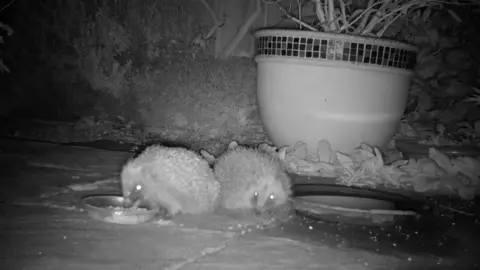 Chester Zoo/Nottingham Trent University
The study comes as increasing numbers of hedgehogs need help from rescue charities as they lose their natural habitats.
Any hedgehog out in the day is a cause for concern – as are hedgehogs seen limping or injured, said Sarah Liney of the charity, Hedgehog Helpline, in South Wales.
"If we can release a healthy hedgehog back into the wild, to be the hedgehog it is supposed to be, and it can produce or help to produce more litters then at least that is going to help with the hedgehog population to continue for years to come within our country," she said.
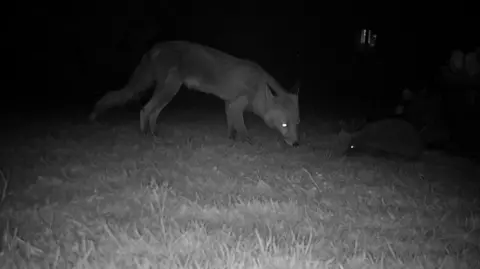 Chester Zoo/Nottingham Trent University
Conservation biologist, Dr Rebecca Thomas, of Royal Holloway, University of London, who is not connected with the study, said gardens are increasingly becoming important habitats for hedgehogs as numbers fall in the countryside.
"The best thing people can do for hedgehogs in gardens is to create wild spaces for them - areas where they can over-winter, mate, live happily, and hopefully we can keep the populations going in these suburban environments," she said.
And if you do choose to feed hedgehogs use appropriate food, such as cat biscuits, and practice good hygiene, she said.
"In the wild hedgehogs wouldn't come together too much... and obviously hedgehogs don't need anything else affecting their populations through the spread of disease."
The research is published in the journal Urban Ecosystems.
