Critical repairs at national sports centre approved

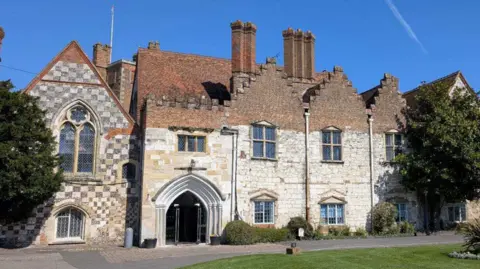 Martin Ashley Architects/Serco
A plan to carry out "essential conservation" at a Grade I listed manor house that is used as a national centre of excellence for sport has been approved.
Bisham Abbey, in Bisham, Berkshire, will benefit from critical masonry and window repairs and work will seek to correct previous "harmful" conservation efforts.
The site, close to the River Thames, is currently used by Sport England as one of its national centres and is also used for conferences and other private functions.
The conservation project was approved by the Royal Borough of Windsor and Maidenhead council earlier this week.
 Catherill Ivill/The RFU Collection/Getty Images
The centre will remain fully open as the work is carried out.
Martin Ashley Architects, which submitted documents for the planning application, said repairs "will halt ongoing decay, remedy harmful past interventions and secure the Abbey's most vulnerable fabric", including masonry, windows and chimneys.
A manor house was first built on the site in the 13th Century when it was used as a Knights Templar preceptory.
Following the suppression of the Templar, the Abbey became an Augustinian priory but was surrendered to the Crown during the dissolution of the monasteries in the 16th Century.
Henry VIII granted the house to Anne of Cleves as part of her divorce settlement from him, and it was later bought by the Hoby family, who lived there until 1768.
Minor restorations were undertaken in 1859 and it was altered in the mid-20th Century, according to Historic England.
The site has been in public ownership since 1946 and was listed in 1955.
