Should teenage killers like Kian Moulton be named?
A decision to name the teenage murderer of 12-year-old schoolboy Leo Ross has reopened the question of whether young people who commit serious crimes should be publicly identified.
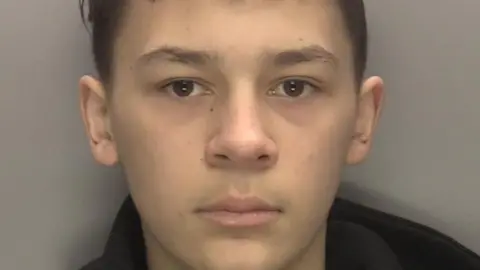
Kian Moulton was 14 when he stabbed Leo in the stomach as he walked home from school in Birmingham in January 2025. He was sentenced to at least 13 years in prison at Birmingham Crown Court on Tuesday.
Now 15, the court heard Moulton was "a young man with formidable mental health problems" but was aware of the consequences of his actions.
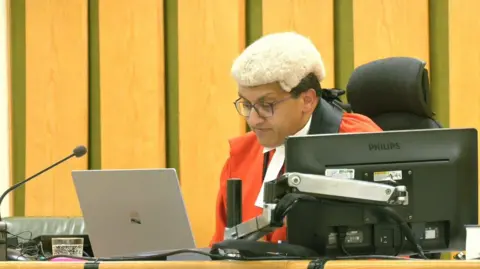
A court order protecting his anonymity was lifted by Mr Justice Choudhury following applications by news organisations including the BBC and Birmingham Live.
The judge cited a strong public interest in the case that outweighed arguments made by Moulton's lawyers to protect his identity, adding that he had shown no obvious signs of remorse or rehabilitation.
An escalation in the teenager's offending also played a part in his decision, with Moulton also admitting attacks on three elderly women in the days before Leo's murder.

 PA Media
The question of whether naming young offenders serves the public interest remains contested.
James Treadwell, a professor of criminology at the University of Staffordshire, said he had some sympathy with the argument that naming young offenders should be carefully considered, but believed this case involved "a significant pattern of behaviour".
"[The events] tragically culminated in the murder of Leo Ross but he'd committed instances of grievous bodily harm against elderly people before he perpetrated that murder," he said.
Treadwell argued there was value in the public knowing who Moulton was if he is eventually released, adding his rights should "never outweigh those of the community to live as safely as they can".
 Family
Penelope Gibbs, director of the Transform Justice charity, acknowledged the crimes were "absolutely horrific", but suggested public curiosity was not the same thing as the public interest.
She argued that all the evidence suggested that naming young perpetrators threatened their rehabilitation.
"I'm personally interested in who did these crimes just as everybody is," she said. "But my interest isn't necessarily the public interest, nor in fact future victims' interest.
"We've got somebody quite young who has all their life ahead of them to be rehabilitated and there's really good evidence that young people who commit horrific crimes can be rehabilitated."
 West Midlands Police
Dr Piers Von Berg, a senior lecturer in human rights law at Birmingham City University, said judges must carry out a "balancing exercise" between the potential harm to the child, and the harm to the public of not lifting restrictions.
He said having a young person's identity made public was "to all intents and purposes irreversible, in the world of the internet and social media".
But he added that judges would also consider public concern, particularly around issues such as knife crime, and the desire to prevent misinformation.
On Thursday, the Attorney General's Office said it had received multiple requests for Moulton's sentence to be reviewed under the Unduly Lenient Sentence scheme.
A spokesperson added those requests would be considered to see if the minimum term could be increased.
Follow BBC Birmingham on BBC Sounds, Facebook, X and Instagram.
