Nigerian police arrest 15 after viral videos of alleged sexual assault at festival

 EPA
EPAPolice in Nigeria say 15 people have been arrested following allegations of sexual assault at a community festival in the southern Delta state.
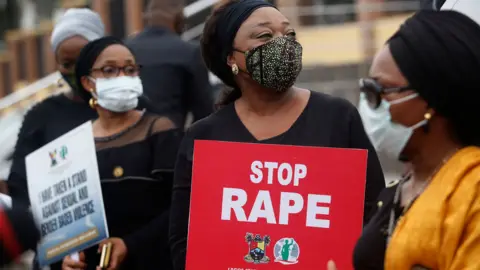
Videos circulated online showing young men openly attacking women who were on their own. The clips sparked widespread anger, leading to the hashtag #StopRapingWomen to trend on social media, and renewed calls for accountability over gender-based violence.
Delta state police have rejected claims circulating online that the Alue-Do festival in Ozoro was a "rape festival".
Local spokesperson Bright Edafe told Channels TV on Monday that no formal report of rape had been made in connection with the festival.
The videos, taken during the Alue-Do fertility festival in the city of Ozoro, show groups of young men chasing, stripping, grabbing and assaulting women in public spaces, in some cases while people are filming.
The police spokesman described the scenes as "alarming, disgusting and embarrassing" and said they had arrested several suspects identified from the videos and transferred them to the state Criminal Investigation Department (CID).
Edafe told Channels: "We have spoken to four girls and all of them said nobody raped them."
Among those detained is a community leader widely named as the organiser of the event.
The police say investigations are continuing.
Some witnesses, activists and residents say women were warned not to go out during parts of the festival, and that those seen outside were deliberately targeted.
This has raised concerns that sexual violence may have been organised or tolerated under the cover of tradition.
Rights groups say that even if it is not clear whether anyone was raped, the documented acts - including forced stripping, grabbing and public humiliation -constitute serious gender-based violence under Nigerian law.
The King of Ozoro has rejected suggestions that the Alue-Do festival condones sexual assault, describing it as a fertility rite that was "misinterpreted and abused by some youths".
Traditional leaders also say that no rape occurred. They admit that two women were harassed, but stressing that such acts are criminal, not cultural.
The Delta state government has backed this view, adding that no recognised festival in the state permits sexual assault and that any violence should be treated strictly as a crime.
Nigeria's First Lady Oluremi Tinubu, who has roots in Delta state, condemned the alleged assaults and urged security agencies to prosecute all offenders.
In a signed statement, she said no culture justified violating women and girls, praised police for recent arrests, and encouraged victims to seek medical and psychological support.
 Getty Images/BBC
Go to BBCAfrica.com for more news from the African continent.
Follow us on Twitter @BBCAfrica, on Facebook at BBC Africa or on Instagram at bbcafrica
