Risk assessment ahead of fatal water trip 'not sufficient', inquiry told

 COPFS
COPFSA risk assessment for a River Tay boarding trip which led to a 12-year-old boy's death was not "suitable and sufficient", an inquiry has heard.
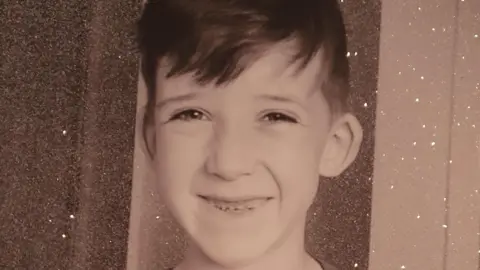
Kayden Walker, who could not swim, died after becoming trapped on the upstream side of a weir during a day trip with the Church House community group in 2019.
The fatal accident inquiry (FAI), follows the prosecution of Outdoor Pursuits Scotland Ltd, who were fined £10,000 in October 2024 for a contravention of health and safety legislation which led to Kayden's death.
The joint FAI is also examining the death of outdoor pursuits instructor Ruaridh Stevenson, 39, in another activities event in Clackmannanshire in 2024.
The second day of the inquiry heard from Katrina Pearson, an environmental health officer with Perth and Kinross Council, who was involved in the investigation following Kayden's death.
Asked by procurator fiscal depute Catherine Fraser whether she would consider the weir to be a "high risk location", she replied "absolutely" and said the main hazard would be body entrapment.
However, she said a number of reasonable precautions could have been taken to prevent the incident.
She told the inquiry: "In the first instance I would expect that the risk assessment for the activity would have been suitable and sufficient, which it was not in this case.
"If it was, they would have known about the hazard of the weir and the potential for body entrapment and also the risk to non-swimmers and to swimmers."
High-risk location
Fraser said she would expect that "sufficient controls" would be put in place to mitigate this, such as "avoidance of the weir", not taking non-swimmers to such a high-risk location, or "additional supervision or robust safety briefing."
The inquiry at Falkirk Sheriff Court previously heard that Kayden, from Glasgow, was separated from his board during a river boarding session near Stanley, Perthshire, on 28 July 2019.
After being pulled from the water, he was airlifted to Ninewells Hospital in Dundee and then transferred to the Royal Hospital for Children in Glasgow where he died the following day.
Aimee Doran, representing Outdoor Pursuits, put it to Pearson that she was commenting on reasonable precautions from a health and safety point of view and without having any particular expertise in water-based activities.
Pearson replied: "Yes, from the health and safety point of view, not technical aspects."
 Central Scotland News Agency
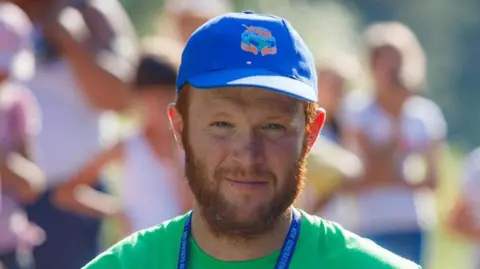
The FAI is also considering the death of Ruaridh Stevenson, 39, from Cupar, who drowned trying to help a client who experienced difficulties in the waters flowing through Dollar Glen, Stirlingshire on 13 April 2024.
Stevenson was a director of a company which offered "canyoning" experiences on Scottish rivers.
The inquiry heard from Peter Carroll, a volunteer assistant ranger with the National Trust for Scotland (NTS) which cares for the area where the incident happened.
He helped give CPR to Stevenson after a member of the public came to tell them what was happening while he was working with NTS countryside ranger Laura Livingstone.
Carroll went to the scene in an area called the Devil's Cauldron which Livingstone described as a "water feature hollowed out which forms a bowl that goes down about seven or eight feet."
He told the inquiry: "When I looked down into the cauldron I could see Mr Stevenson on a ledge lying on his back and a chap was doing CPR."
Carroll then went to guide emergency services to the scene, which could not be reached by vehicles, before getting into the water himself to help with CPR.
He said: "I was in the water until Mr Stevenson was pronounced dead and the recovery process started."
Livingstone, who has been an NTS ranger for 10 years, said the water level looked "high" on the day of the incident and she thought it was "borderline" as to whether canyoners should be in it.
She told the inquiry that the area around the Devil's Cauldron was fenced off after an incident around a decade ago where someone jumped in and died after hitting their head.
Catherine Fraser asked: "Despite the fence, do canyoners move the fence to access it?"
Livingstone replied that they did.
The inquiry also heard that there is a section nearby not managed by NTS that is not fenced off.
Karen Railton, representing NTS, asked: "Do you think if a sign was put up saying it was dangerous that would stop canyoners?"
Livingstone said: "No."
The inquiry, before Sheriff Keith O'Mahony, continues.
