Australian prosecutors consider reopening British girl's cold case disappearance

 Family handout
The family of a British girl who disappeared in Australia more than 55 years ago has welcomed a decision by prosecutors to consider reopening her case.
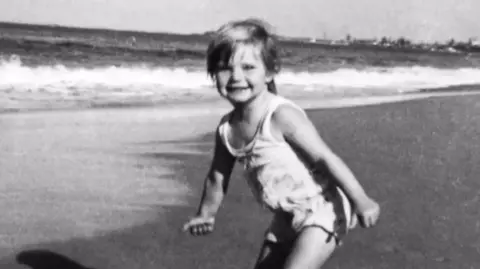
Three-year-old Cheryl Grimmer disappeared from Fairy Meadow beach in Wollongong in January 1970. Despite extensive searches, there were no leads.
A suspect was charged with her abduction and murder in 2017, but his trial collapsed after his teenage confession was ruled inadmissible. He denies any wrongdoing and prosecutors dropped the case.
After public pressure - including from the girl's family - the New South Wales (NSW) director of public prosecutions now says her office is willing to conduct a special review of that decision.
Sally Dowling said in a letter to Grimmer's family that the normal time limit for families to request a review had expired, but that she had agreed to look at the case anyway.
She said she could review the case now, based on evidence police handed over in 2019, or the family could wait until detectives had considered the "fresh" information they say they have found.
"It's taken way too many years but finally we're really happy that they see our fight for some justice for Cheryl," Ricki Nash, Cheryl's older brother, told the BBC.
The BBC's 2022 Fairy Meadow podcast examined Cheryl's disappearance and since its broadcast at least one new witness has come forward.
Nash said the family had written to NSW Police to request it reopen an investigation, taking into account new evidence that had come to light since 2019.
"We are not asking for anything extraordinary," he said. "When transparency leads the process, evil can no longer hide behind process failures or bureaucratic division."
The British toddler and her family had only recently migrated to Australia from Bristol as so-called Ten Pound Poms before she vanished.
On the day Cheryl disappeared, Nash had been put in charge of his younger siblings as the family got ready to leave the beach. He was told to go to the bathroom block and Cheryl ran giggling into the ladies' changing rooms, refusing to come out.
Too embarrassed to enter himself, Nash went back to the beach to tell his mother to help. When they returned 90 seconds later, the toddler was gone.
Cheryl's family has been pushing for a fresh investigation ever since the trial collapsed seven years ago. They argue that lots of missteps were made by NSW authorities in their search for Cheryl.
Last October, Jeremy Buckingham, a member of the NSW Legislative Council, the state's upper house, used parliamentary privilege to name the suspect. He had been known only as Mercury, as his real name is legally protected because he was a minor at the time of the alleged crime.
In May, there will also be a NSW parliamentary inquiry looking into cases of unsolved murders and long-term missing people – with Grimmer's case forming part of the inquiry.
You can stream or download the Fairy Meadow podcast on BBC Sounds
