Inflation eases in US as prices for used cars fall

 Getty Images
Inflation in the US cooled last month as prices for energy and used cars fell.
The consumer price index rose by 2.4% over the 12 months to January, the Department of Labor said. That was down from 2.7% in the prior month and marked the slowest pace since May.
The retreat could add fuel to arguments by US President Donald Trump and others that the central bank was in a position to cut interest rates without stoking a new flare-up in prices.
But some analysts have warned that further progress toward the Federal Reserve's 2% target could stall in the months ahead if companies start to pass on the costs of tariffs more fully to consumers or if labour shortages push up prices for services.
For now, analysts said there were limited signs of any impact from tariffs, as prices for commodities, stripping out food and energy, held steady last month.
Neil Birrell, chief investment officer at Premier Miton Investors, said the effects of tariffs remained uncertain, and noted other data quirks that could be affecting January's figures.
But he said the January report was likely to "ease the path towards a cut in rates sooner rather than later".
"The US economy looks to be in fine fettle with growth strong, inflation stable, the job market looking firmer and a Fed that has room to manoeuvre," he added.
The White House, which has been facing political pressure over Trump's handling of the economy, was quick to celebrate the report, the latest to deliver good news on the state of the American economy.
The US economy was "unbelievable", Trump told reporters at the White House on Friday, adding that "we right now have the hottest country anywhere in the world".
Job growth last month was also stronger than expected, the Department of Labor reported earlier this week.
"President Trump has defeated Joe Biden's inflation crisis," the White House said in a statement, adding that the economy would "turbocharge even further" if the Federal Reserve made "long-overdue" interest rate cuts.
Markets, which had a muted reaction to the inflation report, currently expect the Fed to cut rates in June.
Atakan Bakiskan, a US economist at investment bank Berenberg, said recent job and inflation data meant "the year could not have started on a better footing for Fed officials".
But he cautioned the bank was not fully in the clear.
"We lean toward the view that, sooner rather than later, labour shortages will exert enough upward pressure on wage growth such that services inflation will not come down enough for inflation to return to Fed's 2% target - a goal the Fed has now missed for 59 months – but hey, who's counting?"
Prices for personal services, such as dry cleaning and haircuts, rose 1.6% from December to January, and were up nearly 7% from a year ago.
January was also marked by jumps in prices for cigarettes, airfares and music streaming subscriptions.
But for many items, price inflation was more moderate.
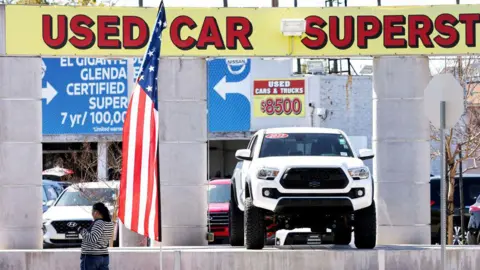
Rents rose 0.2% from December to January, cooling from a 0.4% pace in the previous month. Prices for used cars and trucks dropped 1.8%, while energy prices slipped 1.5% over the month.
Price rises also slowed for key grocery staples. Steak prices, for example, dropped more than 2% from December to January, though they are up nearly 13% from a year ago.
Meanwhile, the cost of eggs fell more than 34% from January 2025.
