Testing to begin on farms after likely discovery of bluetongue

 Getty Images
Testing is to begin at 20 farms in Northern Ireland after the likely discovery of bluetongue virus.
Spread by midges, bluetongue (BTV-3) poses no threat to the public or food safety but can affect cloven-hoofed animals like sheep and cattle.
It comes after the Department of Agriculture, Environment Rural Affairs (Daera) said surveillance at an abattoir indicated the presence of the disease in two cows from a farm near Bangor, County Down.
A 20km temporary control zone was put in place at 21:00 BST on Saturday. Daera veterinary officer Ignatius McKeown said farms within the zone would be tested at random "to determine the degree of spread of bluetongue" in the area.
"These will be large farms," he said.
"We would like to get as many of those farms tested by the end of this week."
He told Good Morning Ulster that "it takes time" to get the testing set up, but added: "We will move as fast as we can."
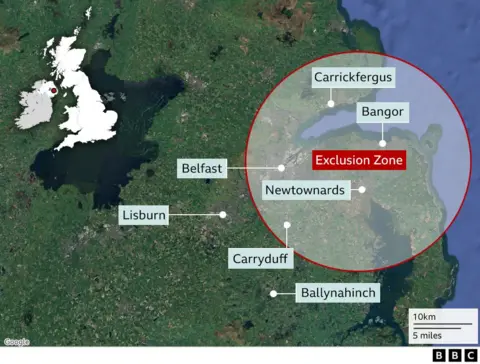
On Monday, Clandeboye Estate told BBC News NI that "a routine test confirmed the possible presence of the bluetongue antibodies in two animals that had formerly been part of the Clandeboye herd".
They said Daera was notified immediately and they were "working closely with their veterinary team to carry out further investigations".
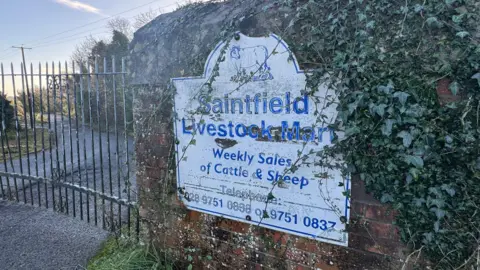
The Agri-Food and Biosciences Institute (AFBI) are currently monitoring midge numbers using traps set in seven locations spread out across Northern Ireland.
In the Northern Ireland Assembly on Monday, Agriculture Minister Andrew Muir said samples taken from cows suspected to have the disease needed to go through "confirmatory testing" in laboratories in Germany and England.
Bluetongue vaccination
In July, it emerged that farmers in Northern Ireland would be able to vaccinate their livestock against the virus, bringing them in line with the rest of the UK.
Biting midges are most active from April to November and the potential for spread depends on climatic conditions and wind patterns with lower temperatures significantly reducing the risk, the department said.
Mr McKeown said "farmers should and must consider" vaccinating their animals.
He also said that that the "vaccination process will have to take place potentially six months before cattle are put out to grass in the warmer weather".
"The high risk period will come into place once the temperatures increase in April and May and midges start to appear again. The animals must be immune before that particular time."
"At this time of year the number of midges about are fairly low, so the risk of further spread at this time is relatively low," he added.
"Obviously as temperatures increase in the springtime that is when we expect the potential increase in the spread of bluetongue."
'Concern'

John Martin, whose farm in Greyabbey, County Down, is within the restricted zone, said it was a "disappointment" to hear of a potential local case.
Mr Martin said there were "limitations on the movement of livestock" within the restricted zone - and this had an impact on farmers.
"We have about 150 sheep left to market from lambing this year, so we are negotiating our way through the regulations and the ability to continue to trade and to move those animals to sale," he added.
"It's very clear that there are no livestock markets taking place within the restricted zone, so that's having a direct impact on how people would have sold all of their animals in a livestock market."
Mr Martin hasn't "noticed any signs of diseased animals" on his farm, but he said "there's always that concern in the back of your mind".
What is bluetongue virus?
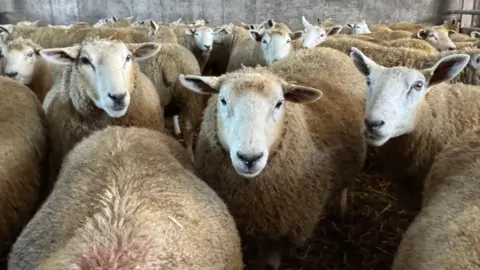
Bluetongue virus affects cattle, goats, sheep, deer and camelids such as llamas and alpacas.
It can cause ulcers or sores around the animal's mouth and face, difficulties swallowing and breathing, fever and lameness, foetal deformities and stillbirths.
It is a notifiable disease so anyone suspecting their animals may have it must report it to a vet, local divisional veterinary office or to Daera directly.
The latest outbreak began in the Netherlands in 2023, where tens of thousands of sheep died, and midges blown over from the continent began infecting livestock in the south-east of England too.
But the impact of BTV-3 seems to vary considerably across different regions, with some animals showing little sign of infection and managing to recover.
