Raccoon and seals make RSPCA's top 2025 rescues

 Emma Jacobs/RSPCA
An overweight raccoon from Cornwall and three seals from Devon are among those recognised in the RSPCA's top rescues of 2025.
The charity compiled the list, hoping to share "some of its most heart-warming tales" of the year.
It also revealed more than 634,000 users visited the RSPCA website nationally to report a concern in the last 12 months, with 7,279 visits needed in just the days between 24 December to 29 December.
The RSPCA said it wanted to showcase "how animal lovers have helped us help so many animals survive".
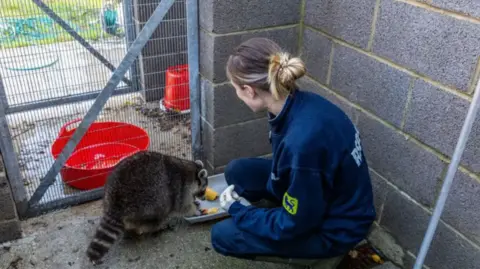
Back in November, the charity said it was called to the village of Gwennap, Cornwall, after members of the public had spotted an overweight raccoon wandering the streets.
When RSPCA officer Abi Kemp arrived to rescue the animal, she found it was three times the weight of a healthy raccoon at 11.2kg (2st 1lb).
At the time, Ms Kemp said it was "a bit of a surprise to get a call about a raccoon".
The charity said: "Thanks to the kind members of the public, and a vet, the raccoon was safely captured and taken to RSPCA West Hatch Wildlife Centre.
"There he received the care he needed before heading off to a permeant home that could meet his need and the strict legal restriction on keeping them as pets."
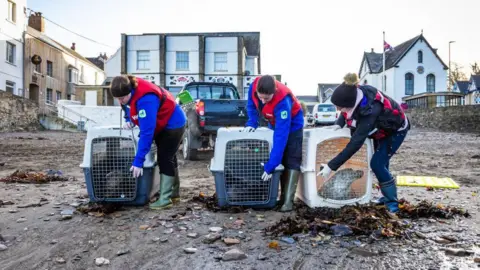
Also making the list were three grey seals from Devon, who were later named Shakira, Iggy Pop and Elmer.
The trio were rescued by the RSPCA and also rehabilitated at a wildlife hatch centre before they were released back into the sea in December.
 RSPCA
RSPCA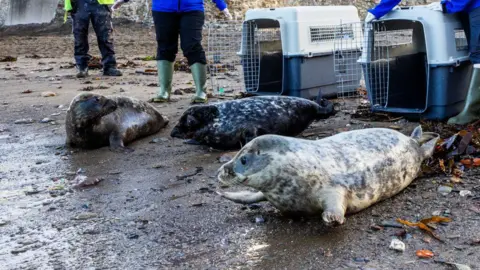 RSPCA
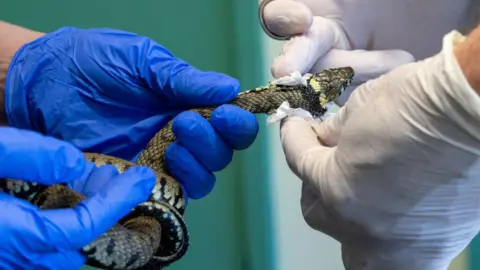
RSPCAA grass snake was found by a member of the public in Liskeard, Cornwall, after it was caught in a glue trap.
The native snake was then rescued and the remains of the glue trap removed before it was released back into the wild.
 RSPCA
RSPCA"Glue traps are cruel and indiscriminate and that's why it's now illegal for the public to use them," said David Couper, the RSPCA wildlife vet who helped the snake.
"When animals come into contact with the glue board, they get stuck by their feet; or, like with this snake, by their head and body," he said.
Mr Couper added: "If trapped animals are left unattended, they'll die slowly from dehydration, starvation or exhaustion, which is why the RSPCA are against the sale of these traps."
Follow BBC Cornwall on X, Facebook and Instagram. Follow BBC Devon on X, Facebook and Instagram. Send your story ideas to [email protected].
