Campaigners call for end to guga hunt tradition

 BBC
BBCCampaigners are calling for an end to a tradition of hunting young seabirds on an uninhabited Scottish island.
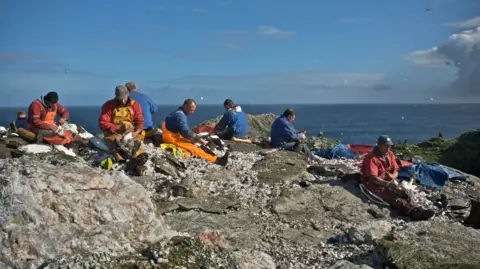
For centuries gannets have been killed for their meat during an annual hunt on Sula Sgeir, a small rocky island 40 miles (64km) north of Ness on the Isle of Lewis.
Hunters argue that the practice, called a guga hunt, dates back to the 15th Century and is part of their heritage.
Animal rights campaigners say the hunt was once used to feed a poor population and is no longer needed.
Members of Protect the Wild gathered outside the Scottish Parliament on Saturday to protest against the hunt.
NatureScot said the cultural significance of the hunt was recognised under the Wildlife and Countryside Act 1981 and hunters must apply for permission every year.
Last year the government agency granted a licence allowing up to 500 birds to be killed, following three years when the hunt had not been held due to bird flu.
The agency said the number had been reduced from 2,000 in recent times to allow the population to recover from the impact of the disease.
NatureScot director Robbie Kernahan said: "This figure was based on scientific evidence which showed the Sula Sgeir gannet population would remain viable in the long term with that limit."
A total of 485 birds were taken at the 2025 hunt.

More than 24,000 people have so far signed a petition calling for the Scottish government to prohibit the annual hunt.
Wildlife photographer Rachel Bigsby, who started the petition, said: "I think it's very important to recognise the heritage of this and again the cultural importance.
"But now, when it's not for survival, when food security isn't at stake, I find it very difficult to justify the tradition."
NatureScot said it was aware of the concerns about animal welfare, but that it is a condition of the licence that birds should be killed humanely.
