Politicians don't know what assisted dying vote means for Wales, MS says

 Getty Images
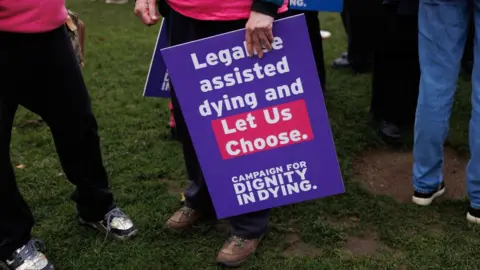
Politicians in Wales do not know what the consequences will be when they vote on the assisted dying bill, a Senedd member has warned.
Labour backbencher Alun Davies said the Welsh parliament was in a "legislative fog" because the final shape of the Bill - which is currently in the House of Lords - is unclear.
Peers are currently debating more than 1,000 amendments to the landmark legislation to allow terminally ill people to have an assisted death, which was created in Westminster and needs the Senedd to agree to it before it applies in Wales.
The Welsh government, which is responsible for tabling the vote in the Senedd, said it will set out its position ahead of the debate expected next month.
It comes after a leading backer of the Bill, Lord Falconer, warned that it was "very difficult" to see how it could become law this year unless his fellow members of the House of Lords change their approach in tabling amendments.
But opponents of the legislation think it is unsafe and needs to be extensively changed before it becomes law.
The vote in the Senedd - currently scheduled for 24 February - has already been delayed from a date in January.
It is unlikely that Wales's parliament can stop assisted dying becoming legal for terminally ill people in Wales, should Parliament eventually back the law.
But the Welsh government has said there will be no service on the Welsh NHS if the Senedd votes the legislation down.
There has been speculation the service could be available in the private sector.
Davies, a member of a committee which has been looking at the issue, said the Senedd should vote "at the last possible moment".
The MS for Blaenau Gwent said: "We do not know the final shape of the Bill. We do not know the consequences of a vote in favour and we do not the consequences of a vote against.
"We are being asked to vote in the middle of a legislative fog."
 PA Media
He said the Welsh government has a problem because the Senedd is being dissolved at the beginning of April - the point the parliament is effectively closed ahead of the 7 May election.
"My preference would be for a vote at the last possible moment, when there might be greater clarity," he said.
In a letter to the Welsh government, his committee called for a vote "as late as possible in March", particularly because of the number of amendments in the Lords.
Davies said MSs "don't know whether some amendments tabled in the House of Lords to clarify the situation in Wales will even be debated".
"Those [MSs] who do not wish to provide consent need to know the consequences of that. Would Wales be 'carved out' of the Bill? We need to understand the consequences of that before we cast our vote."
The legislation is being guided through the UK Parliament by backbenchers instead of the government, and applies to Wales as well as England.
While Westminster can change the Suicide Act without needing the Senedd's permission, parts that do change allow the Welsh government to set regulations for an assisted dying service.
Under a political convention Westminster does not normally legislate on subjects that are governed by Cardiff Bay without seeking the permission of the Senedd first.
That means the Senedd will need to vote on whether it approves parts of the law applying to Wales.
If the Senedd voted against the law, BBC Wales has been told Lord Falconer would likely table amendments to remove parts of the legislation that specifically apply to Wales.
It could mean that while it would still be legal for qualifying terminally ill people to seek an assisted death, the parts of the law that would allow that to happen in Wales could be scrapped.
The cross-party group of MSs, the legislation committee, called for Wales's Health Secretary Jeremy Miles to explain what the implications would be for assisted dying in Wales if the Senedd was to provide consent, or withhold it.
The Welsh government has also come in for criticism after it refused to explain its thinking on which parts of the Bill require the Senedd's approval, telling MSs that because of legal privilege it cannot show its workings.
Davies said he was "bewildered" by the "bizarre situation", saying the government has never expressed concerns about that before in the 72 bills the committee has looked at.
A Welsh government spokesperson said: "We are carefully considering the matters raised by the legislation, justice and constitution committee.
"There are significant legal and practical questions that deserve thorough consideration, and we will set out our position to the committee ahead of the Senedd debate."
Would you like to be a part of our Senedd election coverage this year? In February, BBC Wales is holding a live debate in Aberystwyth with a panel of politicians and you could be in the audience. Click below to apply
