Listen to us, say parents as city's special needs cases rise

 BBC
BBCParents say they hope to be listened to as Wolverhampton faces rising numbers of children needing support for Special Educational Needs and Disabilities (SEND).
A recent report from City of Wolverhampton Council showed a 73.5% increase in the number of children being diagnosed with Autistic Spectrum Disorders (ASD), along with a rise in the number of children offered an Education, Health and Care Plan (EHCP).
While it mirrors national trends, the council said greater awareness and identification were likely to be responsible and that it also means greater pressure on budgets.
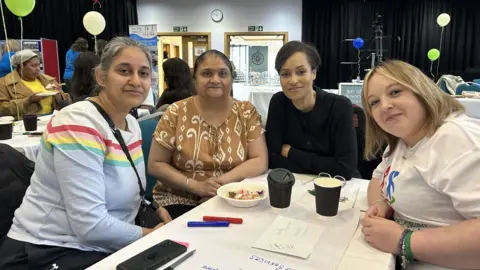
At the launch of the new SEND Wolves Forum in the city, parents and carers said it was important that their children continued to be cared for, with one adding: "No child should be left behind."
Natalie Brewer, one of the forum's organisers, said: "We want change, we want things to improve" but that city leaders must make sure "services are right for people and meeting the children's needs".
Priya Pallavi was among those attending the forum. She has lived in a number of countries, including Singapore, and said none of them gave the level of support the UK gives to SEND children and their parents.
"We need to preserve this at all costs and make sure that this becomes stronger, going forwards and not do it away."
She also said she felt discussions around rising numbers of ASD cases were sometimes insensitive.
"Not everybody is just catching ADHD or SEND like a virus, the diagnoses have improved, but the support hasn't improved at that rate," she said.
Rising numbers
EHCPs are documents which set out the needs of an individual child and the council report noted that while numbers were rising, they remained below the national and regional averages.
Jacqui Coogan, the councillor responsible for children, young people and education, said: "While speech, language and communication is still the highest area of need, it is now closely followed by autism spectrum conditions.
"It is likely that this is as a result of better early identification and improved autism pathways which have led to a greater awareness around autism."
The report also showed that children with ASD account for just 23% of EHCPs issued.
Natalie Brewer said it was important to "get across all disabilities".
"We want to include everyone, so no-one's left out whatever disability, whatever ethnic background, whatever cultural differences, we want everyone to be involved in it," she said.
 City of Wolverhampton Council
Children from Asian backgrounds tend to receive fewer EHCPs, the report said.
Mum Shashmi Kambo said there was often a language barrier, meaning some families "don't know where to go".
"Therefore they're not even getting their kids to doctors," she said.
When the report went before the council's children and young people scrutiny panel on 11 March, it was praised by councillors for its thoroughness.
Most of the trends, such as high ratio of male diagnoses to female diagnoses, long waits for assessments and growing numbers of applications for EHCPs match trends seen in the country at large, councillors were told.
Helen Taylor, the council's head of SEND and inclusion, told the meeting in some cases, such as the number of SEND children being excluded from school, Wolverhampton is below the national average.
She said the council was in a good position to meet the requirements of the government's forthcoming SEND reforms, but was continuing to face pressures on its workforce and its budget.
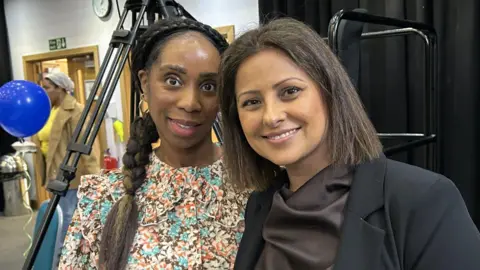
It is not just the children who are being offered help by the city council.
Among those offering support at the forum launch were Corinne Marie and Pav Mahey whose aim is to help parents with the challenges of looking after neurodivergent children or children with other needs.
"Catering to the needs of a SEN child can take its toll on any parent" and she offers to teach techniques such as yoga, reiki and meditation," Marie said.
Her colleague said she concentrated on mindfulness and putting stress to one side.
Mahey said some parents can feel self conscious when going out with their children in public, adding that needed to change.
"It's a shame, I think society needs to do better on that," she said.
More parent involvement
More meetings are planned for the forum, with coffee mornings and gatherings in the evenings and at weekends.
Brewer said she believed it would be "instrumental for what we need to do, going forward".
Pallavi added: "I would really hope that this voice turns into a force" and another mum, Noelle Simpson, said: "The parent is the child's ultimate advocate."
She said it was important that the system was willing to "adapt and flex" and that there was an "understanding that this is something that isn't a one-size-fits-all approach".
Follow BBC Wolverhampton & Black Country on BBC Sounds, Facebook, X and Instagram.
