'From a young girl to womanhood, I've relied on the same domestic abuse refuge'

 BBC
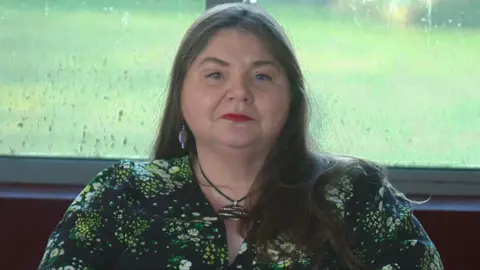
BBCA woman who had to return as an adult to the domestic abuse refuge she had lived in as a child said it was like "going home".
Karen McLaughlin was seven in 1980 when she went to the Women's Aid shelter with her mother.
"I don't remember packing my favourite teddy bear. I [was] just there, that was it," she said.
Decades later, trying to escape abusive relationships Karen went back to the place she remembered as a "happy home".
The refuge was borne out of necessity and frustration over a lack of support for women.
In 1976, two women armed with a ladder crossed an Army checkpoint in Londonderry's city centre and broke into a vacant building.
"The young soldiers said: 'Where are you going, why do you have the ladder?'
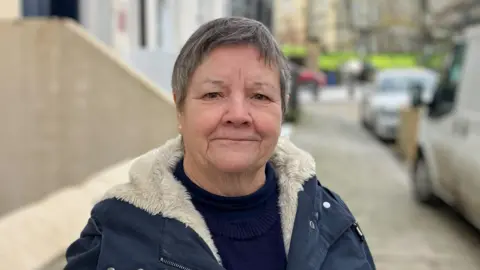
"The pair of us walked through, came along down Pump Street, put up the ladder and - one of the windows was unlatched - and we got in that way," Avila Kilmurray, one of the women, told BBC Spotlight NI.
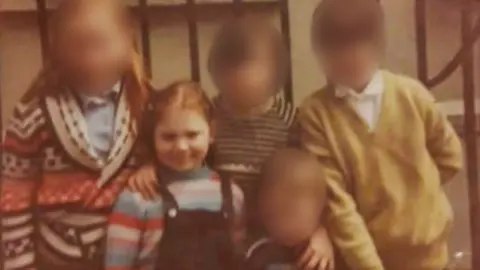 Karen McLaughlin
That empty building on Pump Street became a refuge for "battered wives" - how victims of domestic abuse were then described.
"I'll always remember that night, this woman came down and she was partially blind and said: 'I'm here to support you, because I am the way I am because I've been battered for years and I've nowhere to go,'" Avila added.
The level of need in the city soon became clear, as within the first year alone 90 women and 300 children passed through the doors of the refuge.
Derry, like many parts of Northern Ireland, was gripped by the violence of The Troubles.
Across society the reality of domestic abuse was shrouded in secrecy.
"It was one of those things that was very hidden," Marie Brown, chief executive of Foyle Women's Aid, said.
Karen had kept her abuse a secret, the same way she had done so as a child.
"I didn't tell anybody. I never told.
"You just don't tell. You're hoping for the love that you're looking for, but it kind of never comes."
- If you have been affected by any of the issues raised in this story, information and support can be found at the BBC's Action Line.
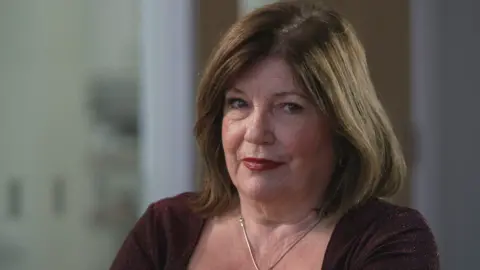
Irene Wilson got married in the summer of 1976 and lived just around the corner from the refuge.
She never imagined it was a place she might one day need, but like Karen she was keeping the abuse she suffered a secret for decades.
"I didn't want my children to come from a broken home.
"Call it embarrassment or shame, but I wanted people to perceive that my marriage was OK," she said.
Irene sought refuge following an assault that left her just minutes from death.
"The police were involved, and for me that night it was like the weight of the world [lifted] off my shoulders. My secret was out," she said.
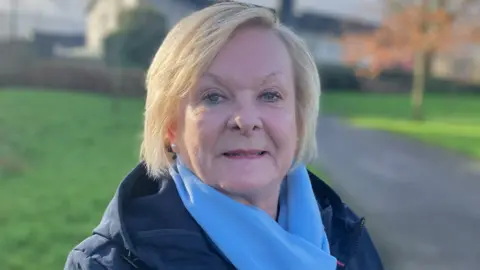
In the 1990s Northern Ireland was edging closer to a peace agreement, but inside many homes, nothing would change.
In communities dominated by paramilitaries, women were also at further risk for reporting abuse to the police.
"Women were used as political footballs at that time and it was wrong," Marie Brown said.
In the five decades since first opening , the services of Foyle Women's Aid have expanded beyond the original refuge.
Its services now include the Foyle Family Justice Centre, a one-stop shop for resources like legal aid and housing support.
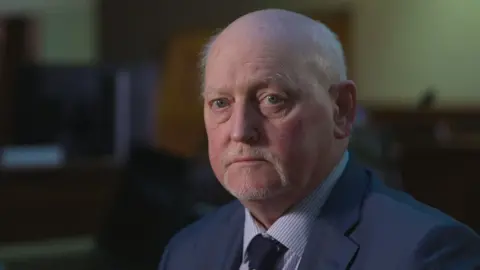
"The differences that I believe we have made for women seeking justice in this city are worth all the effort and work put into them," former District Judge Barney McElholm said.
"The shining beacon of all that is the Family Justice Centre.
"Those sorts of behaviours, the violence, the domination, the control - to me that goes down through generations, and it affects every succeeding generation in some way."
Karen McLaughlin told others suffering from domestic abuse to leave and "don't look back".
"You can do it. You're strong. Just get out, and you start focusing on you and your kids, before it gets worse. You can do better. You deserve better.
"I didn't know what love was. Love needs to come from healing and being able to stand strong, and you can move forward."
