A seismic electoral shift but what happens next?

 BBC
BBCSo, a week on from the local elections, how is everyone?
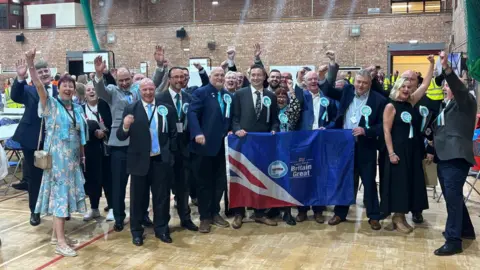
The May 2026 polls have completely changed the face of local government here in the North West.
The Gorton and Denton by-election in February gave us a glimpse into how politics is evolving, and evolving fast. Last week's elections are further evidence of that.
For decades Labour has been firmly in control of most of the councils that were being contested.
Not any more.
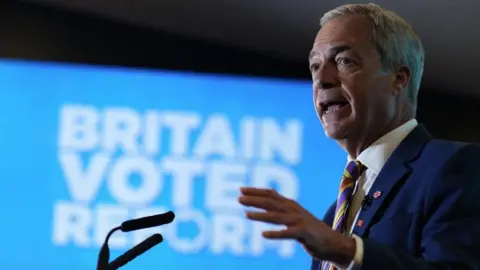
Across the region they lost 222 seats. Reform UK was the main beneficiary, winning 216.
 PA Media
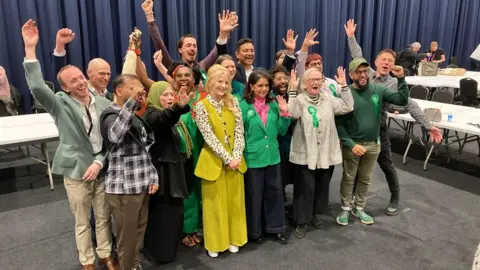
The Green Party won 23 seats, while there are now 21 more Independent councillors than there were a week ago. The Liberal Democrats gained one seat overall, while the Conservatives lost 39.
It was, without doubt, a disaster for both Labour and the Conservatives and a triumph for Reform and, to some degree, the Greens.
Now that the celebrations are over, though, it is time for the serious work to begin and for the parties to deliver on their promises to voters.
 Euan Doak/BBC
Key challenges
There is a huge wave of new councillors in our region - many with little experience in local government.
This is particularly the case for the freshly elected councillors representing the Greens and Reform. They will have to get up to speed pretty quickly.
Councillors have an important job. They represent people living in their local ward and deal with their constituents' casework.
If they belong to the largest party they have control over multi-million pound budgets and have to make difficult decisions on policies like bins, parks, pot holes and, in some cases, social care.
If they are in opposition they will have to scrutinise and offer alternative proposals.
These new councillors face big challenges. Local authority budgets are stretched and costs are rising.
There is a limit to what savings can be made, though, with expensive statutory services such as providing social care and special education needs places at a time when demand is rising.
Reform discovered this when it took control of Lancashire County Council last year. A consultation was launched into plans to close five care homes. Its proposals faced huge opposition and have now been scrapped.
Can rival parties work together?
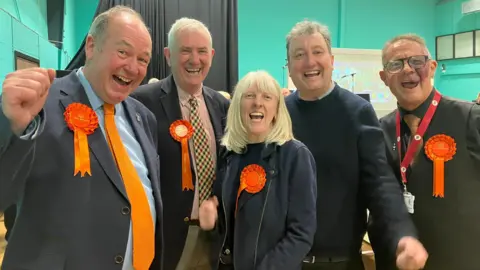
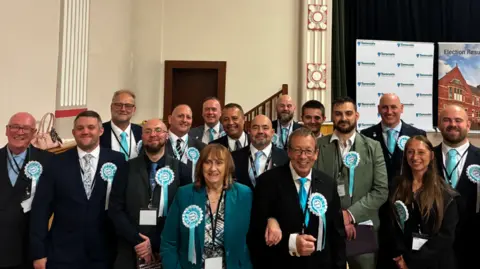
The local elections saw Labour lose control of five councils, the most high-profile local authority to change hands being St Helens, which went to Reform.
Four more councils are now under no overall control, meaning no one party received enough seats to win a majority of seats.
 LDRS
LDRSPerhaps most dramatically, Tameside in Greater Manchester - which had been held by Labour for 47 years - is now a hung council after Reform won 18 of the 19 seats contested last week.
Where Labour dominated and council policy could be passed, largely unchallenged, there will now have to be more collaboration, and there will definitely be more scrutiny.
Different combinations of parties - often at polar opposites of the political spectrum and many with little experience of how local government happens - will need to work together to get business done.
What does the future hold?
Many experienced and long-serving Labour councillors lost their roles last week.
Many Labour MPs may also be concerned about their own job prospects.
If the results of the local elections are in any way replicated in a future general election, a few big hitters could have some real fears about their own parliamentary positions.
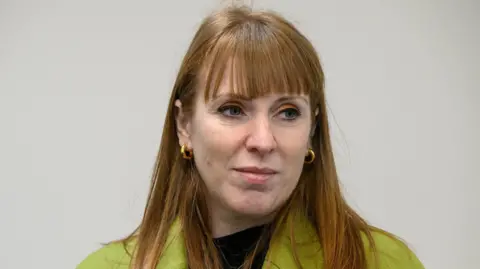
Former deputy leader Angela Rayner may or may not be contemplating a leadership challenge to Sir Keir Starmer, but how safe is her own seat of Ashton under Lyne in Tameside?
 Reuters
And in Wigan, Culture Secretary Lisa Nandy's patch, Labour lost all 22 of the seats it was defending.
These elections show there is a seismic shift away from the established parties that have ruled in our region for decades and towards Reform and the Greens.
They are no longer an emerging electoral option, but parties with the power to change the face of politics both here and across the country.
We live in fascinating times.
Read more stories from Cheshire, Lancashire, Greater Manchester and Merseyside on the BBC, watch BBC North West Tonight on BBC iPlayer and follow BBC North West on X.
