Primary school kids learn about dangers of child exploitation

 BBC
BBCChildren as young as eight have been learning about the dangers of child exploitation by criminal gangs in Northern Ireland.
A charity in Northern Ireland said one example is young people "being forced and coerced into rioting" like the disorder which broke out in Ballymena, County Antrim last summer.
Following arrests 33 young people were referred to social services, according to the PSNI.
Chloe Higginson from Invisible Traffick has been delivering a programme to young people aged 8 to 12 at the Ballykeel Youth Resource Centre in the town.
She said: "Organised crime gangs are exploiting their vulnerability and preying on the kids that are most vulnerable."
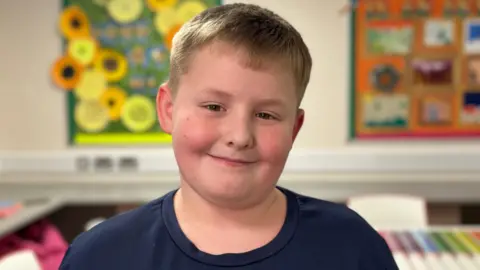
Jax, nine, said he had learned a lot from the programme.
He said it "would help quite a lot of kids, especially the younger ones" if someone approached them playing games online.
"If you're on a game and someone says 'come do this at a certain place at a certain time'... and if it doesn't feel right, tell an adult straight away."
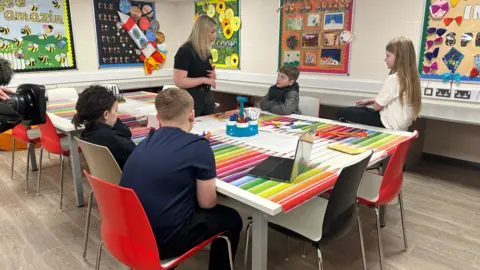
Alex, 10, who attends the Ballykeel Youth Resource Centre, said he had learned "how to tell if someone is putting you through human trafficking and to use your voice and tell a trusted adult".
Ella, who is also 10, said she knew a lot more about the issue now "because it's whenever people are tricked and trapped and forced to do something they don't want to do".
Red Nose Day
Invisible Traffick is working with 600 young people across 15 schools and youth settings this year.
The organisation is supported by money which is raised through Red Nose Day which is part of Comic Relief on Friday.
Higginson said they wanted "to equip and empower our local communities to be aware of the signs and indicators that could lead to someone being exploited".
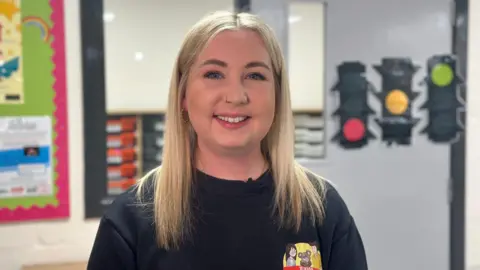
"When people think about human trafficking and modern day slavery they think of sexual exploitation which is a huge proportion, but whenever we think about it locally and closer to home, it is a problem that is increasing," she said.
She said most UK citizens were trafficked for labour exploitation, while children and young people were being exploited for criminal activity.
"On a local level that looks like children being forced to steal, children being forced to move parcels of drugs from one place to another, maybe they're being asked to get involved in public disorder, children are being forced and coerced into rioting which is what we seen happening in the summer here in Ballymena," she said.
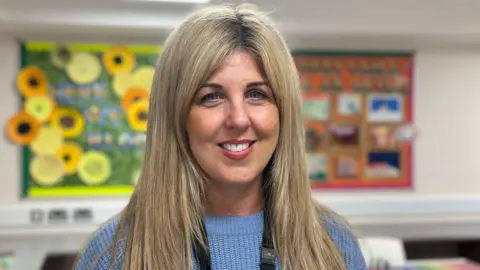
Amie Mott, Education Authority Youth Worker at Ballykeel Youth Resource Centre, said it was the second time they had taken part in the programme.
"It's really important for our young people to be aware of human trafficking and exploitation... as they're able to learn more about it and I suppose it's a very important topic in the area at the minute."
Mott said she was checking in with the young people throughout the six-week programme to see what they were learning and what they were able to share with other young people in the centre and the community.
"It's important that young people who come to the centre feel safe and also when they're going outside the centre, that they're aware of how to speak up and talk to a trusted adult," she said.
