Zoo celebrates first UK-born elephant shrews
 Hertfordshire Zoo
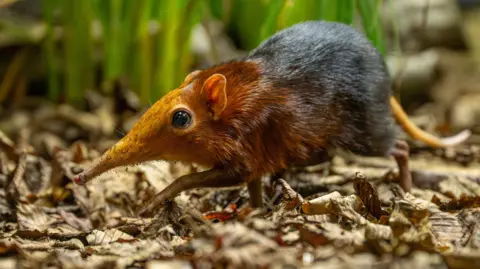
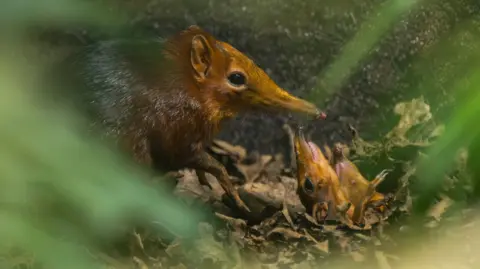
Two black and rufous sengi, known as elephant shrews, have been born for the first time in the UK.
Weighing just 30g (1oz) at birth, roughly the weight of a standard AA battery, the babies were initially missed by their keepers at Hertfordshire Zoo in Broxbourne. Their births were confirmed when reviewing overnight CCTV.
Originally known as shrews, the small African mammals are more closely related to elephants, manatees and aardvarks and were officially renamed as sengi in 1998.
Hertfordshire Zoo says the successful breeding programme is a "significant victory for the wider zoological community, with only a handful of black and rufous sengi currently residing in the UK".
 Hertfordshire Zoo
The creatures are native to the forest floors of Kenya and Tanzania, with adults weighing around 1.54 lbs (700g) and capable of running up to 15 mph (25km/h).
Tyler Whitnall, managing director of Hertfordshire Zoo, said: "To have the first-ever black and rufous sengi birth in the UK is an incredible feeling.
"To see them successfully breed so quickly is a testament to the world-class care provided by our team."
He added: "These pups are growing incredibly fast and are already showing the same high-energy, inquisitive traits as their parents."
The newborns are currently being monitored by the zoo's veterinary team and, while spending much of their time in their nesting area, are expected to be on view to the public in the coming weeks.
Follow Beds, Herts and Bucks news on BBC Sounds, Facebook, Instagram and X.
