School aims to tackle pupil anti-social behaviour
 Northamptonshire Police, Fire and Crime Commissioner
A secondary school is taking on a pilot project which promises to tackle the root causes of anti-social behaviour.
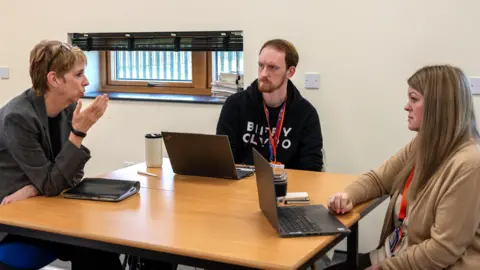
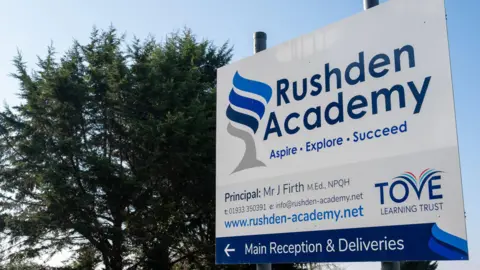
Rushden Academy has become one of the first schools to work with the Northamptonshire Police, Fire and Crime Commissioner (PFCC) ASB Early Intervention Team to put young people on the path to a safer future.
One day a week, students aged 11 to 16 who have been involved in low-level incidents will work with the team to "unpick what's happening in their life", the PFCC said.
The children are chosen by heads of year or safeguarding leaders, "in a bid to reduce the risk of permanent exclusion further down the line".
 Northamptonshire Police, Fire and Crime Commissioner
The intervention could last up to 12 weeks with support offered for entire families.
Targeted sessions could be used to reintegrate children who have been suspended, back into school, it added.
Lynda King, the school's deputy safeguarding lead, said: "Some forms of anti-social behaviour can be quite vague, so it's important for students to be informed when they've done something wrong and understand the harm they've caused so they don't repeat their actions."
She said swift intervention meant students could "speak up if they need more wraparound support at home".
"We hope this new approach really helps to put students on a path toward safer futures," she added.
Danielle Stone, the Labour PFCC, said: "Young people in this county deserve the very best start to life and we must find bold and engaging ways of working with schools to make a meaningful difference to children's outcomes.
"Schools have told us that they want specialist help to prevent future consequences of crime in their communities and empower children to make safer choices."
She added that the work would give students "real-life advice to choose better paths".
Follow Northamptonshire news on BBC Sounds, Facebook, Instagram and X.
