Accounting errors and 'incompetence' led to City of Culture charity collapse

 PA Media
A series of costly accounting errors had a major role in the collapse of the charity that ran Coventry City of Culture, a BBC investigation has found.
The mistakes by staff at Coventry City of Culture Trust, which were blamed on "incompetence" during internal meetings, left a £1m hole in its budget and triggered a financial crisis that led to its demise.
The trust went into administration in 2023, months after it had borrowed £1m of public funds from the city council to plug the gap.
At the time, bosses publicly said the loan was needed for "short-term" funding issues. But documents released to the BBC show behind the scenes it was admitted "human error" and a "failure of governance" had caused significant problems.
The trust's former CEO Martin Sutherland told the BBC he was sorry for the mistakes but argued wider pressures also contributed to the trust entering administration.
In an email he said it was "hard to read that the demise of the trust continues to make an impact on individuals and organisations in Coventry and beyond".
The £1m loan was never paid back and the trust left £4.2m in unpaid debts, including huge losses for a producer of the Edinburgh Fringe, Culture Coventry, the Albany Theatre and Coventry University.
'Breathtaking incompetence'
Dozens of staff were also made redundant and a two-year programme to boost the city's cultural scene was scrapped.
New details about the trust's financial problems have been revealed in documents in response to a freedom of information request.
They contain minutes of meetings of the trust's executive board, where questions were raised about the possibility of fraud, but members were repeatedly told there was no criminality.
For more than a year, Coventry City Council refused to release these documents, leading the Information Commissioner to step in and order the local authority to disclose them.

One senior source involved in the trust said the events team continued spending money without knowing accounting errors had caused financial problems.
While another who worked with the trust said: "I don't think at any stage anyone was operating in any way that was Machiavellian or trying to cook the books.
"I think it was pure financial incompetence, which is breathtaking."
'A tale of chaos'
The Charity Commission has been investigating the trust's collapse since 2023.
In response to the BBC's questions about the discussions of the trust's executive board, a spokesperson said while a compliance case was ongoing, it had not opened a statutory inquiry, which would give it legal powers to request information and disqualify people from being trustees or senior charity managers.
But there are now calls for a statutory inquiry to establish where accountability lies.
"The scale of what's been uncovered and revealed in this investigation is truly shocking," Councillor Gary Ridley, leader of Coventry's Conservative group, said.
"It tells a tale of incompetence. It tells a tale of chaos."
 City of Culture
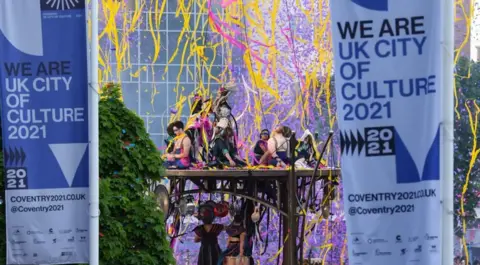
Coventry being awarded UK City of Culture 2021 meant millions of pounds in investment and a spotlight shone on the best music, dance and art it had to offer.
Coventry City of Culture Trust was set up in 2015 to oversee the city's successful bid and then deliver a series of events.
But after delays caused by the pandemic, the trust scaled down and axed some events after income was forecast to be £1.6m lower than previously thought.
As the year came to an end in June 2022, the trust's audit committee said there were no "major worries" about its financial position.
But the documents now show serious problems were identified just weeks later.
'Considerable disparities'
Martin Sutherland was the chief executive of the trust and Martin Reeves was the CEO of Coventry City Council during this period.
In a meeting on 20 July, 2022, the board of trustees were warned everyone was "operating under challenging financial circumstances" and told "there were real risks to the situation, including running out of cash, which would be catastrophic".
A few weeks later, on 12 August, 2022, Sutherland emailed Reeves to inform him of budgetary issues, including several accounting errors.
He stated multiple invoices had been received which "raised the alarm" and "consequently we have discovered considerable disparities".
He said the biggest losses were related to the Assembly Festival Gardens, a pop-up venue in the city centre.
The email stated losses were reported as £1.2m, but were not allocated accurately, "with more than £600k incorrectly charged to the programme - effectively meaning that the programme now appears to be overspent by this amount".
Another error included double counting income, he said, and described the situation as "very challenging".
Asking if the trust could borrow £1m from the council, he added: "I am truly sorry that this situation has occurred, and of course take full responsibility as chief executive."
In a meeting a few days later, the trust's executive board was told "coding errors" had been found that "had not been picked up earlier by anybody in the trust team nor the auditors when they undertook their recent inspection".
The board was told questions had been asked about whether "there had been intent to defraud" but reassured "this was not the case and the situation had arisen due to human error".
Those responsible "were very experienced, qualified accountants, not operating above their capacity and one had been with the trust for a number of years".
They were not named.
In another meeting, one board member felt it was "not a good idea" to tell "a wider audience" that the financial problems had been caused by coding errors.

One attendee said repaying the loan depended on income from the Reel Store, the UK's first immersive digital art gallery, which opened in Coventry city centre in May 2022.
The Reel Store closed permanently after the trust went into administration in early 2023.
At a meeting on 12 October, 2022, a majority of trustees voted to approve the loan agreement with the council, with eight for and two against.
'No fraudulent activity'
In an interview with the BBC in 2022, Sutherland said "short-term cash flow", such as grants yet to be paid, was the main reason for the loan and insisted he was confident the trust would pay it back in full.
He declined to be interviewed for this story.
But in an email, he said: "Trustees sought reassurance that there was no fraudulent activity associated with the major accountancy error. This is appropriate.
"As well as seeking reassurance from team members, including myself, they also sought support from external financial experts, the trust's auditors, who raised no concerns."
Sutherland added: "I am sorry that errors we made have contributed to these difficulties."
But he argued missed commercial sales targets, shifting funder priorities and uncertainties related to Covid "were as much a contributing factor to the trust entering administration as human error".
The BBC contacted a number of trustees but they did not wish to comment.
A council report that recommended approving the loan in 2022 did not mention accounting errors.
Reeves, who is now chief executive of Oxfordshire County Council, did not respond to requests for comment.
A spokesperson for Coventry City Council said the loan "was taken as the appropriate measure in order to protect the legacy of Coventry's successful year as UK City of Culture 2021".
"When the accounting error was identified, the loan was provided to help address this issue and allow the trust to continue its work," the spokesperson said.
"Since the trust entered administration, both the appointed administrator and the National Audit Office have conducted thorough investigations and neither have found any wrongdoing on the part of the council."
Mixed feelings
The founder of the Edinburgh-based events company that delivered Assembly Gardens Festival said it was owed £1.5m.
William Burdett Coutts said Assembly had to borrow that amount every year just to stay afloat, adding: "It virtually shut our company down."
Burdett-Coutts said no-one from the trust had apologised to him and called on the Charity Commission to launch a statutory inquiry.
An official evaluation, led by University of Warwick and Coventry University, said Coventry City of Culture engaged almost half of the city's residents and helped bring millions of pounds into the local economy.
But in the cultural sector, there are mixed feelings about its legacy.
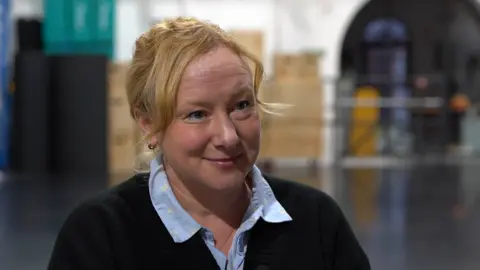
Highly Sprung supported Coventry City of Culture's bid and delivered CastAway, an aerial performance that explored the impact of waste on the environment.
Its executive director Sarah Worth said City of Culture was "a really important moment for the city" that brought investment.
But she said the collapse of the trust "means that we're kind of tarnished with a really difficult and challenging story to take forward".
Theatre company Talking Birds also delivered events and initiatives during the city's tenure, including the UK's first-ever citizens' assembly on arts, culture and creativity.
Co-artistic director Janet Vaughan said those who made recommendations had not seen "the fruits of their deliberations come to fruition and I'm heartbroken about that".
She said there were a lot of "unanswered questions" about the trust's collapse but added: "We have to just move on because we can't let this define us."
Correction 19 January: An earlier version of this article stated that The Belgrade Theatre was owed money by trust. This has been removed as they were not one of the organisations who incurred losses when the trust collapsed.
