Second young prisoner dies in Scotland in space of a week

 PA Media
A second prisoner has died in a Scottish prison - days after a 19-year-old died at Polmont Young Offenders Institution.
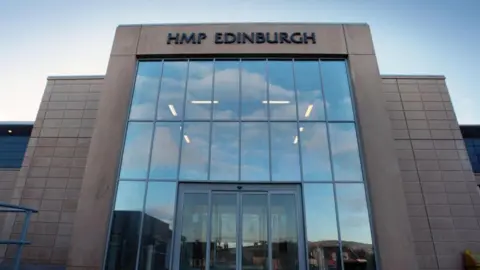
The Scottish Prison Service confirmed the 28-year-old man died at Saughton Prison in Edinburgh on Friday, less than a week after the teenager died at Polmont on 8 March.
It is understood that the man's death is not being treated as suspicious.
The prisoner made a 999 call from the landline in his cell the night before his death and had six months left on his sentence, BBC Scotland News has learned.
A Scottish Prison Service spokesperson said: "Every death, whether in prison custody or in our communities, is a tragedy for all those who knew and supported the individual.
"Following the death of someone in our care, Police Scotland are advised, and the matter reported to the procurator fiscal."
A fatal accident inquiry will be carried out in due course.
Prison deaths record
Figures revealed on Wednesday revealed the number of people dying while in prison custody has surged to the highest level since 2012.
Some 54 deaths were recorded in prison custody in 2023-24 - 15 higher than the year before.
Overall, 399 people have died in prison custody since 2012.
Ten of the deaths over the latest year were recorded as probable suicides - up one since the year before.
Suicides were the most common cause of death overall, with 115 probable suicides recorded since 2012, accounting for 29% of all prison custody deaths.
In relation to the new figures a Scottish Prison Service spokesperson said: "Our commitment to improving safety, care and wellbeing across the prison estate remains unwavering.
"Together with our partners, we will continue to learn, deepen our understanding, and strengthen the systems and supports that protect people in our care."
