Clyde crane facing uncertain future due to high cost of repairs

 Getty Images
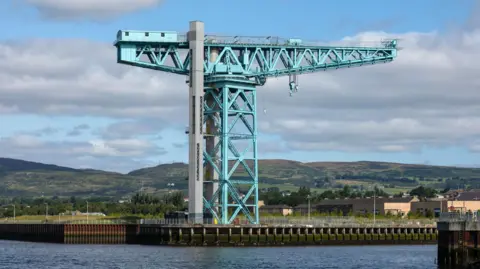
Clydebank's Titan Crane is facing an uncertain future due to the high cost of repairs for the structure.
The crane, built in 1907, has been closed for the past eight years and does not have a re-opening date.
Clydebank Property Company, an arms-length company of West Dunbartonshire Council, owns the local landmark but a council meeting last week heard quotes for the repair job were priced at over £1m.
Dr Andy Clark, a lecturer in Scottish history at Stirling University, told the BBC's Radio Scotland Breakfast programme that the future of the crane was in jeopardy and it had been left "to rot and ruin".
The Clydebank structure is one of four remaining cranes throughout the west of Scotland, with the others in Greenock, Whiteinch and Finnieston.
Dr Clark told BBC Scotland: "These are are large structures that stand about 150ft, so you can imagine the general upkeep of painting, welding and just general maintenance to make sure they keep standing.
"They need work to prevent erosion and rust, so that's a constant upkeep. But the question needs to be why there is such debate over a relatively trivial amount of money for something of such historical importance."
Last week's council meeting heard Clydebank Property Company operated with a £60,000 net loss in the past year, mostly due to the running costs of the crane.
The landmark was open to the public for 11 years, starting in 2007, but closed in 2018. Original estimates were that it could re-open within a year, but this has not happened.
CPC stated that two quotes for repair work were valued at £1.1m and £7.4m.
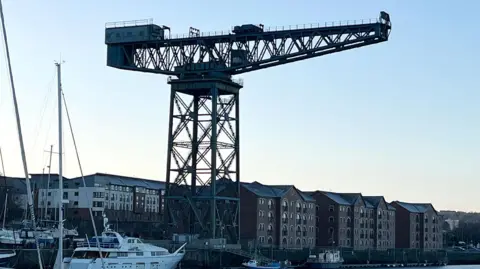
Dr Clark said images of the cranes are heavily associated with both Glasgow and Clydebank and tied into the history of the areas.
"These cranes tell the story of Scotland's industrialisation, its wartime experience and its de-industrialisation. They are the kind of landmarks that people anchor their identities and experiences to," he said.
"It's seen two world wars, the post-war boom and the decline from the 1970s onwards. It has stood there all this time. It isn't just a celebration either, there is a sad and angry story in them about Clydebank and Greenock have been left behind.
"It should be opened back up because it is an image of survival."
A spokesperson for West Dunbartonshire Council said the authority was holding a strategic review regarding the future of the crane.
The spokesperson said: "There are no current plans to open the Titan crane to visitors however the board has committed to undertake a wider strategic review of the long term future of the crane including options for use, funding and investment.
"Clydebank Property Company continues to fund ongoing running costs and maintenance of the site."
Last year, plans were unveiled regarding one of the other remaining cranes - at Greenock's James Watt Dock - that would see it become "longest urban zip slide in the UK" as part of a wider development of the area.
