Plaque for Scottish Holocaust victim unveiled in Edinburgh

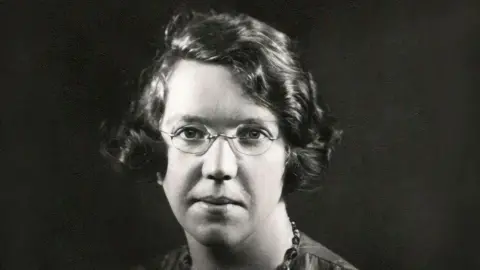 Church of Scotland
A brass memorial plaque for a Scottish Holocaust victim has been unveiled in the centre of Edinburgh.
A Stolperstein stone has been laid outside St Stephen's Church in Stockbridge, where a service was held for Jane Haining in June 1932 before she travelled to Budapest to work as a matron.
She was later murdered by the Nazis in Auschwitz on 17 July 1944.
The Stolperstein, or "stumbling block", is a small brass plaque set into the pavement, serving as a personal and lasting memorial for someone persecuted by the Nazis.
Gunter Demnig, who created the plaques, has placed thousands across Europe.
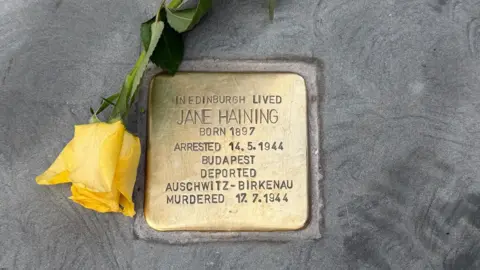 Michael Sturrock
A memorial for Miss Haining was held on Monday where members of her family and supporters held up her picture.
In 1932, she took on the role of matron at the Scottish Mission School in Budapest, which had about 400 day and boarder pupils aged from six to 16 years old, and were a mixture of Jews and Christians.
She helped keep the children safe until she was betrayed and arrested by German officers in April 1944.
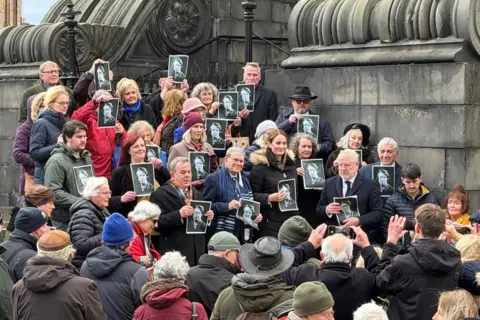 Michael Sturrock
Charged with eight offences, she was jailed in Budapest before being transported to Auschwitz-Birkenau by rail in a cattle wagon along with scores of others on 14 May, 1944.
Miss Haining succumbed to starvation and the terrible conditions in the camp and died aged 47.
Her niece Deirdre MacDowall, 77, was among loved ones attending the memorial.
Ms McDowall told BBC Scotland News the whole family is very proud.
She said: "It's a great honour and I'm so pleased that Jane is being remembered in this way, although she herself would have not wanted a lot of fuss.
"We want people to hear her story and to learn from it."

Miss Haining is also the only Scot to have been recognised as 'Righteous Among the Nations' at Yad Vashem World Holocaust Remembrance Centre in Jerusalem.
Angus Robertson MSP, who proposed the memorial, said: "Jane Haining was Scotland's most prominent Holocaust victim.
"We must never forget the victims of Nazism or the lesson from history that persecution and extremism can tragically return," he said.
"Jane Haining left Scotland for Hungary to help Jewish children and rather than save herself she tried to protect them and died in Auschwitz.
"It is right that Scotland's first Stolperstein commemorates Jane Haining and many thanks to the City of Edinburgh Council who have made its installation possible, and to Gunter Demnig who's Stolperstein project has become the largest decentralised memorial in the world."
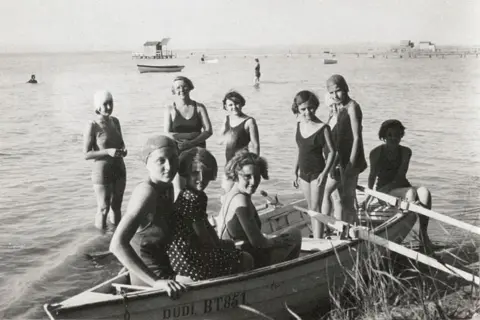 Church of Scotland
Haining was born in 1897, on a farm near Dunscore, Dumfriesshire.
Rt Rev Rosie Frew, Moderator of the General Assembly of the Church of Scotland, said she was delighted about the memorial for Haining, who had shown "tremendous courage by continuing to look after her young charges, many of whom were orphans or abandoned by their parents, in the face of escalating danger".
"She was simultaneously an ordinary and extraordinary woman, and her story is one of heroism and personal sacrifice and reminds us that when we feel powerless, there is always something that we can do," she said.
"It is a fine example of service over self-interest, and we hope that this honour, the first of its kind in Scotland, will help keep her memory alive for generations to come."
Members of Jane Haining's family, including her niece, were due to attend the unveiling.
Edward Green, senior member of the Edinburgh Hebrew Congregation said he was proud.
"We remember and honour her today and for future generations and are grateful to the Scottish government for its leadership in this."
