'It's cow's milk or water' - children with allergies struggle to get alternatives at school

 Zoe Stokes-Jones
Parents of children with dairy allergies want milk alternatives to be offered at schools as some children feel "excluded" from milk time.
Councils in England and Wales can offer free milk to under-fives and subsidised milk to under-11s, with Wales providing free milk to children aged five to seven.
But some parents have said the scheme needs updating as only products from cows, goats and sheep are eligible and each school decides whether to offer alternatives.
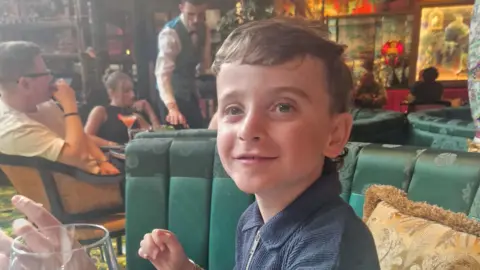
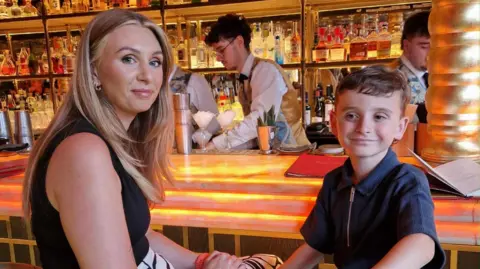
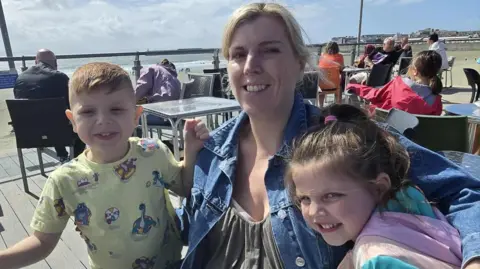
Zoe Stokes-Jones, 37, from Llandaff, Cardiff, said she and her eight-year-old son Jacob - who has a severe dairy allergy - were told his options were "cow's milk or water" when he started primary school, leaving him feeling "left out".
Of Wales' 22 councils, only 11 provided data showing how many schools provided milk alternatives.
Those councils said alternatives were available upon request - at an extra cost to the council - but only Torfaen council said it explicitly provided alternatives in all of its primary schools.
A request from BBC Wales found schools could provide alternatives for children with dietary requirements at their own discretion, but most needed to be requested and approved.
The Welsh government said it was working to "review the current arrangements" for the School Milk Scheme, but governing bodies had the discretion to design school dinner menus including soya, rice or oat drinks.
 Zoe Stokes-Jones
Zoe, who discovered Jacob had a milk allergy when he was six months old, believes milk alternatives should be provided for free, just like cow's milk.
Jacob has potentially fatal anaphylactic reactions to dairy, so must carry an EpiPen with him and take multiple antihistamines.
When Jacob started nursery, Zoe said the family was able to provide oat milk for him to, but when he started mainstream school they were told it was "cow's milk or water", as they didn't have the facilities to store it.
"What we found is he feels a little bit pushed out and he feels the odd one out because he's not able to have the same experience as his peers," she said.
"They are all sat down together having a quiet moment and if you can't have it, you're not included.
"It is sad and it does impact him. And I think more could be done to make him not feel that way, but people don't always think about the implications around it."
Zoe said there was a lack of awareness around the risks associated with milk allergies, and her family has to spend a lot of money buying the correct food to make sure Jacob is safe.
Cardiff council said schools that opt into the School Milk subsidy scheme offer milk during either mid-morning or afternoon break time, with some choosing to deliver milk alternatives in addition to the subsidised offering.
 Zoe Stokes-Jones
Approximately 1.5 million children under five receive school milk in England, Wales and Northern Ireland under the Nursery Milk scheme, which allows pupils in daycare to get 189ml (1/3 pint) for free each day.
In Scotland, pupils aged one to five receive milk alternatives as part of the Scottish School Milk subsidy scheme.
In Wales, 81,374 pupils up to seven got free school milk in 2024-25, which included whole or semi-skimmed heat-treated milk, whole or semi-skimmed plain yoghurt, UHT milk and lactose free or lactose reduced milk.
Any milk other than from cows, goats or sheep - such as soya or rice - is not subsidised, according to the scheme's website.
 Stacey Angel
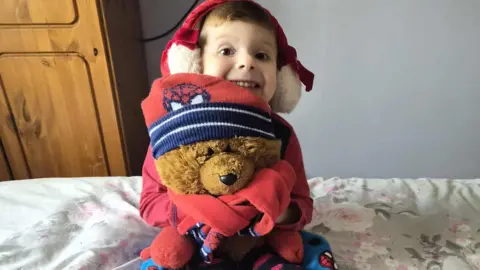
Stacey Angel, 41, from Newport, said her weekly food shop was more than £170 to make sure her son, Brayen, five, was safe.
Brayen is allergic to dairy, banana, pineapple, peas, green beans, wheat, egg, soya, nuts and peanuts, kiwi, root vegetables and pea protein.
Stacey said she was thankful that Brayen has a group of four friends at school who have dairy allergies as they all sit together away from other pupils during milk time.
This group does not get a milk alternative, which Stacey wants to see changed.
"Everyone is getting milk. The whole point is that they get the calcium they need. It would make him feel better.
"While he's still aware he's different and not getting the same milk, it would be more inclusive for him."
Newport council could not provide the number of primary schools that deliver milk alternatives, but it said all 56 schools could request alternatives if they wanted to.
In response, Brayen's school said milk alternatives were now being arranged for children who need them during free milk time.
"Steps are taken by the school to ensure children with serious allergies are protected from any potential risk," it added.
 Stacey Angel
Stacey's family of six have all switched to a dairy free diet to avoid any cross contamination in the kitchen, and Stacey and her husband make all of Brayen's school lunches.
"He doesn't get a free school meal as it's not safe for him to do so," said Stacey.
While the family accept Brayen's allergies are their "normal", she said his food was "so expensive" and she goes to three or four different shops to get what he needs.
Brayen is registered as disabled due to his allergies, so the family receive £200 a month towards his care, but Stacey said it doesn't cover the "staggering" cost of his food.
Stacey commended Brayen's school for its handling of his allergies - pupils wash their hands before and after lunch, and Brayen heads straight to the yard after eating.
But she hopes things will be more inclusive for him in future, especially as allergies are becoming more common.
"Sometimes, when I step back, I can get overwhelmed and realise it's not normal - it's a lot," she said.
These calls come after five-year-old Benedict Blythe died in hospital after a reaction to cow's milk in school in December 2021.
His mother, Helen Blythe, has been campaigning the government to "act immediately" to roll out spare allergy pens in school ever since.
Hundreds of parents have signed a petition calling for plant-based options in UK nursery and school milk schemes to "help promote inclusivity and ensure all children can benefit".
Allergy specialist Dr Helen Evans-Howells, whose son Ethan has a milk allergy, said people underestimated how severe it could be and milk was the "highest cause of death in allergies".
She added that most deaths happened in schools and nurseries and there had to be a greater understanding of the issue, with milk alternatives being a good way to help parents "already living with increased costs".
As it stands, she said milk time could be discriminatory for those with allergies as, without alternatives, some children are excluded.
The Welsh government said it was working with "local authorities, schools, and suppliers to review the current arrangements" for delivering the School Milk Scheme.
"All primary learners are eligible for free school meals and local authorities/governing bodies have discretion to design menus which can include plain soya, plain rice or plain oat drinks," it added.
