Has Scotland's NHS recovered from the Covid pandemic?

 PA Media
The sixth anniversary of Scotland going into lockdown also marks the final phase of a £1.2bn plan to help the health service bounce back from its biggest ever crisis.
When launched in 2021, the Scottish government promised the five-year Covid recovery plan would "drive the recovery of our NHS, not just to its pre-pandemic level but beyond".
Health Secretary Neil Gray cites progress in reducing longer waiting lists in recent months as one of the signs that "our NHS is clearly turning a corner".
But BBC Verify analysis shows many of the key targets in the 2021 Covid recovery plan have been missed and it is unclear how others are measured or will be achieved.
What was promised in the Covid recovery plan?
"My specific concern is that it's awful".
This was the verdict of ex-first minister Nicola Sturgeon in 2021 when discussing a draft of the recovery plan in WhatsApp messages later released under freedom of information laws.
The recovery plan was then reworked and launched with dozens of pledges aimed at helping to "increase NHS capacity and get everyone the treatment they need as quickly as is possible".
The most high-profile promise was to "increase capacity for outpatients by 10% compared with pre-pandemic activity levels of around 1.4 million appointments and procedures a year" by 2026.
It followed the widespread cancellation of operations and appointments amid fears the NHS was going to be overwhelmed by the pandemic.
Has capacity in the NHS been increased?
NHS data body Public Health Scotland (PHS) does not record "capacity" for outpatients, which is the category for people who have an appointment in a hospital or clinic but do not need to stay overnight.
However, PHS does record the number of new outpatient appointments and procedures, which gives an indication of capacity.
The latest available data shows that between October 2024 and September last year there were a total of 1.3 million outpatient appointments.
This is less than before Covid when there were a total of 1.45 million outpatient appointments (between October 2018 and September 2019).
 PA Media
Figures are also available for inpatient - that is people who stay at least one night in hospital - and day cases, where patients are discharged the same day.
They show that there has been a steadily improving picture since the end of the pandemic but not hitting the pledge for a 20% increase over pre-Covid levels made in the 2021 plan.
In terms of outpatient procedures carried out at hospitals, this data is gathered annually by PHS.
In 2018-19, the last full year of data before the first Covid lockdown, there were a total of 531,058 procedures in Scotland's NHS.
This dropped dramatically in the following years as a result of the pandemic and has been improving since, but is not back to pre-Covid levels.
How was the NHS expected to increase activity?
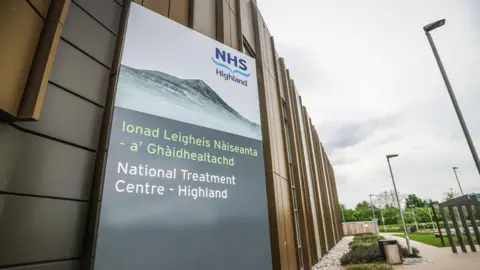
A central plank of the original plan to increase capacity was to build 10 National Treatment Centres (NTCs) - dedicated facilities for the likes of knee and hip operations - that would provide an additional 40,000 procedures per year by 2025/26.
Five of these purpose-built centres have been opened so far at a combined cost of £169m.
A further £36.7m has been spent on plans for the other five but the projects were put on hold two years ago as a result of funding cuts.
This has put a dent in the original forecasts and a 2024 Scottish government update on the recovery plan said the operating NTCs were now expected to deliver an additional 20,000 procedures per annum.
Measuring their output is complicated by the fact PHS has said "it is not currently possible to accurately differentiate between NTC activity and additional activity carried out within an NHS board".
But data from the NHS Golden Jubilee surgical NTC in Clydebank, obtained by the BBC, suggests that the treatment centres are performing well.
It opened in the autumn of 2024 and delivered just over 15,000 orthopaedic and endoscopy procedures up to April last year, with nearly 18,000 expected in the current financial year.
Promises on GP numbers
Other noticeable pledges which have been paused include providing 1,000 additional staff in primary care mental health and giving every GP practice access to link workers who help patients address non-medical issues, such as housing, which are affecting their health.
The recovery plan also included a Scottish government pledge that by 2027 it would increase the GP workforce by 800.
Latest figures published by NHS Education for Scotland show the GP headcount has grown by 197 (4%) since 2017 to 4,582 and only by 2% when using a different measure that totals part and full-time staff.
Where the recovery plan has worked
 Getty Images
Spending watchdog Audit Scotland has kept a close eye on the progress of the recovery plan since its launch.
In its 2023 review of the NHS, the watchdog said that "updates against a range of the ambitions are absent" from the government's annual recovery plan updates, while others had no mention of the progress made, or it was unclear if things had improved.
This remained the case for much of the Scottish government's 2024 update but this report does highlight some of the plan's successes.
A promise to hire 800 mental health workers and 500 advanced nurse practitioners was achieved by 2022.
In addition, targets on hiring more radiographers and creating 30 cardiac physiology training places were hit.
The Scottish government also hailed its expanded hospital at home service as meeting the 2021 pledge to develop alternatives to attendance at accident and emergency wards.
The service prevented more than 8,350 people spending time in hospital between July and September last year.
Elsewhere, a recovery plan target of 90% of people being referred to Child and Adolescent Mental Health Services being seen within 18 weeks has been achieved.
What else is being done to help the NHS recover from Covid?
There have been other recovery-related targets set for the NHS in the years since the pandemic.
Targets introduced in July 2022 sought to eradicate waits exceeding two years, and subsequently one year, in most specialities by September 2024.
None of those targets were met and the Scottish government then made a new pledge that by the end of this month no patient would wait longer than a year for their new outpatient appointment, inpatient or day-case procedure.
Latest PHS data shows that in January there were just over 53,000 waits of more than 12 months for inpatient and outpatient treatment.
Data on whether the Scottish government's March deadline target has been met is scheduled to be released at the end of April.
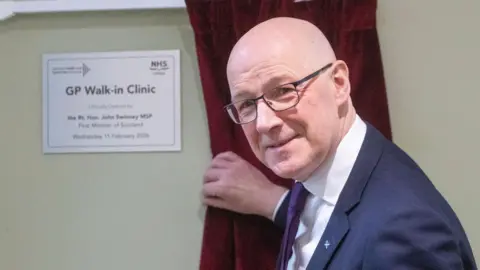
Another key strand to the Scottish government's recent recovery plans is a new network of walk-in GP clinics which is hoped will reduce the pressure on primary care.
Health Secretary Gray said: "Our NHS is clearly turning a corner and our plan is working.
"Long waits are down for eight months in a row, GP numbers continue to go up, thousands more appointments and operations are taking place.
"Whilst this progress is welcome there is still much more to do. Improving our NHS and delivering for the people of Scotland will continue to be our priority and that is why our budget this year includes record funding of £22.5bn for health and social care."
The post-Covid challenges faced by the NHS are not unique to Scotland, the health service across the rest of the UK has also struggled to get back on its feet and meet targets on waiting times and operations.
The IFS think tank has suggested England and Wales have both done much better than Scotland at increasing hospital activity above pre-pandemic levels, but PHS has said data across the nations should not be directly compared.
